

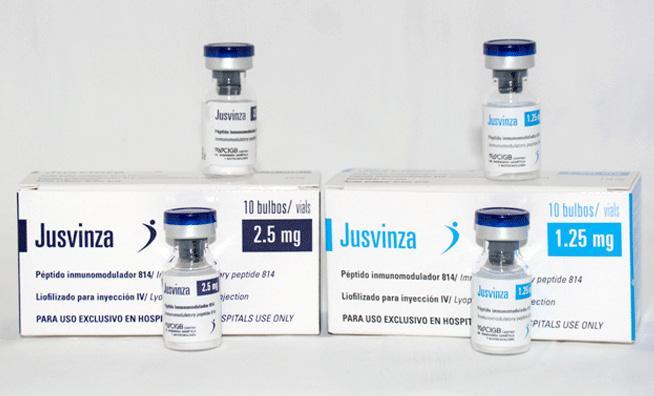
On Monday, the Comandante Faustino Pérez Provincial Clinical Surgical Hospital began a clinical trial with the Cuban drug Jusvinza—developed by the Center for Genetic Engineering and Biotechnology (CIGB)—for the treatment of residual polyarthritis in patients recovering from chikungunya, one of the most disabling sequelae of this viral disease.
The research, led by Dr. Yudisay Reyes Pelier, a specialist in oncology and member of the CIGB Clinical Research Group, seeks to evaluate the drug's effectiveness in reducing pain and persistent joint inflammation, which affects many patients months after they have overcome the acute phase of the infection.
According to a publication by our colleague Yunielis Moliner, the trial includes 120 patients between the ages of 19 and 80, all with a confirmed diagnosis of chikungunya and joint symptoms lasting more than three months.
The participants were divided into two groups of 60 people: an intervention group, which will receive Jusvinza along with conventional treatment, and a control group, which will continue with the usual therapy alone.
Treatment with Jusvinza consists of nine subcutaneous doses distributed over a period of six weeks, administered on an outpatient or inpatient basis, depending on the patient's clinical situation and place of residence.
Jusvinza—known scientifically as peptide CIGB-258—is a Cuban biotechnology product that already has emergency health registration in Cuba for the treatment of patients with severe Covid-19, an area in which it has demonstrated the ability to modulate the excessive inflammatory response that causes lung damage.
Dr. Eulogio Pimentel Vázquez, director of the CIGB, recently highlighted that the drug "has proven to be safe" and that its development responds to the need to offer therapeutic alternatives for chronic inflammatory conditions, with a significantly lower production cost than similar alternatives on the international market.
This trial is part of the Cuban Health System's strategy to address the long-term sequelae of chikungunya, a disease that, following its epidemic outbreak, has left a considerable percentage of patients with persistent arthralgia that affects their quality of life and their ability to work.
The researchers hope that Jusvinza will achieve an improvement of more than 70% in the clinical evolution of patients, which could make the Cuban drug an accessible therapeutic alternative for a condition that currently lacks effective specific treatments.
The study highlights the role of Faustino Pérez Hospital as a reference center for clinical research and demonstrates the capacity of Cuban science to develop its own solutions to health problems affecting the population.


