

TEXTO: On July 11, 1987, the world population reached five billion. From then on, the United Nations General Assembly recommended that World Population Day be celebrated on this date every year.
In less than 30 years, the total number of people on the planet has risen by over two billion, in a context marked by social, environmental and economic crises and natural disasters.
GI spoke to Jesús Robles Vera, international programs coordinator of the United Nations Population Fund (UNFPA) in Cuba, regarding initiatives to celebrate the date and population issues on the post-2015 development agenda.
- What is the theme for this year’s July 11 celebrations?
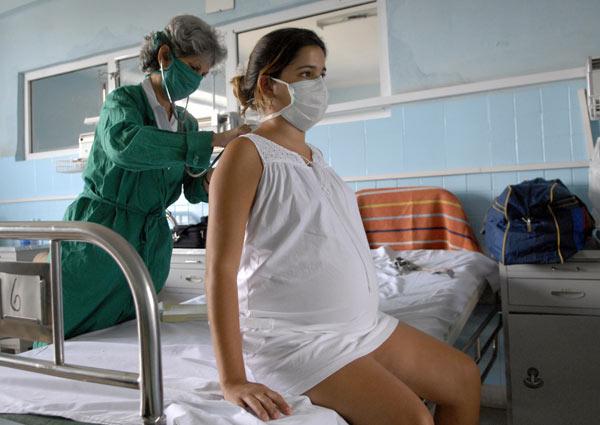
- This year there is a very interesting theme: vulnerable populations in emergency situations. This is the institutional message. In the case of Latin America and Cuba, we will be studying the topic with regards to vulnerable populations according to the UNFPA, that is women and the adolescent population.
“For us this year the theme is gender. The main message for Latin America and the Caribbean, which will also apply in the case of Cuba, is: “No excuses, caring for the lives of women is a priority in all circumstances and at all times.
“This provides us with a very strong message, which is not only applicable to an emergency situation, but to any life situation.
“In Cuba this functions differently. Luckily here there is a whole Ministry of (Public) Health structure, which works, and in the case of women in the lead up to a hurricane, the Ministry of Health has its protocol whereby women likely to go into labor in remote areas are taken to maternity homes well in advance, where they are protected.
“In our July 11 campaign, continuing the work done by the UNFPA Creative Youth Workshop and supporting the agenda for reflection convened by institutions that form part of our work, are also objectives.
“Cuba has its own initiatives to celebrate World Population Day and we accompany them.”
- What activities are planned for the occasion?
- “We are going to convene a talk on July 13 where we can invite our counterparts, the immediate circle of institutions that support us. The main issue will be the call to celebrate World Population Day, but we want to talk about how Cuba deals with emergency situations and the care provided to women and adolescents.
“We'll host the Federation of Cuban Women firstly, Civil Defense and the Ministry of Health. We hope to have a chance to reflect, to learn how these situations are addressed on the island, reflecting on the issue and disseminating this.
“On the 11th we have two major activities: the exhibition of a selection of photographs from the “Youth in the lens” contest, by the Center for Studies on Youth, and a concert by Ernesto Blanco in the “Arte en la rampa” fair.”
- What role does the subject of population play in the post-2015 development agenda?
- This is an extremely important point. During this year we have been holding anticipatory meetings in relation to the new agenda for sustainable development. They are now going to move from Millennium Development Goals (MDGs) to become Sustainable Development Goals (SDGs).
“In previous years there has been a form of consultation on the MDGs regarding what the new global development agenda should be. During 2015 intergovernmental meetings are being held, which will lead to the final declaration of the SDGs in September this year in the framework of the UN General Assembly.
“So far there is one proposal for the SDGs. There are 17 goals and they are largely related to environmental issues. There is no explicit goal on the issue of population as such, although it continues to cut across the rest.
“What is interesting is that regional agreements are becoming a great force in relation to international cooperation. Compared with previous situations, regional agendas are being more clearly defined than in the past.
“In August 2013 a regional agreement was reached on population and development forming the Montevideo Consensus, where Cuba played a substantial leading role.
“Every day we are coming closer to a certain maturity in the region and endogenously assuming our challenge in terms of multilateral decisions. CELAC, Alba, Unasur, Mercosur are an example of this. They are configurations that are underway and are providing clear signs that Latin America is taking on this challenge in its own way.
“Every day we see the World Bank and the IMF further distanced from Latin America.
The region has the capacity to have its own mechanism of multilateral financing.
“While the post-2015 development agenda will be an important reference for future international cooperation, in the case of Latin America regional agreements will also have weight.
“We can not detach ourselves from global multilateralism, but regional aspects are taking major force.”
- The major population challenges facing the region?
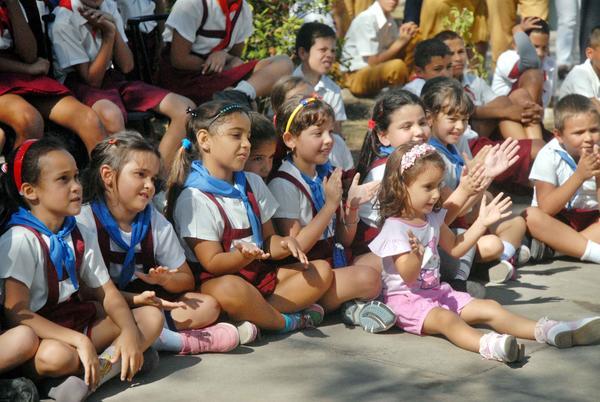
- The challenge is the demographic dividend. It is not the case in Cuba, but the topic of youth is significant because what happens to young people in Latin America will affect the development of our countries within 15 years. Speaking of the region, if we do not invest in youth to educate them and provide them with job training and development; if we do not invest in them, what happens to this population is what will happen to the development of our countries.
“In the case of Cuba the situation differs, the challenge is an aging population. It is an issue that the country is watching closely and it is in the process of defining its policy of care and attention on this issue.”


