


The frequency with which national media are addressing the drought affecting the entire country is no accident, but rather absolutely justified. Seventy-seven municipalities experienced a period categorized as dry, with 43 of these facing moderate drought conditions, 23 severe, and 11 extreme.
As an island nation, which has precipitation its only source of water, the subject is of great importance, since rainfall determines the availability of this vital resource stored in reservoirs.
According to the National Water Resources Institute (INRH), January through October, 2015, was the fifth driest such period in Cuba since 1901. This year’s rainy summer season was not encouraging, described as the seventh driest since the beginning of the 20th century.
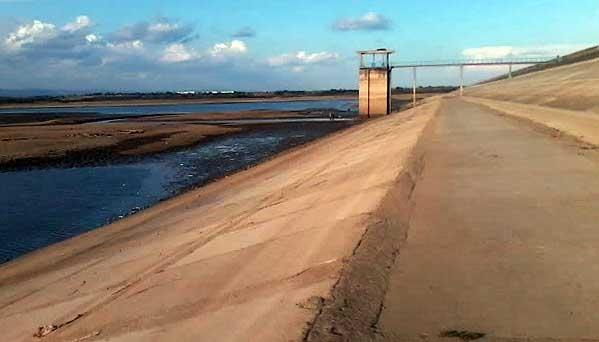
In easy to understand terms, as of November 10, reservoirs held only 50.4% of their capacity. Those which supply large population centers stood at 56% capacity, while those serving rice farming regions were at 45%.
“Despite the difficulty of this situation, we have not reached the levels we had from January through October of 2004, which were the worst in 115 years,” said M.Sc. José Antonio Hernández Álvarez, INRH director for rational water usage.
While the problem is less acute in some provinces such as Las Tunas, the cities of Santiago de Cuba and Havana face worrisome prospects given the low level of their reservoirs.
To cite just one example provided by Hernández, measures being implemented at this point in Santiago have extended distribution cycles to 15 or 16 days, so the city is not left without water. The expert indicated that water available is being reserved for the population.
SAVING TODAY TO HAVE WATER TOMORROW
Among the particularities of this drought, Hernández emphasized its national scope; the low level of water stored in reservoirs; and increased saltwater intrusion. In more than a few cases, turning the situation around will require long periods of at least average rainfall, in addition to considerable financial, material and technological resources.
An adequate response involves short and medium term measures to mitigate the impact and build awareness of the severity of the problem.
“One problem we have at the national level,” the expert explained, “is that real consciousness of the drought issue has not been developed. People still have not taken note of the situation we face, and the necessity of using water rationally.””
Studies conducted by the Meteorology Institute show that precipitation is decreasing in Cuba, and predictions indicate that by 2100, the amount of rainfall and the physical availability of water will be reduced by 50%.
The country has a national water policy which establishes four priorities: first supplying the population, then livestock, food production and industry, in that order. Thus no measure adopted should deny citizens access to water.
Important efforts being undertaken nationally include work on principal supply networks to eliminate leaks, and adjusting use allowances for agriculture and social institutions such as hospitals, schools and hotels, traditionally heavy consumers.
Another short term measure being implemented in a few provinces facing critical conditions is the suspension of agricultural irrigation, which implies, according to Hernández, “moving agriculture to locations where water is available or moving toward more efficient irrigation techniques.”
None of this can be well managed if water usage is not better measured in all sectors. Thus increasing the installation of meters is a priority, the expert reported, explaining, “This is not meant to generate income, but rather with the purpose of encouraging conservation, and to really know the amount of water consumed. By 2016, 100% of state enterprise consumers will have meters and 14% of the residential sector.”
The population is not exempt from such conservation measures, but installing meters in all residences is a long term, costly project. Thus the importance of efforts to build awareness and encourage public cooperation in preventing waste, Hernández said.
PREPARING FOR THE NEW YEAR
In 2010, water usage was first included as a resource to be taken into consideration in economic plans. Despite government efforts, more than 50% of the water pumped through the system is lost, in either main line aqueducts, distribution networks or within homes. An investment program to change this reality is underway in 13 prioritized cities.
Set to be launched shortly, Hernández said, is a response and prevention system to address the drought, with the participation of organizations, ministries and state enterprises in all provinces, to make conservation a daily practice for individuals and institutions.
Hernández Álvarez explained, “In the provinces of Las Tunas and Camagüey we have established how much water is available for rice in 2016, and how it is going to be used in the most efficient manner, to produce more with what we have.”
Despite the difficult situation facing the nation as a whole, there are locations where there is plenty of water, according to the expert, principally the northern regions of Pinar del Río, Holguín and Villa Clara, as well as the underground aquifers of Matanzas.
Nonetheless, making careful use this important, finite resource is the best way to ensure its long term availability, while we wait for the rain.


