

For a second consecutive year, Cuba competed in the Ibero-American Biology Olympiad. In 2014, two students participated, winning a silver and a bronze medal, while this year, the country sent a full team of four competitors, and came away with a gold, a silver and two bronzes.
Unlike other international academic competitions for high school students, there is no Central American or International Biology Olympiad, and one of the requirements for this event is that participants have not participated in a similar event previously.
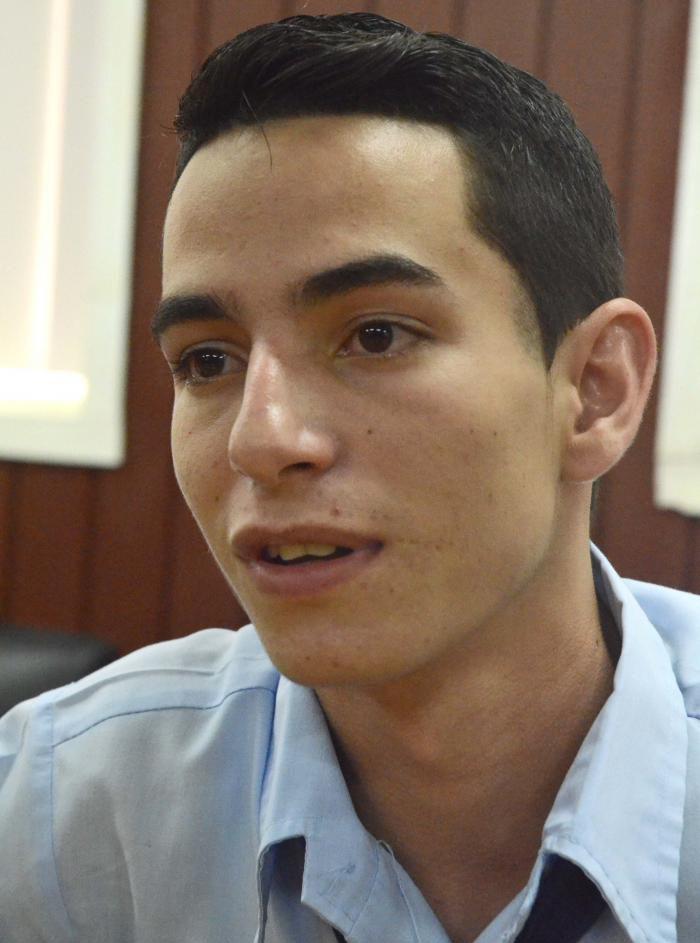
The best Biology students attend the Olympiad and are examined on a broad range of topics. Alain Areces López, from the Mártires de Humbolt Pre-professional Exact Sciences Institute, in the province of Artemisa, won a gold medal at the event, held in El Salvador this past September, and along with his teacher, recounts his experience.
How did you prepare for the test?
Alain Areces López: I’ve been preparing since I was in 10th Grade, first in school and then in the training for national contests. The Cup contests between
Exact Sciences Institutes also helped. The final objective is the national contests, and when you manage to make the pre-selection national team, that’s where we begin preparation with the trainers in different specialties. Then it’s not just taking Biology, but rather Zoology, Botany, Microbiology, Biochemistry. We specialize with a much more rigorous training program. It’s very selective, we haven’t made it yet. Of the ten students on the national pre-selection team, only four are selected, and they represent the country at the international event. In the case of Biology, that’s the Ibero-American Olympiad.
This takes a lot of study. In biology, the independent study, is fundamental. The professor is necessary as the guide, but the interest you put in studying is important as well. It is a subject that requires lots of reading, memorization and deductive reasoning.
Who else went to the competition?
I went with three other students and the results were spectacular, since all four of us won medals. In my case, the gold. The others won two bronzes (Luis Enrique Martínez, from Camagüey, and Andy García, from Havana) and a silver (Leonardo Martín, from Camagüey). All students at Exact Sciences Institutes.
Tell me about the day of the contest. How are these international tests conducted?
Since students participate in two different languages – Spanish and Portuguese – the test must always be translated for the Brazilians and Portuguese, but in the end we all communicate with each other.
There are two days of tests. The first are practical tests in Microbiology, Molecular Biology, Plant Morphology, Ecology, all with time limits.
Then we take the theoretical exam, which is divided into two themes. Each one must be completed in 120 minutes, with 120 fairly high level questions.
When do you find out about the results?
Each country brings between two and four students. While we were taking the exams, the professors leading the delegations work on studying the themes and reviewing the exams, and on the last day, during the gala ceremony, the winners are announced. Up until the last minute, we don’t know any results. In the majority of cases, the differences between winners is minimal. I was the sixth gold medal, and the difference between my score and the first was four percentage points. This shows that all the students participating are about even. If you are studying and training as well as a student from Spain - being Cuban, with all the difficulties we must struggle through because of the blockade – when we face the level of development that a student from that country possesses, training with a specialized university professor, we can say that we are pretty good.
What was your reaction when you learned that you were among the gold medal winners?
I had seen the three other boys win medals, since they make the announcements from bronze to gold. So I said to myself, “I have gold, or I don’t have anything.” I was really tense. When they started giving out the medals, they started with me, because I was sixth. I went up with my flag over my shoulders, and accepted the medal and the certificate. Right away, I got in touch with my people at home and they were super happy.
You began the school year with an international prize, how is 12th Grade going? What are your plans after graduation?
In 10th and 11th Grade, I was training for this competition which meant, I didn’t waste time, I invested it in Biology, leaving other subjects to the side, like Math, Physics, Chemistry. Now, in 12th Grade, I’m catching up in these subjects I had to let go, and I’m not letting Biology go, because I’m helping the students at my school who are in the contest. I’m focused on catching up in other subjects, strengthening Biology, and thinking about what I want to study. I have two options: Medicine or Biochemistry. They are both related to Biology. Biochemistry is a branch of Biology and Medicine is one of the best ways to apply knowledge to life. I think that’s the one I would like best.
How do you evaluate the country’s accomplishments in international contests these last two years?
José Lázaro Hernández Tabío (National Chemistry methodologist): For us, this year has been the most gratifying we’ve had in international competitions. Twenty-one students participated, and with the exception of Computer Sciences, all others won medals or honorable mentions. That is, 16 won medals and four honorable mentions. This year we won bronze medals in the international Physics and Mathematics Olympiads. We won an honorable mention in Chemistry, and in the Central American Mathematics tournament, we took two golds, a silver and a bronze. Medals have been won in all of the contests this year.
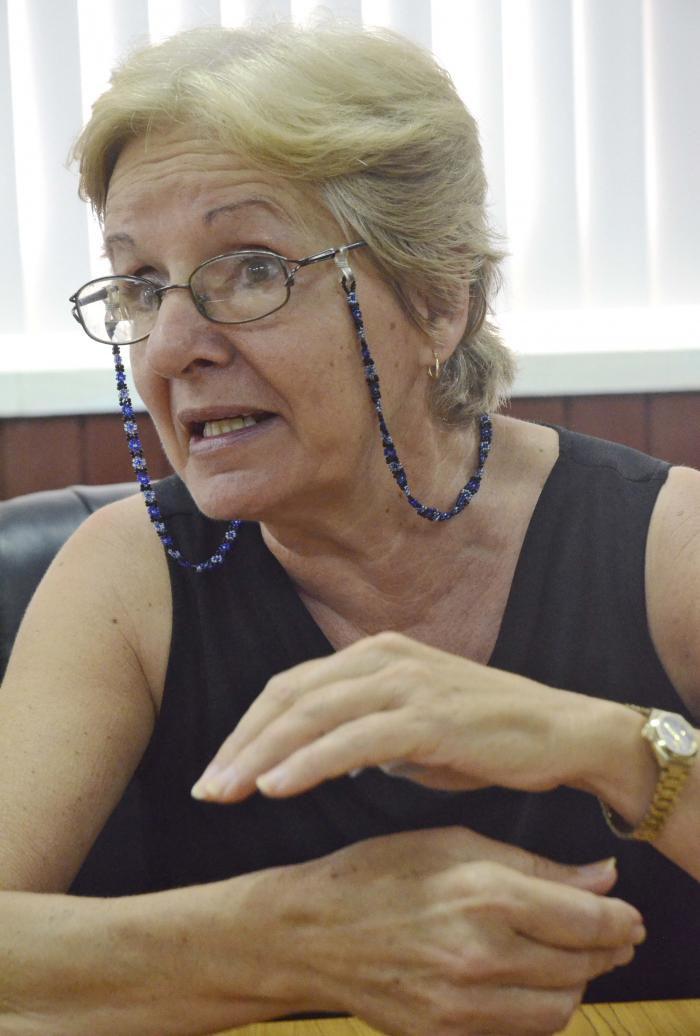
Julia Díaz Perera (Teacher at the Exact Sciences Institute in Artemisa): It’s important to recognize the role the Humbolt has played in these accomplishments. We have had outstanding results in Mathematics, Chemistry, Physics and this one in Biology, which makes the school proud. This was the first time we had a student win this award, in this subject. For me, this is very important. I love the school and its accomplishments are fundamental. This is very significant to me.


