

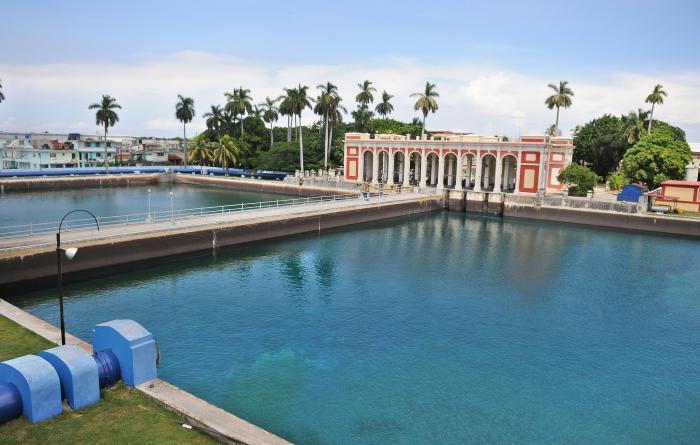
Almost as intense as the drought affecting the country for two years now, is the National Water Resources Institute (INRH) plan to reduce leaks and losses of water.
A wide gamut of projects in 2015 required investments of 340 million pesos. Of this amount, 266 million was destined for construction and installation; 67 million for equipment; 40 million for the preparation of works to be completed in 2016 and 2017; and 14 million for a variety of other projects.
“The investments are fundamentally directed toward supplying the population, reducing losses, supporting food production, and tourist infrastructure,” reported
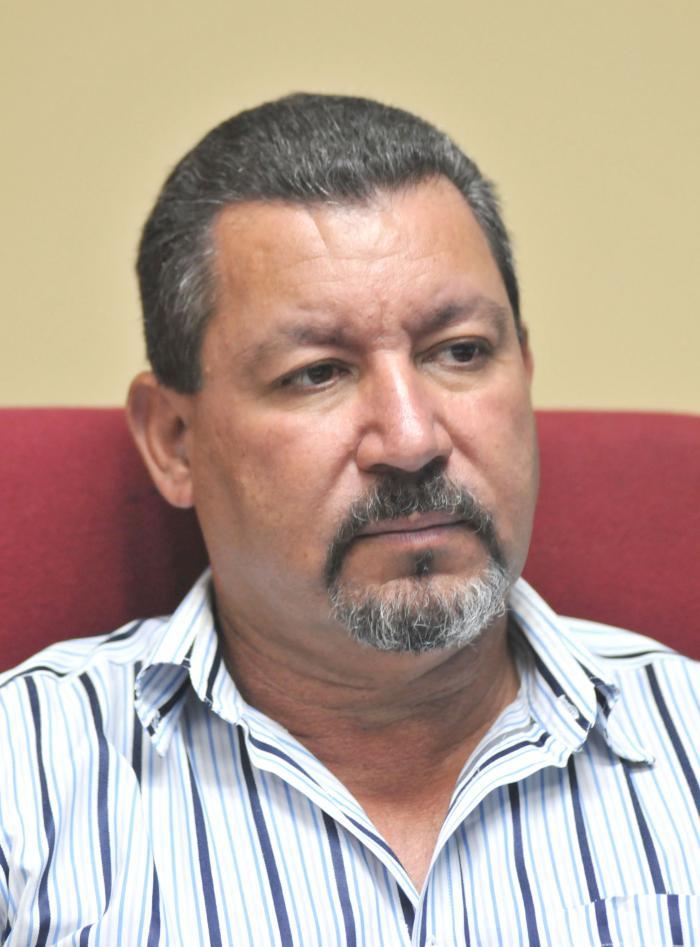
Antonio Rodríguez Rodríguez, INRH vice president.
Until recently, 58% of the water pumped failed to reach its final destination. Since the program was launched in 2011, efficient use of the resource has gradually improved.
“One of the directions in which we are working is measuring the impact of investments. We are advancing on the order of a 5% annual reduction in losses. This is a very broad program, in which more than 11 billion pesos must be invested,” Rodríguez said in conversation with Granma International.
The current drought has been more critical in some provinces than in others, and work to repair or replace conduits has therefore been concentrated in specific areas of the country.
Prioritized at this time are 12 cities included in a program approved by the Economic-Finances Commission to restore supply networks.
Taking several factors into consideration, these include large cities like
Havana, Camagüey, Santiago de Cuba, Holguín, Bayamo and Manzanillo; sites of importance to the tourist industry such as Trinidad, the Isle of Youth, and Guantánamo; Palma Soriano, with a difficult situation regarding the quality of its water supply; Pinar del Río and Consolación del Sur.
Repairs to conduits and networks, as well as pumping stations and water treatment plants, have been completed, to ensure adequate conditions throughout the water delivery system.
INRH statistics indicate that, through the end of October, these works benefited 475,461 inhabitants with new installations or improvements in supply and treatment. Efforts will be intensified in 2016.
“Our plan for next year,” Rodríguez said, “will involve 70 million pesos more than that of 2015. What this means is that the country’s leadership is making all of the necessary resources available with respect to the water issue.”
GETTING TO WORK
The National Water Resources Institute is not only undertaking new projects. Certain investments are directed toward restoring the technical parameters of existing facilities, while high priority new projects are being launched.
Of special concern is the agricultural sector, since water waste in irrigation systems is also a problem, and when levels of production of food crops such as rice fall, what is needed by the population must be imported.
Rodríguez reported that the INRH has taken multiple steps to support food production.
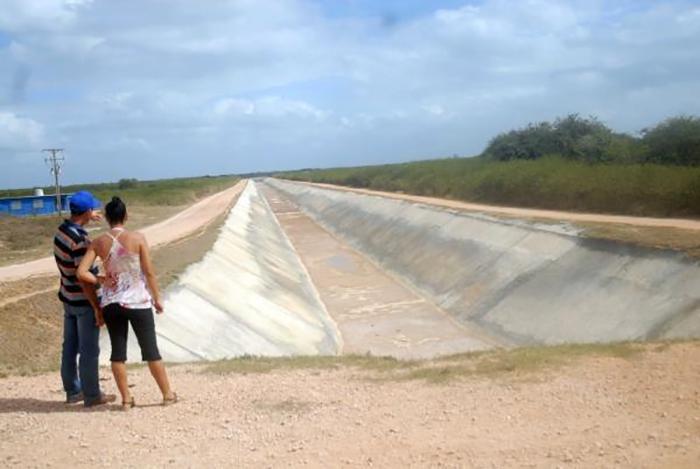
“Alongside the construction, we are working on a strategic program involving the central diversion aqueducts, the Sancti Spíritus–Ciego de Ávila and the East–West, in Holguín, to better use water for both supplying the population as well as the economy, fundamentally the irrigation systems utilized in agriculture.”
“Work is also being done on the canals, since the main client is agriculture, and within this sector, rice. Right now, work is being done on the main canal, the Zaza, the longest in Cuba, from which approximately 90 million cubic meters of water are lost every year.”
SANTIAGO, GUANTÁNAMO AND TOURISM
The provinces of Santiago de Cuba and Guantánamo, located in the eastern part of the island, are facing critically low levels in their reservoirs. Santiago’s reservoirs, for example, are not holding even 30% of their capacity, and those serving the population, less than 18%.
Although only rainfall can reverse the situation, the INRH has undertaken important construction projects to ensure the delivery of water to the city.
In 2015, the main nine-kilometer conduit was completed, and a pumping station constructed to extract water from the Gota Blanca Reservoir, allowing for the utilization of approximately 15 million liters of water. Likewise under construction is a desalination plant which should be operational by mid-2016.
The province of Guantánamo is facing a very difficult situation, Rodríguez emphasized. Drought conditions are severe and emergency measures have been implemented, including the construction of an additional pumping station to expand delivery of water to the provincial capital, among other efforts to maintain a stable supply.
In addition to these projects directly related to meeting the population’s needs, the INHR is concentrating on the installation of infrastructure to allow for the development of tourism.
Of special importance are delivery and treatment projects in Varadero, Cayo Santa María, Cayo Coco, Cayo Cruz, and Camagüey, as well as the aqueduct which will supply Ramón de Antillas in Holguín, a project set to begin this year.
To undertake this ambitious endeavor, the country has allocated a budget of more than 220 million dollars.


