

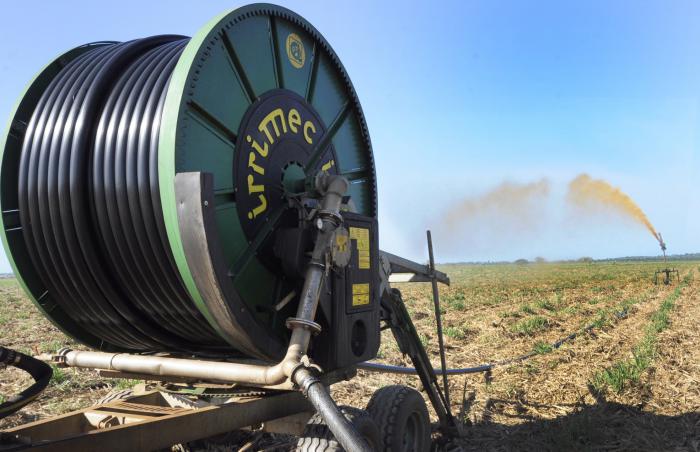
A dark liquid with a strong odor, far removed from the crystal clean water used in traditional irrigation, emerges from a sprinkler. This liquid flows to the fields through pipes that run from the biogas plant of the Heriberto Duquesne distillery, in the province of Villa Clara. The plant’s turbines are connected to the irrigation system and in the distance, a mixture of vinasse and industrial waste fertilizes the sugar cane fields.
“Previously, high volumes of all this waste poured into the Guaní and Managuimba river basins. The alcohol distillery generates 800 to 900 cubic meters (of wastewater) per day, with an organic matter concentration of between 40 and 60 milligrams per liter, thus requiring a large amount of oxygen to reincorporate it into a river as reusable water,” explained the Director of the plant, Ramón Santos Díaz.
At the distillery and the sugar mill of the same name, technological changes were made to mitigate pollution and, for 2016, the wastewater treatment system is expected to begin irrigating over 500 hectares of sugar cane fields.
Investment is still pending to ensure final touches to the treatment process, including the treatment of waste which the biogas plant currently pumps to the southern river basin, which “will allow for the use of 100% of the treated waste in fertigation and put an end to a dark chapter in the history of the Heriberto Duquesne distillery as a major source of the pollution of ecosystems in Villa Clara,” Ramón noted.
This will also add value to a product that was previously harmful, and have an impact on increasing sugar cane yields, resulting in more sugar and higher productivity, an aspiration shared by the rest of the country’s sugar mills.
REDUCING CONTAMINATION
The sugar sector is identified as one of the main sources of environmental contaminants in Cuba, both due to the concentration and the amount of waste produced, given the number of industries: 56 sugar mills, 11 distilleries and four torula yeast plants; which each year generate approximately 10 million cubic meters of waste, enough to irrigate 2,800 hectares of sugar cane – according to the consumption rates of each soil type – five times over.
The impact on ecosystems has accumulated over centuries, as sugar cane provided a livelihood for the Cuban population for a long time, until the island became a mono-producing country. Later, livestock, coffee and various other crops appeared, and today efforts continue to diversify agricultural production.
Since 2007, the AZCUBA Enterprise Group has been implementing a comprehensive program to address this problem. Beginning within the industry itself (breakdown of solids, fats, wastewater, acids and potash), water saving measures, repairs, logs and installation of flow meters at the entrances and exits of the mills, the process will continue with the draining of waste through underground pipes to oxidation ponds (many of which are yet to be built), and conclude with the use of these treated liquids to fertilize sugar cane.
To date, works have been undertaken in 57 of the 71 polluting sources in the sugar industry; in the last harvest, 28 plants used treated waste products for fertigation (these are high in potassium and phosphorus and applications need to be controlled to achieve the desired effect).
“The sugar industry has identified the main pollutants, the environmental impacts, and there is a program underway to resolve these, but despite the achievements, progress is not as rapid as is required,” explained AZCUBA science and technology specialist, Víctor Tejeda Marrero.
BURNING BAGASSE TO REDUCE CARBON EMMISIONS
Sugar factories and distilleries have reduced their carbon emissions – a product of burning fossil fuels – by generating energy from biomass. Sugar mills are now using bagasse to generate electricity, and although not all have achieved complete efficiency in this process, during the sugar harvest the sector is self-sufficient and surplus electricity is distributed to the National Electric System.
Plants currently only burn fuel oil when there is a shortage of bagasse, or an industrial problem occurs. The investment program promises to achieve greater industrial efficiency: more sugar, alcohol, electricity generation, steam and less environmental impact.
The modernization also includes the construction of bioelectrical plants to generate energy from bagasse and marabou. Feasibility studies have been conducted and, in several sugar mills, tests are already underway, with prospects in both cases indicating an increase in production.
Víctor Tejeda explained, “The environment is very extensive, and in order to care for it we rely on the cooperation and advice of key agencies such as the Ministry of Science, Technology and Environment and the National Institute of Water Resources, among others. AZCUBA has had a major impact on the recovery of ecosystems, which will even benefit marine flora and fauna by preventing waste from being dumped into the sea.”
“We can not become accustomed to living with the harmful effects produced by our industry, we must streamline investment and make it as efficient as possible, since the country has decided to undertake costly investments, which even include the acquisition of pipes and irrigation equipment to directly distribute part of the vinasse over the sugar cane production, and reduce imports of chemical fertilizers,” Ramón Santos noted.
USING WASTE MATERIALS TO COOK
A tour of various industries and distilleries in the country confirms the efforts made by AZCUBA to accelerate investments, and ensure better environmental conditions for the 2015-2016 harvest. Together with the construction of waste treatment plants, training activities are underway to extend the use of waste products as fertilizers.
Described as one of the sugar mills that most negatively affected the environment, the Melanio Hernández mill in Sancti Spíritus has resolved part of the problem with works that include the separation of waste from the condensate produced by the factory, which is turned into reusable water through an automated evaporation process, Rodolfo Pérez Arteaga, head of the plant’s Technical Group, explained.
“For 17 years waste has been used in sugar cane fertigation; now we use the irrigation equipment, following strict restrictions to avoid saturating the soil, as the land sits on the Zaza river basin, which supplies large populations, animals and crops,” stated Oscar de la Cruz, municipal director of Services for Sugar Producers.
Agricultural producers south of the Héctor Molina sugar mill in Mayabeque lament the loss of the tributaries that previously ran through an extensive trench to the coast. Here, they established their best fisheries and used the liquid to fertilize the soil, but the work undertaken within this environment hid the silent effects of hundreds of years of pollution, which has damaged the ecosystems of the area.
Many of the investments rationalize and humanize work, as the distillation pumping, waste re-pumping and steam generation systems are automated.
A significant detail is that the waste treatment plant at the Heriberto Duquesne distillery, the only one of its kind in the country, also supplies biogas for use in the kitchens of forty homes in the surrounding community. This example alone justifies investment, as the cost is paid off in the short term with benefits to wider society.


