

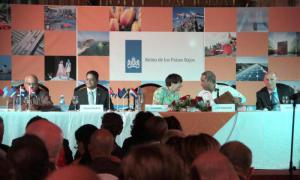
Dutch companies are not here to make a quick profit, but to form joint ventures. Their objective in Cuba is sustainable partnerships with the Cuban government, organizations and businesses, Lilianne Ploumen, minister for Foreign Trade and Development Cooperation of the Kingdom of the Netherlands, stated in Havana.
During the Cuba-Netherlands Business Forum held on January 12 in Havana, Ploumen stressed that this is a new, better and different world with new, better and different companies; as such this is the kind of partnership Dutch businesses are offering, with the hope that the island will want to work together with them.
The delegation from the Kingdom of the Netherlands (Holland, Curaçao, Aruba and Sint Maarten) was composed of representatives of 77 companies and organizations from different sectors, including major companies such as Unilever, Philips and Heineken.
On a different note, Ploumen stated that the Dutch government wants to engage with Cuba in the political sphere. The Dutch Foreign Ministry organized the first official visit to Cuba in 2014, and during negotiations with the EU, the Netherlands has played an important role in defending the agreements made with the island, she noted.
On the Cuban side, Orlando Hernández Guillén, president of the Chamber of Commerce, highlighted the broad business delegation visiting the island, which included companies from the renewable energy, tourism, food, health and maritime transport sectors, among others.
“The economic and trade relations between our countries have been good. Many areas for cooperation, business and investment in fields such as agriculture, tourism, renewable energy, are currently opening in Cuba, which increases the opportunities to do major business, make strategic alliances,” the Cuban official stated.
Our country has a broad portfolio of health-related, communications, energy, information technology, tourism, education and environmental services. Dutch entities’ knowledge of these is essential to discovering shared interests between both countries in order to form strategic alliances, the president of the Chamber of Commerce explained.
Today we have 13 accredited subsidiaries of the Kingdom of the Netherlands operating in Cuba. “Following this visit and mutual understanding of our markets, we expect to increase the presence of companies in the areas offered by our market, through direct trade, the creation of joint ventures and joint efforts in Cuba and abroad,” he added.
In this context, Guillén extended an invitation to the Kingdom of the Netherlands to participate in the next Havana International Trade Fair, which will provide a further opportunity to strengthen trade ties.
Also representing the island, Antonio Carricarte, first deputy minister of Foreign Trade, noted the potential to increase bilateral trade and that in this sense the island is promoting a long-term policy to broaden its trading partners.
The possibilities offered by the island’s new foreign investment policy represent an opportunity for a superior stage in relations between the Kingdom of the Netherlands and Cuba, Carricarte added.
During a press conference held at the Embassy of the Kingdom of the Netherlands in Havana, Guido Landheer, deputy director general for International Economic Relations, noted that the business delegation visiting Cuba was not just motivated by economic interests, but also had a political mission.
Landheer described the visit as an opportunity to strengthen bilateral ties and encourage companies to come to the island and do business in sectors such as agriculture, renewable energy and food.
Currently, the Netherlands is Cuba’s second most important trade partner in Europe, according to the annual volume of exports and imports.


