

My grandfather’s hands were always a mystery to me. Not only because of their ability to work miracles with wood: from making parts for ships, to creating a frame for a beautiful print of La Gitana Tropical, which adorns the walls of my house.
But these very same hands also carry with them the visible mark of years of work. I have often held them in mine and caressed the middle finger which is missing its tip, the work of a saw which would leave an everlasting mark, as well as the pronounced bow of one of his legs, which he almost lost in a shipyard where he worked for many years before the Revolution.
My grandfather was able to tell us the stories about these wounds, which to us seemed like battle scars, but this has not be the case for many families, whose relations never came home.
The fact is that the risk of work-related accidents is everywhere, and sadly in the majority of cases, if norms were followed there would be no reason for regret.
KEEPING SAFE
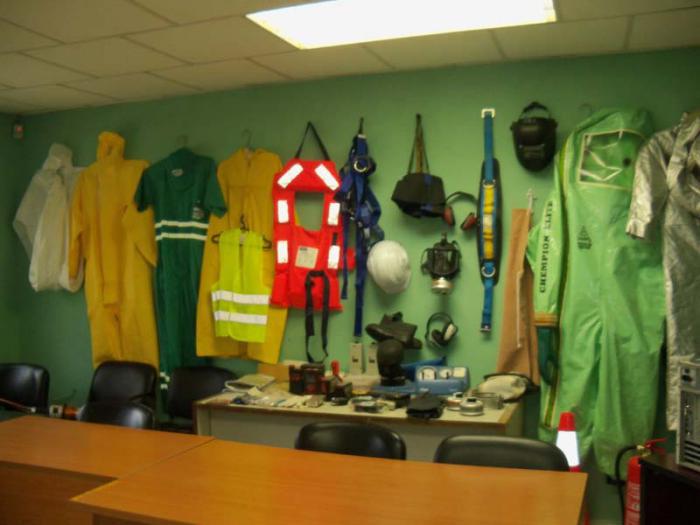
It might seem impossible for accidents not to occur in a place where danger is ever present. The explanation, however, is simple: everyone knows what they must do and they do it. Workers know how to take care of themselves and are also provided with the necessary protective equipment.
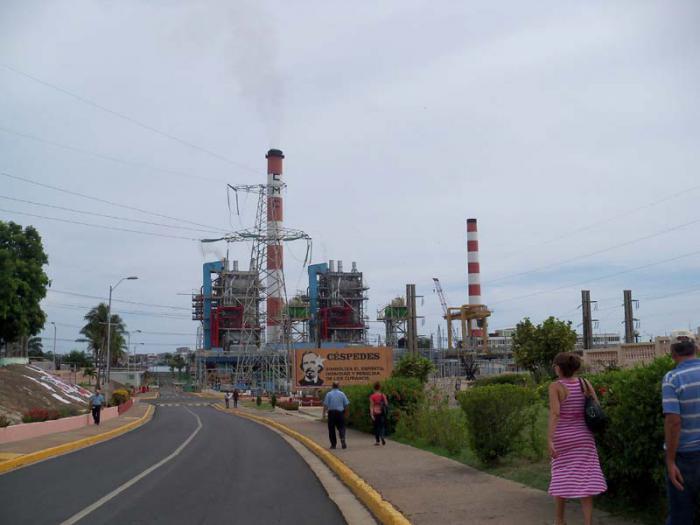
The Carlos Manuel de Céspedes thermoelectric plant in Cienfuegos is one of these high-risk workplaces, where employees work around high voltage, temperature and pressure machines, in elevated areas, confined spaces, with heavy weights, and underwater.
During a visit by Granma reporters, Yeranis Zurita García, the plant’s technical director, explained that the electrical industry has a strong health and safety policy.
“We have established a system which ranges from risk identification to the elimination of potential hazards, and all this is achievable if managers are committed to ensuring health and safety in the workplace,” he commented.
“We always tell employees that we hope they come here to work and that they are efficient, and return home safe and sound. This is why it is important that everyone is focused on the work.”
The director explained that the facility has protocols known as safety permits for high-risk activities consisting of occupational training, how to use the appropriate safety gear, which is provided to all workers, and includes protective boots, helmets, earplugs and gas protection-wear. “They (workers) are provided with everything and we demand that safety equipment is used and used appropriately,” stated the director.
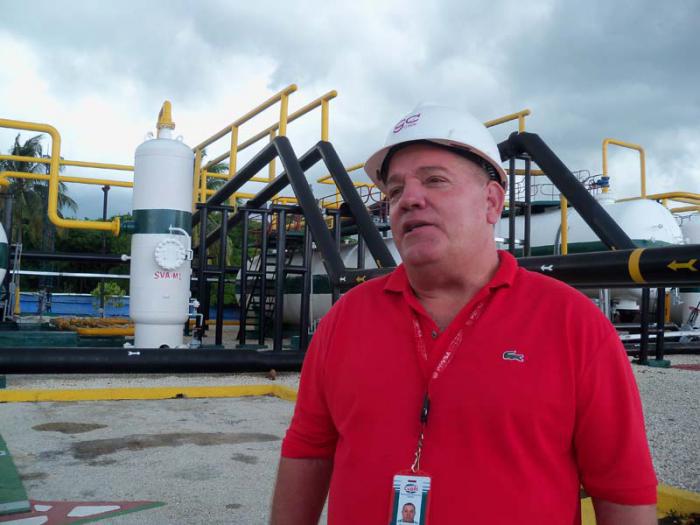
He added that the entity’s wage system is linked to compliance with these measures. “During a routine work day, inspection of good and bad practices, and workers who violate safety norms, are identified before the entire team, they also receive a 30% deduction to their pay,” stressed Zurita García.
Checks are carried out daily and health and safety inspectors, who also supervise environmental standards and fire control systems, ensure that work is carried out according to procedures and in line with safety permits.
During our visit last September, the facility - which is also certified by the Health and Safety at Work Management System, and has received the National Vanguard certificate for 35 years - had reached 2,345 days without an accident.
Another high risk facility is the Center for Oil Drilling and Extraction based in Varadero, where the risk of fire, explosions, gas leaks (hydrogen sulfide gas), falls, and electrical hazards, among others, are ever present.
Engineer Eduardo Rafael Rodríguez López is head of the entity’s industrial safety group and is responsible for everything related to workplace safety standards, industrial security, fires, medical services, and the rescue and recovery teams which deal with the most dangerous tasks, for example when a error occurs somewhere in the facility.
Around 1,500 workers have received adequate health and safety training, in an oil facility where everything is kept exceptionally clean, and neither the faintest scent of gas nor a single spot of oil is perceptible.
The Center operates under a closed, airtight system, where oil is pumped from wells through pipes to a central container, and then into drums where it undergoes a treatment process, after which it is transported by a central pipeline to the supertanker, explains Rodríguez López.
The entity has received eight workplace safety distinctions which have been revalidated twice, a national certificate for extraction facilities and also has a fire safety system endorsed by the Fire Department.
“Here staff members aren’t permitted to work without their protective gear and undergo various checks. Depending on where they work, employees are given boots, overalls, helmets, gloves, protective coats, goggles and maskswith an appropriate gas filter, hydrogen sulfide gas detectors, and breathing equipment is available in every zone incase of a gas leak…” commented Rodríguez López.
“Our wells have high concentrations of hydrogen sulfide gas which is quite toxic and represents the greatest risk to our health” he added.
The facility’s 2015 health and safety budget (for fire prevention and individual employee wellbeing) was a total of 443,099 pesos. The budget is planned in accordance with necessary safety measures for all workers protecting them from the implicated risks of their given jobs, and usage norms established through studies, for the replacement and delivery of safety equiptment.
The facility also has an onsite doctor and first aid kits, as well as medical check-ups by trained specialists. Workers undergo risk prevention refresher training every six months, except for electricians and welders who undergo the process every three months.
Eduardo Rodríguez Ramírez is a technician with 30 years experience at the plant, working in collector space No.10. “We haven’t had any technological accidents in extraction areas and we have received lots of training in order to adequately perform our jobs, we are constantly being inspected and trained, we also have safety gear at hand. Every month the maintenance team checks the alarms, and ensures that the sensors are working correctly.”
“We undergo level one checks on a daily basis. The expert, who is also the rotation chief, takes a tour of the facility with operators; level two checks are done every 15 days or four weeks, while level three inspections are carried out by managers. Checks are thorough,” he added.
At the Cubapetróleo Union (Cupet), affiliated with the Ministry of Energy and Mines, accidents and injury rates are reduced through training of workplace health and safety specialists, as well as staff and managers.
Today Cupet is no exception to the global reality, which sees 80% of workplace accidents caused by human actions.
The organization identifies, reports, investigates and analyzes the causes of incidents which lead to accidents. Updating technology, investment and machine and workplace maintenance contribute toward ensuring a safer working environment.
Workers here are provided with necessary protective gear, bearing in mind, however, that it represents the last barrier between the person and hazards. The entity first addresses technical and organizational safety measure before it arrives at protective gear for workers, whose wellbeing is their number one priority.
DOMESTIC AND INTERNATIONAL REALITIES
During the 2015 edition of the Workplace Health and Safety Day, Odalys Torrens Álvarez, head of the relevant department of the Ministry of Labor and Social Security (MTSS), reported that ever year more than 313 million people suffer injuries or non-fatal illnesses in the workplace, equal to 860,000 victims a day, according to the International Labor Organization (ILO). A reported 6,400 work-related fatalities occur daily, a figure which exceeds 2.3 million annually. “These figures show that work-related injuries and illness are one of the main burdens to health systems. According to the ILO, every year 4% of global GDP goes to covering costs associated with lost production time, medical treatment, rehabilitation and compensation claims,” he added.
According to the expert, a culture of workplace health and safety develops in environments where vigilance is fundamental, as well as those where commitment to safety, looking out for colleagues, cooperation, and commitment to the organization constitute the key driving factors to achieving the lowest accident and fatality rates.
“This strategy has seen good results in several high-risk national work centers and entities, where efforts to share and promote good practices among workers and managers, and generate greater awareness of dangers and how to avoid them, have been carried out” added Torrens Álvarez.
He likewise stressed that much more remains to be done in order to minimize risks and eliminate work-related accidents, illnesses and other injuries.
The expert added that, as outlined in the Ministry of Public Health’s (Minsap) most recent National Occupational Safety Plan, “The effect of multiple factors on workers’ health create an epidemiological profile characterized by a combination of common illnesses contracted in the workplace (laryngitis, deafness, pesticide and heavy metal poisoning, skin and respiratory diseases) and treatment for other potential work-related health problems (asthma, cardiovascular, muscular and bone diseases)” among others. Treatment of these illnesses is a key part of prevention efforts.
Torrens Álvarez noted that during the first half of last year, 2,061 workers suffered injuries due to accidents in the workplace, a 7% increase as compared to the same period in 2014.
“Until then we had seen a downward trend in fatal accidents (three less deaths than the same period in 2014). However, by the end of October, the nationwide figure had reached a total of 56, with 57 fatalities, 19 on public roads, representing a third of all work-related accidents and fatalities, and five more road incidents as compared to the same period in 2014, with a larger number of female victims,” noted the head of the MTSS’ Workplace Health and Safety department.
He noted that individual conduct the biggest cause of road related accidents (895) while; organizational deficiencies are the main cause of all other work-related fatalities (61%).
“The main causes of accidents are generally linked to organizational or managerial shortcomings, demonstrating a lack of control when accidents resulting from technical or staff conduct occur,” he emphasized.
Among the main causes of road fatalities are violation of the Highway Code, failure by managers to prevent dangerous conduct, and the use of non-safety certified equipment, leading to dangerous practices by victims.
In addition to road accidents, being hit by objects or equipment, falls and electrocutions continue to be the main causes of work-related fatalities. Given their degree of danger, focus has been directed toward preventing such risks, as well as fire, biological, radiation hazards.
According to figures from the report, presented last November, the highest number of work-related fatalities were registered in provinces of Havana and Santiago de Cuba, with the majority of victims affiliated with local braches of state entities, including the ministries of Food Industry, Agriculture and Construction, each registering seven fatalities.
“There has been an increase in fatalities in the Food and Agriculture industries, which means that health and safety actions and controls must be prioritized in these sectors,” commented Torrens Álvarez.
According to the expert, the ministry has consistently stressed the need to improve practices related to registering and investigating accidents, as well as the quality of subsequent inquiries.
PROTECTIVE MEASURES AND MORE…For Ana Julia Cleger Anaya, Workplace Health and Safety representative of the department of labor and social affairs, of the Cuban Workers' Federation (CTC), when an employee starts a new job, it is the responsibility of managers to ensure that he or she receives basic health and safety training, something which must also be stipulated in workers’ contracts, as well as a previous health check.
Meanwhile, she added that union health and safety inspections are being strengthened in order to identify and manage risks, noting that directors and unions must take a more stringent approach to health and safety in the work place.
“The circumstances which lead to accidents are related to allowing unsafe work practices, the use of non-safety certified equipment, as well as incorrect conduct by the victim,” commented Cleger Anaya, adding that accidents are also caused when workers fail to use protective equipment and clothing, despite the fact such items are readily available to all staff.
The CTC representative added that although the Ministry of Economy and Planning had granted all budget requests for health and safety supplies submitted by the country’s’ 37 main bodies, by the first half of 2015 only 56.6% had been spent.
She noted that by June 2015, the ministries of Communications (10.3 %), Sports and Recreation (16 %), Culture (18 %), and Tourism (23 %), along with Tabacuba (19 %), and the National Institute of Water Resources (27 %), were among the organizations which had spent the least on such measures, while a total of 47.6% had been spent on work clothes and shoes alone.
”This situation demonstrates a lack of rigor on the part of unions, which also results in failures to comply with that which is established in article 137 of the Labor Code. Every year we must work to reduce these indicators (workplace accidents) which to a certain extent affect the national economy,” noted the union representative.
Likewise, Odalys Torrens Álvarez explained that the importance of having quality and effective risk prevention programs has been stressed to Central State Administration bodies and enterprise groups, given that these measures and their implementation are sometimes left out of plans and resource allocation, contributing to accidents.
“We must identify shortfalls in financial planning and management to fund measures outlined in risk prevention programs,” stated Torrens Álvarez.
The expert added that those responsible for creating such programs must be familiar with new labor legislation, Labor Code Law 116 and its complementary norms and regulations implemented by ruling bodies such as the ministries of Public Health, Construction, Industry, Energy and Mines, Transport and Agriculture.
“We have been working with these organizations on the process of implementing these legal norms, as well as reviewing and updating the Cuban Regulations System. However, we still have a long way to go to ensure that the complementary norms are fully implemented and that which is established in these documents in systematically applied,” he commented.
It is also worth mentioning that although personal protection is prioritized, in some cases, necessary equipment related to specific activities is not included in plans, meaning greater resources must be spent to rectify the situation.
Odalys Torrens added that MTSS is responsible for approving protective gear to be used nationwide, before it is made available for purchase. The organizations are asked to report problems linked with quantities, sizes and quality, which often means they don’t receive the necessary equipment.
“Training programs have been developed in order to inform workers of the purpose of every piece of gear, so that they know what to request from importers, which then provide the appropriate MTSS approved equipment, which all have their own individual expiration date,” she added.
The MTSS expert also noted that, during the first half of 2015, the Personal Protection Equipment Approval Center reviewed and approved a total of 499 pieces of personal protection gear, and consulted users in order to improve the quality of products and ensure that they meet the Center’s established approval requirements.
“Given this goal, national producers were offered a seminar on how to use equipment, while we are currently planning a workshop with the Ministry of Culture which will see the participation of producers represented by the Cuban Cultural Goods Fund,” noted the MTSS official.
Workplace accidents should be viewed from a multiple-cause perspective. Evaluations of all potential risks, not limited to accidents, but also including illnesses, must be carried out, as well as thorough investigations into accidents, because there are always warning signs that sometimes appear as if by chance.
In the majority of cases, risks in visibly dangerous workplaces are identified; however there are other spaces – such as in the comfort of an office - where health risks are also present.
“Obligatory recording and investigation of workplace accidents and ensuring that risk assessments and regulations for highly dangerous activities are up-to-date; all feature in the Labor Code. It’s all established under the law, and just comes down to fulfillment, to doing what is necessary,” commented Torrens Álvarez.
“We demand and ensure that organizations and entities include risk prevention initiatives in their investment and maintenance plans.
“We try to ensure that every entity includes a budget for health and safety measures, while their failure to do so is part of the problem, adding "Despite the fact that protective equipment is often vital, it can’t be seen as the first step, problems associated with construction, technology and work conditions must be solved first…Not all risks can be tackled with personal protective gear,”
Can you imagine the impact of these accidents on the economy, not only in regards to social security payouts for employees and days of lost work, but also the impact on victims, and families who suffer the loss of a loved one. It will always be a question of managing risks to avoid harm.


