

Gaining independence despite missing home, learning to cook, visiting the beautiful Varadero beach, and finding love have been the most significant experiences in the lives of Farwarz Amadou, Yanan Lin, Ya Jun Xu and Leandro, young second year Spanish as a Foreign Language students at the University of Havana (UH).
On this road toward adulthood must be added Megan Ferguson’s dream of becoming a translator, that of Yeshuang Wang to travel around Latin America, and Bo Zhu’s desire to work for a company, or as young Chinese student Qu Tia Shuai points out, the luck of finding so many students from different places in the same group. All are charting their own future from within UH classrooms.
Some of the students, such as Rong Xia and Hu Chenglong, studied Medical Sciences in Cuba or in their native countries, and decided to continue their studies on the island, taking a Masters in Spanish as a Foreign Language.
Others were motivated come to Cuba for a variety of reasons including, on the advice of family and friends, the prestige of the island’s institutions, the friendly people and relative safety of the country.
Today, all are very happy to be studying on the island, hold the work of their professors in high regard, and not a single one regrets their decision.
QUALITY SERVICES
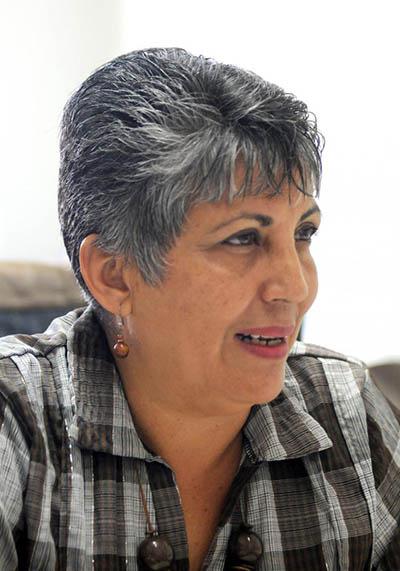
In order to learn about the opportunities UH offers foreign students, we spoke with Isabel Milán Licea MSc, head of the institution’s International Academic Services department, and responsible for organizing, coordinating and promoting UH courses to foreign students.
“We receive professionals, experts, and students from all around the world, with academic and professional exchanges guaranteed through flexible, high quality, competitively priced programs.
“Professionalism, quality … are some of the principles we defend as a university of excellence, strongly committed to Cuba’s social project.”
The UH’s International Academic Services department was established in 2010. According to Milán Licea, since then the department has undertaken a great deal of work.
“Marketing and promotion of our services has increased. Above all we have carried out an intense campaign to promote degree programs as one of the many popular academic services we provide,” stated the specialist.
WAYS TO STUDY
Shortly before speaking with students, Milán Licea explained ways to apply for one of UH’s under or post graduate degree courses.
“There are two ways foreign students can study at the UH; self-financed, which is someone who comes and pays for their studies themselves, and government sponsored.”
Among governments which fund young people to study in Cuba is Angola, which has also signed agreements with the Ministry of Education, while 115 students from that country are currently enrolled in courses on the island, the majority in Law, Tourism, Psychology and Economy.
A large number of self-financed students are Chinese. A successful educational exchange program with the Chinese was developed under the former Cuba-China Governmental Agreement. At that time over 2,000 students came to study on the island. The exchange not only contributed to the development of the UH program, but also raising the institution’s status in the Asian nation, which is why many Chinese students come here to study Spanish.
Over 30 Chinese students across different years are currently studying Spanish as a Foreign Language, one of the many academic degree courses offered by the UH.
Although with more moderate numbers, the UH also has self-financed students from countries such as Antigua and Barbuda, the Bahamas, Benin, Chile, Colombia, Ecuador, Equatorial Guinea, Japan, Korea, Laos, Mongolia, Mozambique, Russia, El Salvador, Syria and Viet Nam.
The most popular option is self-financed and those interested in enrolling on a course should contact the University of Havana, which will send interested parties all relevant information. The applicant will begin their studies at the institution once they receive their acceptance letter. Non-Spanish speakers are obliged to take a one year mandatory language course before joining Cuban students in their respective fields.
NO EASY TASK
Although studying abroad, being away from family, friends, familiar customs and language may seem daunting to students; it is also a challenging task for professors responsible for teaching the young students.
“The teaching methodology we use is geared toward working with foreign students, above all in the Spanish as a Foreign Language Faculty,” states Isabel Milán. “But students face a variety of problems, most of all during the fist year, when they join their Cuban classmates.
“The professor might have one or two foreign students, but they structure their classes around Cuban students. Foreign students have to make double the effort. This is a problem only they can overcome.”
These students also face the high demands of the Faculty of Exact Sciences, but everything is achievable, with disciplined and regular study.
THE ROOTS OF A TRADITION
The International Academic Services department is scheduled to bring back summer courses, which were suspended due to infrastructure problems, although Spanish courses continue to run in June and July.
The tradition of offering academic activities dates back to 1941, when the University organized its first summer courses, which saw the participation of 400 foreign students, the majority from the United States.
At that time the most popular courses were Spanish and the lectures given by the eminent Cuban anthropologist, Fernando Ortiz.
The University of Havana has been consolidating its work over the last 75 years in order to place all of its experience at the disposal of Cuban and international students across all its departments.


