

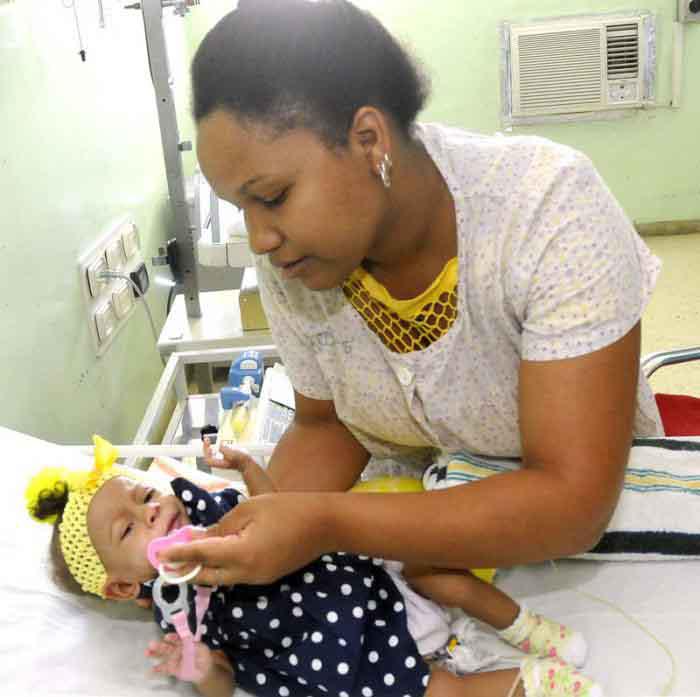
“Everything is ok now,” a relieved mother states, noting the calm after a turbulent month. At just seven months old, Renesmee de la Caridad Sánchez has more than just luck to thank for her recovery. She is one of the thousands of patients who have benefited from a program which, above all else, is motivated by love.
Her mother explains that Renesmee was born with a congenital heart defect known as ventricular septal defect, resulting in malnutrition. A month ago she underwent successful surgery and, despite some postoperative complications, has made a full recovery.
Renesmee is from San Juan y Martínez, a municipality in the province of Pinar del Río. She is currently staying in a newborn and infant ward. The area has ten beds and functions similarly to an intermediate therapy ward where, according to her mother, she has not lacked any care.
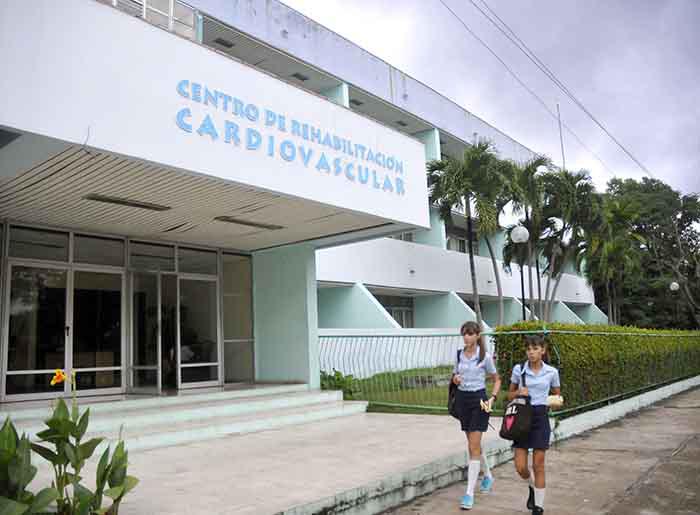
However, it has required more than a small ward in the William Soler Pediatric Hospital to attend to the congenital heart defect cases of hundreds of Cuban children. Previously, certain procedures were undertaken at the Institute of Cardiology and Cardiovascular Surgery, while closed heart surgery, extracorporeal circulation and diagnostic cardiac catheterization procedures were conducted at the William Soler Hospital itself. Fidel understood the deficient situation early on, and in 1983 construction works began on an adjacent building to the hospital, specializing in this field.
The resulting building, in a short time, would become a national reference in Pediatric Cardiology and Cardiovascular Surgery.
“On the one hand the construction works advanced, while on the other we acquired the equipment, at the same time training began for all the doctors and personnel who would work at the new facility. The training took place at the Cardiology Institute to begin with, not only for cardiologists, but for other specialists such as surgeons and intensive care professionals. Later we were sent to various countries, such as Czechoslovakia, England and Canada…” recalls Dr. Herminia Palenzuela López, a founder of the William Soler Pediatric Cardio Center, which opened its doors on August 26, 1986.
By 2004, the center had been declared an independent institution of the Cuban public health system.
Fidel visited the hospital over forty times. It was, and is, one of his most cherished works, and on more than one occasion he has spoken of what such an advanced institution represents, not only for children, but for their families. Above all, it represents hope, defended at all costs, for the health and wellbeing for their little ones.
Dr. Herminia Palenzuela, coordinator of the National Pediatric Cardiology Network and responsible for the hospital’s quality program, told Granma International that by 1982, the country had succeeded in reducing the number of child deaths due to infectious diseases and diarrhea, for example. However, the infant mortality rate was still 14 per 1,000 live births, of which three children died due to congenital heart diseases. The situation required action.
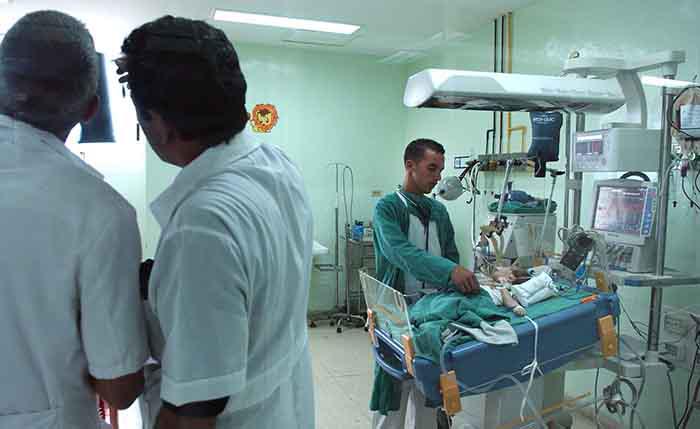
The consultant professor explained that a prenatal diagnosis program was also required as “the only way of preparing to receive these little ones and guarantee timely care, was to ensure that their condition did not come as a surprise on birth.”
Every day, the William Soler Pediatric Cardio Center provides medical, interventionist and surgical care through inpatient and outpatient services, as well as research, diagnostic services and comprehensive rehabilitation of children with cardiovascular conditions and adults with congenital heart diseases.
Dr. Eugenio Selman-Housein Sosa, director of the institution, noted “the significance of having a center such as this at the social level; of the guarantee to Cuban families that should they have a child with a heart problem, there is a place where they can be cared for, a National Pediatric Cardiology Network governed from here, which provides support anywhere in the country they may live. The child with be monitored and offered the possibility of overcoming or improving their health condition, rehabilitation, and care given any complications, even as an adult.”
He noted that this is the result of an articulated program which operates on the basis of a focused health policy with government support; and constitutes an achievement of the socialist health system.
Dr. Herminia Palenzuela recalled the developments of the past three decades, providing several examples:
Interventional catheterizations currently represent 61% of those undertaken in the institution, and constitute a technique that has supplanted the need for surgical treatment of various conditions. Pregnant women who were unaware of having a heart disease, and whose condition poses threats to their own and their baby’s lives, have also successfully benefited from these, she noted.
The Cardio Center is also an institution offering a third opinion in prenatal diagnosis, a program that has been consolidated throughout the country. Today there is also a protocol for those children who will be born with serious heart defects, and for those who it is not convenient to transfer long distances, given the imminent risk of death from birth. “In these cases the mothers are transferred to a maternity hospital close to the Cardio Center, and once they give birth, in less than three hours, we have them here,” she explained.
Care for patients with arrhythmias is another area which has been consolidated. While hopes remain for a department dedicated exclusively to this specialty, to perform ablation procedures and electrophysiological studies, which are currently undertaken in conjunction with the Institute of Cardiology, Cardio Center professionals have been trained in pacemaker implantation, a surgical technique performed in the institution itself.
The interviewee also noted that the institution has carried out some 100 hemodynamic procedures for the implantation of stem cells through cardiac catheterization, and has a research protocol in this field.
Across the country, there is no other pediatric facility that treats pulmonary hypertension in patients, either at the primary care level or following surgery. This service has been strengthened in the Cardio Center.
The institution has also implemented guidelines for patient nutritional recovery treatments. “Sometimes patients weighting less than 2,000 grams with heart diseases are admitted to the hospital. Some 15 years ago that was unthinkable,” the Center's director noted.
Today the island’s infant mortality rate has been reduced to 4.4, while the mortality rate due to congenital heart disease is just 0.31 per 1,000 live births.
“Providing long-term monitoring of patients, not just rehabilitating them after surgery, is one of the fundamental premises of the institution,” Jesús Francisco Carballés García DSc., head of the National Cardiac Rehabilitation Program and the Cardio Center’s teaching department, noted.
He explained that as part of patient care, the team seeks not only to treat the condition, but to improve quality of life and prognosis.
The consultant and associate professor noted that performing heart surgery on a child, given the small size of the organ, can result in sequelae which, at an appropriate time, must be eliminated.
He highlighted that the Child Cardiac Rehabilitation Center, attached to the Pediatric Cardio Center, has played a crucial role in this regard. Currently 6,500 patients of the over 9,000 that have undergone closed or open heart surgery since its beginnings, are monitored at this Center.
“Many of them have seen increased surgical reinterventions or interventional catheterization and in the long term have needed a pacemaker,” he explains.
Professor Carballés García, who is also a researcher and founding member of the Cardio Center, noted the advantages offered by the institution, as specialists can plan and predict when a patient will require a further procedure in accordance with their evolution, thus always remaining one step ahead. This helps improve quality of life and reduces admittances due to bradycardia or decompensated heart failure.
“In the last study we conducted, we found that the quality of life of patients we care for is about 90%. Just 1.95% of patients who have undergone heart surgery do not work or study, the rest do. For example, we do not have patients on the program missing entire school years,” he noted.
The specialist explained that the Child Cardiac Rehabilitation Center is also responsible for monitoring adults who suffer from a congenital heart disease and were not operated on as children. It also acts as the governing body of the national Congenital Heart Disease and Work, and Congenital Heart Disease and Pregnancy programs.
Carballés García explained that over 300 women with congenital heart disease have given birth, naturally. This exemplifies the social value of the work undertaken here to ensure patients can lead a normal life.
Since 2006, the William Soler Pediatric Cardio Center has held the status of “Science and Technology Unit”, a category that has been awarded twice.
The Center’s contributions to public health in the country are not limited to providing health care services, but extend to serving as a classroom for several generations of pediatric cardiologists, given its high-level team.
“It is an undergraduate teaching unit for fourth and sixth year medical students; and postgraduate for all the country’s cardiology residents and those of other specialties such as pediatrics, neonatology, physical medicine and rehabilitation, intensive care, anesthesiology, among others,” Carballo García noted.
As part of the work of the National Pediatric Cardiology Network, a total of 14 postgraduate courses are offered here, including to international students.
More than 120 professionals have graduated from the pediatric cardiology diploma course and almost 200 from the prenatal diagnosis of heart disease course, a collaborative program between the Cardio Center and National Network of Medical Genetics.
Ten of the institution’s specialists provide international collaboration.
Dr. Selman-Housein noted that there are many challenges ahead, firstly continuing to develop new technologies and training the necessary personnel. “The approach to complex heart diseases in younger children, with low birth weights, and the monitoring and prevention of long-term complications to improve the quality of life of heart patients,” are permanent challenges, he explained.
The doctor highlighted the link with the rest of the units that make up the cardiovascular care program of the national health system, both in the capital and the rest of the country.
He spoke of the efforts underway to renew the hospital infrastructure, with the repair of engineering, air-conditioning and telephone systems. “We have also received nearly 3 million convertible pesos worth of equipment from late 2015 to date. New angioscopy equipment is currently being installed,” he said.
More than 25,000 patients are treated in the outpatient department of the William Soler Pediatric Cardio Center each year.
The Center has some 100 beds, three operating rooms and 360 employees. The latter are the key to its success, given “the integration of the team that struggles every day to make the system’s work efficient and sustainable.”
“Pediatric cardiology is a very expensive activity, in an underdeveloped country where services are extensive, comprehensive and free,” Dr. Selman-Housein highlighted.
He continued by adding that “we are still under the effects of the U.S. blockade. An immoral policy is maintained with regards to such a sensitive health issue, which has not been relaxed at all. In practice, you can not even buy an aspirin.
“This is a center that demonstrates the will of the Cuban state to maintain health services for the population despite all the economic difficulties and the policy of piracy of human resources in health which also continues, and has severely affected us. Despite that, thanks to the unlimited collective efforts of the institution, we have managed to maintain and improve health indicators and there is the prospect to continue to develop,” he stressed.
Even during the toughest years of the special period, the William Soler Pediatric Cardio Center did not halt its activities. This was not even conceived of, as what has always been clear in this social project is that the life of every Cuban child comes first.
Popular belief claims that when a young person has a heart attack, they are less likely to recover. This is nothing more than a myth, as this Center, which has just turned 30, and is nothing if full of heart, continues to demonstrate.


