

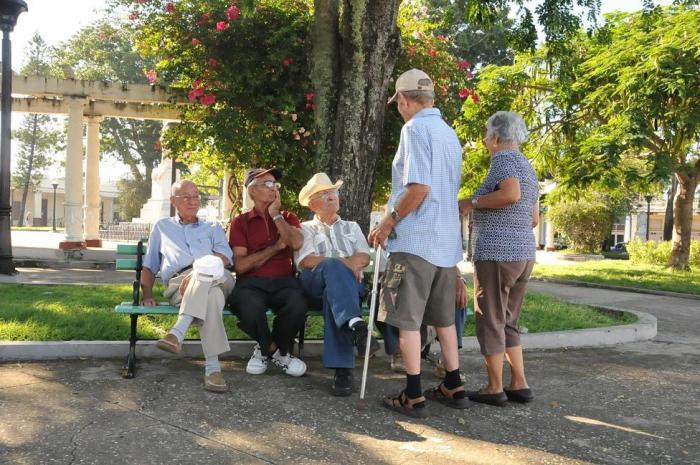
Making our cities a user-friendly environment for older adults requires, in addition to good intentions, modifications to communal spaces and policies designed to that effect.
The concern that this issue has raised among the country’s leadership is reflected in Economic and Social Policy Guideline 144, approved in 2011 during the 6th Congress of the Communist Party of Cuba, which urges “particular attention to studying and implementing strategies across all sectors of society to address high levels of population ageing.”
Since 2000, the National Methodology to Develop Urban Planning Strategies has included the aim of gradually eliminating all architectural barriers and not creating new ones. This measure is supported by technical, legal and administrative provisions to control both state and private construction initiatives.
“These regulations are closely linked to what for many years in our country, has been known as Building Ordinances, which have played a very important role as they were used to plan our cities. Today, these ordinances have become our urban regulations,” states Dr. Iris Menéndez-Cuesta González, deputy director of Urban Planning at the Institute of Physical Planning (IPF).
Although these norms and regulations are designed to remove obstacles in the urban environment and public buildings, sometimes modifications to homes impede the population's mobility.
The most common examples are house and garage doors which open outward in areas where dwellings face directly out on to the sidewalk. But these are not the only ones.
Dr. Menéndez–Cuesta González clarifies that architectural barriers also exist inside homes and buildings. “These are ones we define within the private sphere. There are also others outside of this space which affect the entire population, those in the public sphere,” she highlights; going on to note, “There are lots of architectural barriers in our cities, from electricity and phone pylons to street lighting, none of which can be on the sidewalks because they take up space. Sidewalks and all pedestrian and vehicular conduits must be free of all possible obstructions.
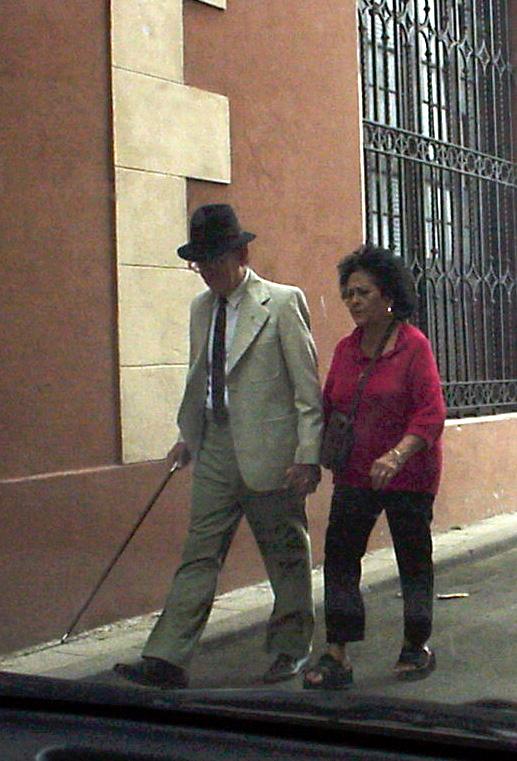
“Sometimes in an attempt to remove a barrier another is created. For example: There are lots of badly built ramps which have also caused another problem because although they aid wheelchair access they also create an obstacle for the visually impaired.”
Concerning population ageing, structures in public spaces that weren’t initially considered to be architectural barriers could now be a problem for older adults.
Regarding this matter Dr. Menéndez notes, “This is why a few years ago we began to incorporate the issue of removing barriers into both planning, and urbanization and architectural projects.
“This is why the Physical Environment Regulations stipulate that all building projects serving a public function must have ramp access. These include ramp specifications related to gradient and user safety which must be complied with, as well as types of flooring to ensure that users don’t slip.”
Figures from the Population and Development Research Center reveal an increase of over 400,000 older adults in the Cuban population between the first and second decade of the 21st century.
The same source notes that the majority of people 60 years of age and older live in big cities; which is why population ageing in urban zones is greater than that seen in rural areas.
This has led to greater emphasis being placed on implementing strategies geared toward removing all physical elements which could impede proper movement in any space, be it public or private, in densely populated areas; a process which is already showing positive results.
According to Dr. Menéndez –Cuesta, the greatest progress has been seen in cases of buildings which serve a public function, including hospitals, cultural and recreation centers where barriers have been progressively removed.
Tourist structures also comply with these regulations. “Barriers have been removed across the entire accommodation system and new constructions, as required by the project. However, much remains to be done, above all in urban areas,” states the IPF specialist.
According to the Population Ageing Study conducted on the basis of the 2012 Population and Housing Census, Cuba is one of the few countries in the region with a high rate of population ageing.
This phenomenon on the island has particular characteristics: on the one hand, from a statistical point of view, Cuba’s rate of population ageing is comparable with that of the most developed countries in the world, while on the other, such a trend has been achieved in less than 50 years; relatively fast if we considered that it took Europe two centuries to do the same.
This new reality represents a genuine challenge when developing urban planning strategies, with half a million older adults living in the country’s most important cities, which were designed without incorporating the needs of a population as old as the one that currently resides in them.
The government’s willingness to facilitate mobility, and urban access in public spaces and green areas is evident within urban planning regulations and initiatives which extend beyond cities. Little by little spaces are being transformed to accommodate children at play, fast-moving youth, and the slower pace of older adults.


