

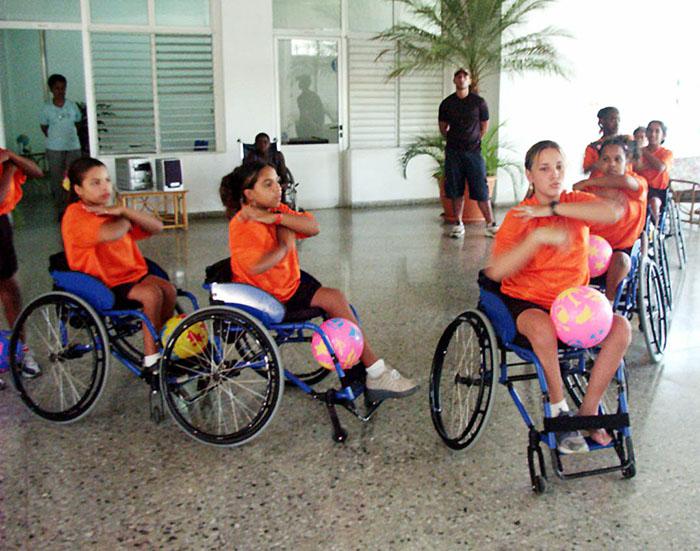
One hundred and forty-five gold medals, 133 silver, and 62 bronze won by 251 athletes with special needs, in over 19 international events are achievements that must be recognized.
While more competitions are already lined up for 2017: The indoor hockey World Cup in March in Austria, and the third edition of the Special Latin American Olympics set to take place in Panama in April.
Cuba will be represented at these events by children, youth and adolescents with learning disabilities, affiliated with island’s Special Olympics movement.
The aforementioned accomplishments and events constitute a good reason to review the 55 years of work undertaken by the island’s Special Education sector, as well as one of its most fundamental elements: professional training.
“We have a 100% employment guarantee plan with the Ministry of Labor and Social Security for children with learning disabilities who are able to develop all their skills,” states Dr. Marlén Triana Mederos, national director of Special Education.
“Approximately 2,030 to 2,050 students enroll in special schools every year. They are adolescents who have been receiving special training since they were very young.”
Although the majority of those enrolled in special education institutions in Cuba are students with learning disabilities, others with special educational needs are also served across the country’s network of schools, of which between 90 and 110 with visual, hearing or motor-physical impairments continue on to university.
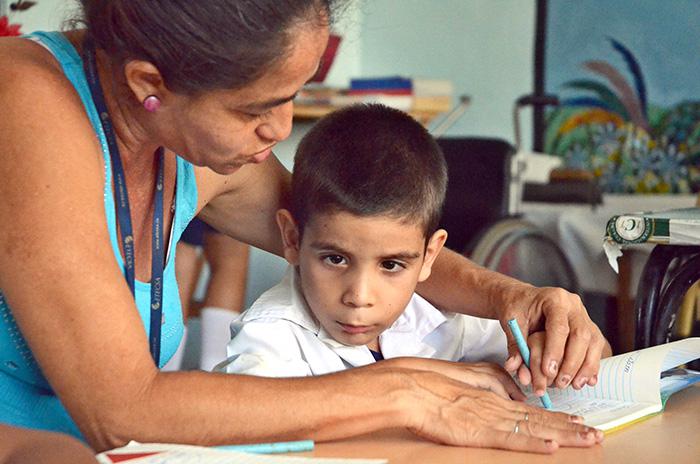
“While in other countries students are expected to complete primary level, in Cuba they are in high school, and are preparing to start university. This is something we see every year in our country,” states the Ministry of Education representative.
But how has it been possible to achieve such results in only 50 years?
A JOINT EFFORT
Since its founding on January 4, 1962, Special Education’s key principle has been to guarantee the right of all to receive quality education under any circumstance, a foundation on which institutions have been working to ensure that individuals with special education needs, either linked to a disability or not, achieve their maximum comprehensive development.
In order to cater for all those in need of its services, the sector has over 15,000 teachers. The general teacher-student ratio is approximately one to four; however, every pupil in schools for blind-deaf children have their own personal teacher.
Meanwhile, specialized out-patient educational services, designed for pediatric patients with prolonged hospital stays, provide one teacher for a maximum of three children, according to a ministerial edict.
Another characteristic of Special Education in Cuba is that it aims to see students eventually inserted into the regular school system, according to Dr. Triana Mederos.
“We currently have over 9,800 children with special educational needs both related to a disability, and not, who are part of the regular system from early childhood through higher education.”
The achievements of the country’s 356 special education institutions would be far fewer if it weren’t for the support provided to the over 37,000 children, adolescents, and young people enrolled in these institutions, by the ministries of Education, Higher Education, Labor and Social Security, Public Heath, and the National Institute of Sports, Physical Education and Recreation, as well as those associated with people with disabilities.
MINIMIZING DIFFERENCES
The efforts of the Cuban state to provide differentiated treatment from an early age to disabled people are key to ensuring their maximum comprehensive development, regardless of their limitations.
The sector receives numerous resources and investment, including modern equipment and school supplies, to training courses for teachers, assistants and classroom aides.
Nonetheless, Dr. Malén Triana acknowledges that much still remains to be done: “We must continue working on developing awareness, above all regarding psychological barriers; as well as methods to support the professional training of children with disabilities enrolled in the regular system, in order to provide them with the necessary skills to insert themselves into the complex world of work, because, despite being guaranteed employment, they must be competitive.”


