


At a time when efforts to improve Cuba's national education system are regularly discussed in the media, a look at the country's Central Institute of Pedagogical Sciences (ICCP), is in order. Researchers here are making an important contribution to perfecting Cuban schools, and moreover, the institution is celebrating its 40th anniversary.
Since its founding, November 30, 1976, some 4,681 educators from 13 countries in Latin America and the Caribbean have graduated from the higher learning institution, the majority having earned a Masters degree, while the number of PhD students to have completed their studies has reached 632.
There are more figures demonstrating the prestige the center has acquired, such as the more than 58,000 teachers who have taken courses or completed shorter non-degree programs to support professional development.
Investigators at the center have implemented programs internationally, in underdeveloped areas, designed to improve the quality of education, with families and the community playing a leading role.
One of the principal means through which the ICCP disseminates its work is through scientific conferences, workshops, and seminars, that serve as an opportunity for Cuban educators and those from other countries to share their findings and experiences.
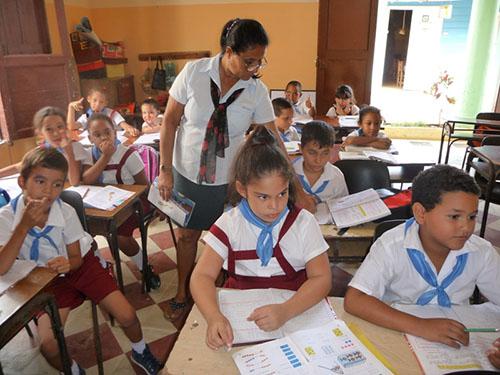
Over these last four decades, the ICCP has focused its research on the needs and aspirations of the Ministry of Education, and has always kept the role of the classroom teacher in mind.
"The institute has the challenge of preparing educators not to keep quiet, but rather to use the resources they have to seek information, with the necessary knowledge, and continue being an investigator of the ways the teaching-learning process can be conducted, in accordance with the social changes and demands of the day," said
Dr. Silvia Navarro Quintero, general director of the center.
Currently represented at the institution are all levels of education, from early childhood and special education to secondary and adult education, obliging researchers to remain constantly in contact with teachers, families, schools, and communities, she said.
"The principal value of the findings of the institute's research," Dr. Navarro continued, "lies in the investigator who works jointly with a teacher on the basis of explicit needs and requests made by the Ministry of Education.
"The ICCP has a great challenge: in the first place, developing the professionalism of researchers, and additionally continuing to contribute to schools truly meeting the needs of children, adolescents, of youth, and their families. A school that takes its place as expected, that answers questions, that is up-to-date in terms of technology and communication."
Along with the well-deserved celebration of the institute's anniversary, recognition of its personnel is due, given the strengths of investigators who conduct lines of research to provide scientifically founded solutions to problems identified by the Ministry.
The ICCP has a Scientific Council and a permanent academic jury, which was the first constituted in Cuba in the field of Pedagogical Sciences. Thanks to its contribution, PhD students have been trained and similar juries created in other provinces and institutions around the country.
When asked what the institute was most proud to celebrate on this anniversary, Dr. Navarro was emphatic:

"We are celebrating 40 years of science at the service of education and the Cuban Revolution. We are an institution which meets the needs of, and supports change in the teaching-learning system, and a place where we continue to work on providing the educational answers that our children, adolescents, youth, and society need. The best and only way, in my point of view, is the scientific route."


