

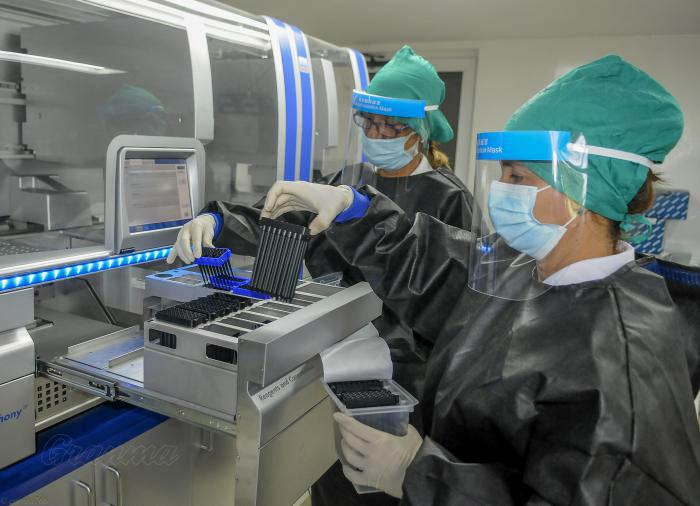
Studies published in scientific journals since the beginning of the new coronavirus pandemic suggest the existence of individual genetic factors that may be related to the development of severe symptoms in certain COVID-19 patients.
International reports have identified these to include: blood type A; genetic variations in the gene, which produces a protein known as angiotensin-converting enzyme (which is the receptor through which the virus penetrates a cell); genes related to the recognition of viral characteristics, which in turn activate a specific immune response; and others linked to the production of interferon I and III.
Also included in the list are genes related to the inflammatory response at the tissue level, which triggers the so-called cytokine storm, known to be the most common factor in aggravating a patient’s condition.
To learn about research conducted in Cuba on this important issue, Granma spoke with Dr. Beatriz Marcheco Teruel, a specialist in clinical genetics and director of the National Medical Genetics Center, an institution founded by Comandante en Jefe Fidel Castro, August 5, 2003.
-What is the focus of the investigation and when did it begin?
-This is a research project directed toward describing the factors mentioned in Cuban patients, who had the disease and have recovered. It involves clinical-epidemiological, laboratory, basically hematological, immunological and DNA studies.
Additionally, we are attempting to identify the blood type and factors of each individual, studying the subpopulations of lymphocytes that participated in the immune response, using flow cytometry and Elisa assays, as well as conducting genetic-molecular research to identify the genetic variants present in individuals and assess whether these characteristics may have influenced the clinical evolution of the disease in each patient.
We include a first-degree relative (mother, father, son or daughter, brother or sister), who lives with the individual who tested positive and was at risk for infection, but did not present symptoms and was identified as negative with a PCR test.
The first step in the study is to obtain consent from the individual. Next, advisors and specialists who are part of the national medical genetic services network, in all provinces and municipalities, proceed to conduct a clinical interview, to collect detailed information on habits and lifestyles; health, personal and family histories; and information on the patient’s experience with COVID-19, using all this to develop a family tree.
The data provided is complemented with information that appears in hospital clinical records, for which work sessions by multidisciplinary teams are held in all hospitals where patients have been treated around the country.
After the blood sample is taken, it is transported to laboratories at the National Medical Genetics Center to be tested, with the additional participation of the Immunoassay Center (where the immunoglobulin G test is conducted to determine if the person has specific antibodies against the SARS-COV-2 virus) and the Molecular Immunology Center.
The research, which is in the initial phase of development, began on June 2 and 3, in the province of Pinar del Río, with the clinical stage (when the interview is conducted, and the blood type, Rh factor and hemogram are studied), followed by the provinces of Cienfuegos and Las Tunas, and the municipality of La Lisa, in Havana.
During the next three weeks we will extend the study to the rest of the provinces and to the Isle of Youth special municipality.
-How will your findings benefit individuals and the population?
-First of all, it helps us to increase our knowledge about this disease, which is new and has a huge impact on individuals, families and the social order, and about which we still know very little. At the same time, our findings could help characterize all the factors related to its incidence, lethality and clinical and therapeutic approach.
Seen from the individual point of view, by identifying if someone is more vulnerable to developing serious symptoms or conditions of the disease, strategies can be devised to prevent that severity with earlier therapeutic interventions, for example.
The studies we are conducting also allow us to gain insight into how each person individually recovers from a disease that can seriously damage the immune system. Thus, the research project includes work that is part of our health system's strategy in the post-COVID-19 stage for all patients.
At the same time, having the opportunity to study individuals who did not get sick, even if they are close relatives and were exposed to the virus, can be very useful in identifying factors of a protective nature and that is also important in terms of prevention.
-What preliminary findings have been obtained?
-We've seen that there are patients with very vulnerable immune systems, not only as a result of the disease, but also because they have biological markers indicating that their immune response would not be adequate.
We will see each of these people again, individually, to recommend specific actions and precautions for their health, which they can begin immediately.
If we are able to characterize genetic factors that are specific to Cubans, or that are present in other populations, and replicated in our own in relation to the clinical patterns of the disease, we can then design, in turn, more effective actions for its management in our environment.
By identifying the genetic factors related to clinical severity, we will be taking a significant step forward in the objective of developing personalized treatment that respond to individual genetic characteristics, strengthening the implementation of population-based prevention strategies.
Mission of the National Medical Genetics Center:
This scientific institution has a staff of 175 workers, 108 of whom are directly involved in research, teaching and medical care, while women constitute 75% of the personnel. One of every 13 professionals working here is has a PhD, with one of every two having earned a MSc. Currently being trained by the Center, across the country, are 46 specialists in Clinical Genetics.
The Center leads the development of Clinical Genetics with a community approach, through the integration of highly specialized medical care with the introduction of technologies and production of new knowledge and pre- and post-graduate training in Human and Medical Genetics, with the goal of preventing the impact of congenital defects and genetic diseases on the health of Cuba’s population.
Located on the campus of the University of Havana Medical School, the staff is highly ethical staff committed to excellence in medical care, research and training of human resources in the field of medical genetics. The center is a reference institution for Latin America, experts in conducting programs of diagnosis, management and prevention of genetic diseases at the primary health care level.
Responsibilities of the National Medical Genetics Center:
-Coordinate the Ministry of Public Health’s National Program of Diagnosis, Management and Prevention of Genetic Diseases and Congenital Defects.
-Design, introduce and ensure the quality of laboratory studies for prenatal and postnatal diagnosis of genetic diseases for patients and individuals at risk, both Cuban and from abroad.
-Design, guide, execute and evaluate, as appropriate, the process of technical and professional training in medical genetics at the pre- and post-graduate levels, both for the specialty of Clinical Genetics and for other medical specialties.
-Design, organize, execute and supervise research related to the prevalence and patterns of genetic diseases and congenital defects and their impact on the health of the population; evaluate medical genetic services, introduction and assimilation of new technologies, with a community approach.
-Develop and propose to regulatory authorities quality assurance standards for diagnostics and research in laboratories at the Center and across the national network; and design quality management program for the accreditation and certification of medical genetics national network centers and services, with the approval of the Ministry’s regulatory authorities.
-Edit the Cuban Journal of Community Genetics.


