

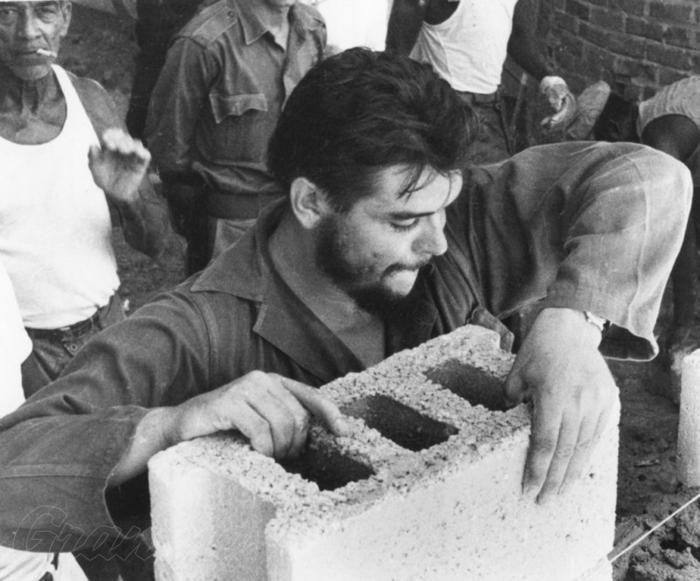
Granma.- It was Sunday, November 22, 1959 and, with a "tremendous outpouring" of volunteers coming from everywhere in trucks, carts, on horseback, no telling how many, arrived in El Caney de las Mercedes (now in the municipality of Bartolomé Masó) to help build the Camilo Cienfuegos Center, the first great educational work of the Revolution.
From the bed of a truck, Ché explained to the thousands present the importance of the project that would become "a permanent symbol of the alliance between workers and farmers on which our revolutionary power is based," and an instrument to transform consciousness.
It was the first massive voluntary work day that, under Comandante Che Guevara’s leadership, brought together campesinos, construction workers, those from a shoe factory in Manzanillo, and others to build an educational center where 20,000 children from the Sierra Maestra would study.
From that day on, Ché would lead the mobilizations, every Sunday, to cane fields, coffee harvests, construction projects and other tasks, a practice that would be extended across the country.
Sixty-two years after this memorable day, young people in Granma - committed to keeping its legacy alive - participated in a productive day working in cane fields, coffee plantations and other agricultural areas.
Likewise, the Federation of Cuban Workers (CTC) led a mobilization on different productive fronts in the mountainous municipality of Bartolomé Masó, principally in community clean-up and reconditioning of schools.


