

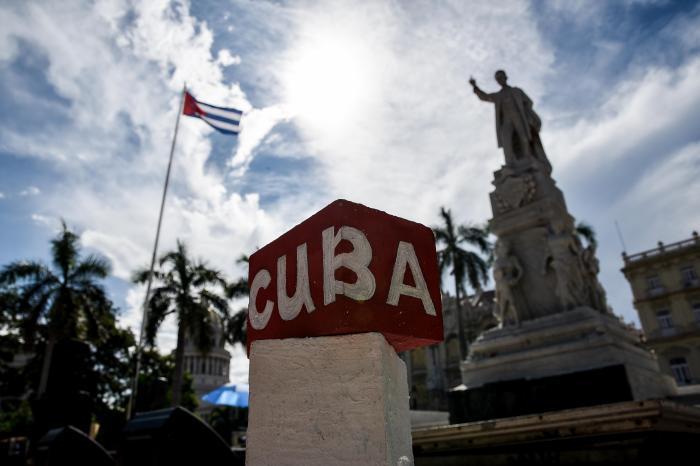
When the Cuban Revolution triumphed on January 1, 1959, against all odds and pressure from the forces of the tyrant Fulgencio Batista, supported by the United States, our nation became the very incarnation of utopia, of the possible alternative for a better world.
From then on, this small archipelago would become a global example of resistance and, after the fall of the Soviet Union and the European socialist bloc, the irrefutable proof of the power and value of dignity.
The Revolution that triumphed 64 years ago opened the channel of popular democracy for Latin America in the face of U.S. domination and made the Cuban people the protagonist of constant struggles and sacrifices in the name of freedom, independence and Marti's dream of a Republic whose first law was the cult of the full dignity of man.
In 1959 the desire of the author of The Golden Age began to become a reality, as part of a process of the humble, by the humble and for the humble that led the country to become, a few years later, the first Latin American socialist nation.
The outstanding intellectual Fernando Martínez Heredia, when reflecting on the subject, highlighted precisely as the main and most valuable dimension of the Revolution, its humanist essence, and within that principle, its internationalism, "a primordial feature that is also distinctive of Cuban socialism, and that has developed and saved us so much from pettiness and setbacks."
The fall of the socialist bloc denounced the promise of an alternative world, but Cuba did not fit into those formulas and stood up as a heretic by aspiring to another type of civilization beyond capitalism, faithful to that dangerous madness, which according to writer and journalist Eduardo Galeano has as its main support "to believe that human beings are not condemned to humiliation.
"In a world where servility is a high virtue; in a world where those who do not sell themselves, rent themselves, it is rare to hear the voice of dignity. This revolution, which has been punished, blocked and slandered, has done much less than it wanted, but it has done much more than it could. And that is where it is," said Galeano.
A revolution rooted in the people, which grew up defending its identity, which with the people improvised solutions to tremendous problems, which ensured that the daily life of each person gave account of the project; and that made it democratic, with justice and sovereignty at its roots, an organized people, symbols creating popular self-esteem everywhere, and epics to come.
This is how figures like Llanisca Lugo, member of the Martin Luther King Center and the World March of Women in Cuba, who sees the legitimacy of the process in the truck full of young people on their way to cut sugarcane, in the 11-year-old girl who went to teach literacy, in falling in love on a day of defense and then having a few beers with the labor collective, building a house with the brigade for the children who were studying and surpassing their parents’ educational level, learning to use weapons and weaving an anti-imperialist identity in the popular sentiment, because with the United States on top of us, we would never be able to be a democratic country. With the United States on top of us, we could never be free.
How could we not love that revolution? With the revolutionary thinking, "our stubborness" and the protagonism of its leadership, the confidence and the path of liberation undertaken by its people... "Let us not feel ashamed of wanting to defend the Revolution," said Llanisca in the Problems and challenges of socialist democracy in Cuba workshop-cycle, and then sentenced more firmly: "We will not have more democracy if we allow the dismantling of the Revolution."
From Buenos Aires, Néstor Kohan, Argentine philosopher, intellectual and Marxist militant, would support Lugo's idea by adding that "the socialist revolution, the Cuban revolution, has been for decades and will continue to be the only vaccine and the only antidote to guarantee national and popular self-determination in the face of the annexationist pretensions of the United States, in its neo-fascist version, in its light and soft, but equally imperialist, presentation."
The process on the island has a value that goes beyond internal borders and transcends to an unparalleled universal level.
Let us remember those verses that Pablo Neruda, Nobel Prize winner in literature, wrote to Fidel Castro when speaking of the triumph in his Canción de gesta: "This is the cup, take it, Fidel / It is full of so many hopes / that when you drink it you will know that your victory / is like the old wine of my homeland: / it is not made by one man but by many men / and not one grape but many plants."
The brother president of Venezuela, Hugo Chavez, also knew it and years later, on January 1st, 2009, in Caracas, when commemorating half a century of the revolutionary triumph, he emphasized with full certainty: "The Cuban Revolution is the mother of all revolutions that are advancing in Latin America and Fidel, the father of all transformations in the region."
Nelson Mandela, leader of the struggle against apartheid and former president of South Africa, would broaden the dimension of the independence struggle of the Greater Antilles when he pointed out that "the Cuban Revolution has been a source of inspiration for all freedom-loving peoples, because in practice it has helped many to conquer it."
We admire the sacrifices of the Cuban people to maintain their independence and sovereignty," Mandela continued in his speech on July 26, 1991, during the central act for the 38th anniversary of the assaults on the Moncada and Carlos Manuel de Céspedes Barracks, held in the province of Matanzas, in the face of the perfidious imperialist campaign orchestrated to destroy the impressive achievements attained by the Cuban Revolution."
The African leader was well aware of the struggle faced by the thriving and small nation in defense of its sovereignty, but under conditions of absolute inequality of forces, facing the daily bombardment of lies, installed truths, fetishes, clichés and double yardsticks that distort reality to the point of grotesqueness.
In this context, the Spanish jurist and politician Manuel Medina Ortega accurately points out the bulwark that Cuba has "amidst the darkness of hypocrisy and cynicism, subjected to colossal pressures and blackmail (...). Its strength lies in the example of its struggle, of its social transformations, which continue to constitute hope for millions of Latin Americans."
That is why this Revolution, as Fidel affirmed, "can never give up on utopias. The fact is that to fight for a utopia is, in part, to build it (...), and in our country we have seen many of yesterday's dreams become realities. And if we have seen utopias that have become realities, we have the right to continue thinking about dreams that one day will be realities, both nationally and globally.
"If we did not think like this, we would have to stop fighting, the only consequent conclusion would be to abandon the struggle, and I believe that a revolutionary never abandons the struggle, just as he never stops dreaming."
Under these premises, we have survived 64 years forging the present, and we will continue in the future without losing sight of that essence that makes and will make the Cuban Revolution unbeatable.
To paraphrase Eduardo Galeano in his speech after receiving the Honoris Causa Degree “from the University of Havana: because it is a work of this world, dirty with human mud and, for that very reason, contagious.”
Translated by ESTI


