

Rosario Torres does not hide her amazement. "When they told me that she would be fitted with a prosthesis and that the next day she would be able to get up, I couldn't believe it; but they insisted that she should get up and take a few steps."
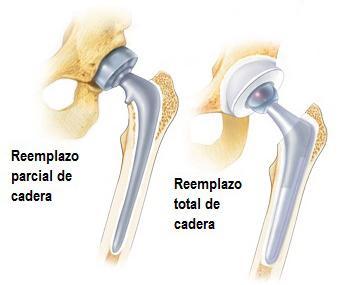
Aida’s aunt, is one of the first patients to benefit from the new partial hip prosthesis, which were recently described as another success of our science by the First Secretary of the Central Committee of the Communist Party and President of the Republic, Miguel Díaz-Canel Bermúdez.
" It was a great joy for me, because I didn't think there was a process that could give people back their independence so quickly," adds Rosario, when interviewed for an audiovisual broadcast by Cuban Television (TVC).
ORIGINS OF THE NEW PRODUCT
The novel project emerged in April last year, and its purpose is to gradually provide answers to the demand for hip prostheses in the country.
Doctor of Sciences Roberto Balmaseda Manet, a prominent Cuban orthopedic surgeon and traumatologist, explained that the complex situation of our economy contributed to not being able to purchase hips prosthesis for more than five years.
"Without them, we have to send the patient home, because we have nothing to do".
Hence the enormous importance of this experience, which last November received the Authorization for Exceptional Use from the Center for State Control of Medicines, Equipment and Medical Devices (CECMED), and is currently in phase III of the clinical trial.
Dr. Balmaseda explains that the prostheses are made with imported stainless steel, certified at the place of origin and certified again upon arrival on the island.
José A. Barroso, technical director of the Empresa de Tecnologías Alternativas, Tecal S.A., which played a leading role in obtaining this product, explained to Cuban televisio that his entity had never ventured into the field of Biomechanics, but with the help of Dr. Balmaseda they have acquired the basic knowledge to establish the requirements of the prostheses and to carry out the technological processes that allow their effective use in surgical interventions.
For his part, Eliecer Blanco, Tecal's technologist, recalled that the process went through critical stages, such as the profiling of the prosthesis spheres, which generated doubts at the time and constituted one of the main challenges.
In this regard, the participation of Osbel Fleita, a self-employed worker, who was in charge of manufacturing the spheres, was of vital importance. Fleita explained that the starting point is a three-millimeter flat steel plate, which, through a deep-drawing process, is used to make the two halves of the sphere.
"Subsequently, the excess material from the drawing itself is turned and then welded to the equator".
The next step,"consists of welding the sphere to the stem, and he points out that this is done using equipment he created, Osbel Fleita continued.”
"It is a machine that orbits, at a constant speed, with constant parameters, so we achieve a homogeneous weld of very high quality," he explained.
CERTIFIED QUALITY
Dr. Balmaseda points out that these welds are subjected to optical examinations and then the sphere is analyzed in detail.
In total, there are 19 steps that include turning, milling, welding, and each one is certified, says the renowned physician.
They say that they have worked so closely together that, at times, anyone observing them in the workshop, dressed in overalls, would not be able to tell who are the mechanical engineers and who are the doctors.
As proof of the effectiveness of these devices, Dr. Balmaseda assures that 38 operations have been performed at the Fructuoso Rodriguez Hospital, and that none of the patients have had any technical complications during the surgical procedure, nor have there been any adverse reactions or infections after the implants. "All the people have evolved satisfactorily," he says.
The renowned specialist points out that this is the first Cuban prosthesis that exists, thanks to the efforts of a valuable work team made up of technologists, engineers, designers, programmers and other professionals who have joined forces for a noble and humane project.
Aida Díaz, one of the first patients to receive the prosthesis, attests that it has been a marvelous achievement of Cuban science: "I have the normal pains of a person who has just had surgery, but I am already walking. Look how well I can lift my leg.
Translated by ESTI


