

The 243 measures of the Trump Administration had to pile up, including the cut in travel and remittances and the persecution of shipping companies that transported fuel to Cuba, crowned by the spurious designation of the Island as a country sponsoring terrorism; with its consequent impediments to international financial transactions, for the 2014 announcements become a reality as he has predicted ... six years later!
At the beginning of the second half of 2021, with Biden already in the White House, but with the same Trumpist policy towards the Island, the convergence of a pandemic peak with the Delta variant of SARS-COV-2, coupled with power and water outages, an already very noticeable shortage of retail trade, and the effects of a monetary restructuring, which counted on a control of the pandemic and a change in U.S. policy that did not occur, brought the intoxicated irritation from the digital networks, in many cases resulting in vandalism, to the streets on July 11 of that year.
Meanwhile, the U.S. Secretary of State, Antony Blinken, delayed his promised "review of the policy towards Cuba," which he has barely reviewed.
Earlier, in November 2020, people prepared for the U.S. strategy of regime’s change capitalized on the effect of a provocation masked as a defense of artistic freedom.
Disguised as defenders of freedom of expression, they managed to mix real artists in search of dialogue with trained provocateurs, and in a maneuver in front of the Ministry of Culture of Cuba, just on the eve of Biden's arrival at the White House, they made the most extremist sectors of Miami demand a military intervention and turn the President, who would take office in January 2021, contrary to his campaign promises, into their friendliest and most compliant servant.
The recent total defeat of the Democratic Party in South Florida has proven the error of trying to compete with the political ultra-right, which controls that state, on who is tougher on Cuba; but it is not yet apparent that what Marco Rubio openly calls "fear of the Cuban exile" has left the minds of those who decide U.S. foreign policy.
Only the sustained increase of Cuban migrants arriving at its border, spurred by the economic crisis in Cuba, to which the closure of its consulate in Havana and the magnet of an immigration policy that turns Cubans who manage to set foot on U.S. soil into refugees, made Washington return to talk with the Cuban government and reopen the services in its Havana embassy while keeping more than 90% of the Trumpist sanctions in place.
ON MARCH 26
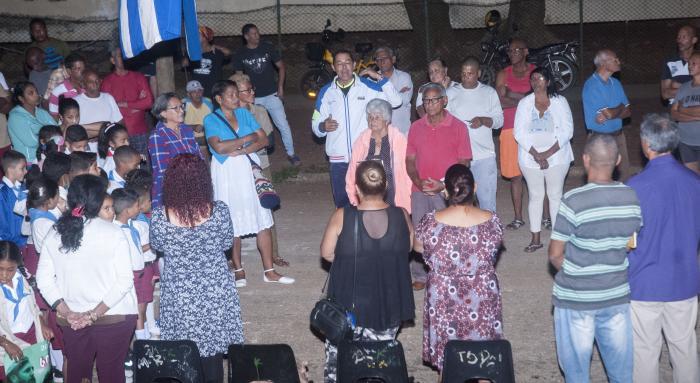
Calling repeatedly to the polls, six times in six years, in the midst of the difficult scenario that Cuba has lived and is living, where daily life has been hit by shortages in the supply of all kinds of products, including medicines and food, high deficits in public transportation and systematic power cuts, is an act of courage that reveals a deep trust in the conscience of the people.
It is to assume that the majority of Cubans are politically literate enough to know that we are facing a brutal economic war and a communications war campaign to return us to the pro-imperialist subordination and dependent capitalism we were under before 1959.
Liberal democracy, which is sold to us as a model, is conceived for the reproduction of the capitalist system. When it reaches power, as a result of the erosion of the system itself and the consequent popular mobilization, and it becomes an alternative that could pose a threat to oligarchic interests reaches the Government, there are the other powers to strike: the judicial, the media, the parliamentary and even the militaryone blows in defense of what they consider should be the natural order of things.
Everything is tried then: the assassination of a candidate, the unjust imprisonment of another, the manu militari, or the threat of the banks, if it is not possible to prevent a leftist from governing and carrying out leftist policies as they have promised to do.
For the capital, democracy is only elections in which money and the media intervene in a decisive way, never in the power of the majorities, but always dependent on advertisers and shareholders. They are processes carried out in the midst of enormous economic, educational, cultural, communicational inequalities, where representatives of the economic elites organized in political parties settle their differences in a great media spectacle to obtain financing first and votes second.
Those who object to our democracy hide the fact that, in Cuba, without the intervention of money or any party, it is the neighbors, organized in neighborhood assemblies, who nominate candidates, who then go to a ballot where it can contain as many as up to eight candidates in each constituency, and by secret vote of the citizens elect a delegate to the Municipal Assembly, which is the highest organ of power in each territory. Why don't the candidates of the counterrevolution and liberal democracy win there? Why are they not, no longer a majority but, if, a tiny minority in that Municipal Assembly made up of delegates directly elected by the people? Will the lists made depending on the loyalty to the interests of national and foreign financiers proposed as a model, be more democratic than those who vote in those assemblies to make up the highest power of the State, proposed by mass organizations made up of millions of citizens? Did we or did we not see the plenary sessions of those organizations at all levels proposing candidates? Candidates for whom the people will have to vote again directly and secretly to form the National Assembly.
It is a system that may still be perfectible, but it is the system of a country without illiteracy, with nine compulsory grades of education, where health and education are universal guarantees and citizens should not pay with their vote to politicians for access to these services, as it happened before 1959 and still happens in many countries.
The Cuban electoral exercise is closer to the democratic ideal advocated, but not practiced, by those who attack Cuba.
And beyond elections, Cuban society has many other forms of democratic participation and defense of the rights of workers, students and the inhabitants of the communities, superior to those of capitalism.
A participation that, although in its concrete practice may suffer from formalisms and deviations that society and its leaders criticize, has nothing to do with the deformations caused by the economic interests that corrupt and dominate politics in most capitalist societies.
Others will decide this March 26 to align with the call of the haters, of Marco Rubio and the like, and thus facilitate, consciously or unconsciously, the work of those who have imposed the 243 new sanctions on us. It is their right and no one will bother them for exercising it. Their conduct, although the press that demands plurality and looks at us unanimously will not say so, will also be a resounding denial to those who claim that in Cuba repression and social control force people to behave in one way or another and obey calls such as the one to go and vote.
For those of us who want a sovereign Cuba that continues to seek social justice against all odds, it is time to rise above doubts, mistakes and shortcomings and send a message of strength, unity and future.
There would be no worse mistake than doing what the enemy wants. To vote and to vote united is the energetic response to put the Homeland safe from those who dream of imposing here, through bloodshed, politicians at the service of mafias and lobbies, in the image and likeness of those who control Miami and controlled Cuba until 1958. For Cuba and against that we will vote on March 26th.


