

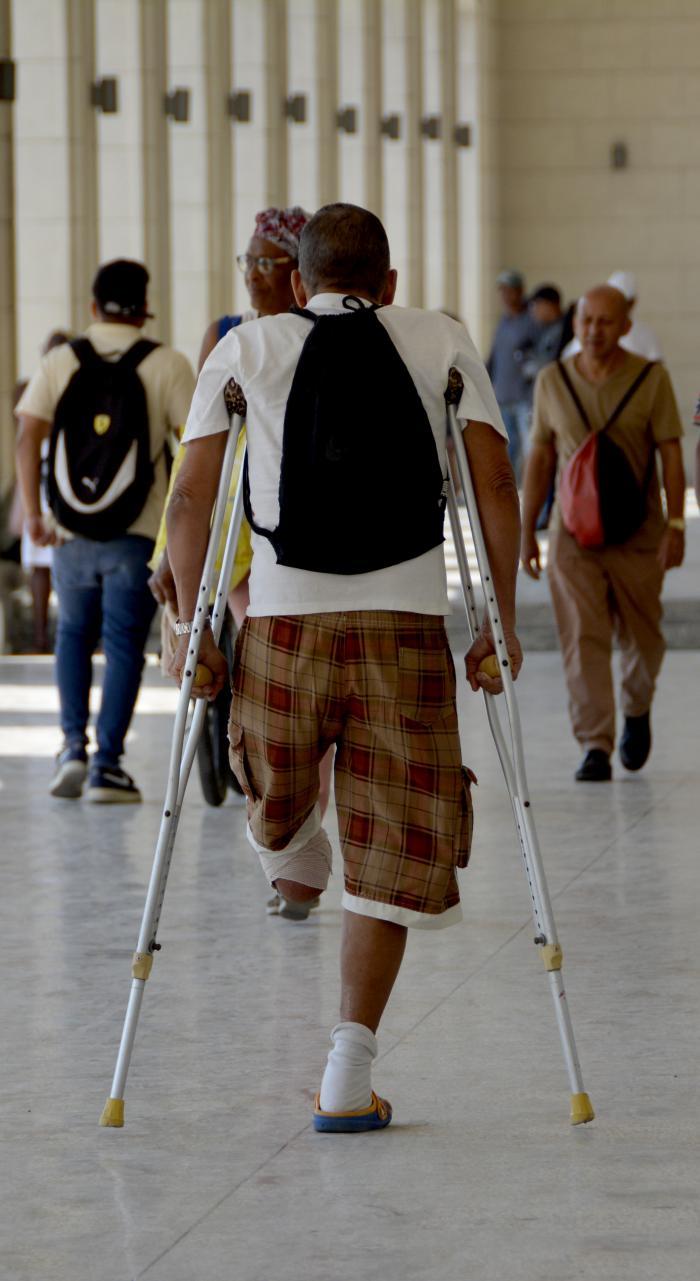
Vulnerability is inherent to the human being due to the different causes and situations that generate it, such as disability, minority, gender, old age, ethnic origin and religious creed, among other issues.
It is the Law's responsibility to establish the approaches, paradigms and multiple phenomena that give rise to it. It does so through a regulation that provides the special protection demanded by people in this situation, which leads to the analysis of their protection from the judicial process, in its relationship with the principle of human dignity, a premise of constitutional rank, to validate their integration and social inclusion in all spheres of society.
The effective protection of people in vulnerable situations depends more on social solidarity than on laws, which, in this matter, do not solve anything if awareness does not evolve to enforce them from the family, the community, the labor and social environments. Only affection, understanding and satisfaction of their needs and preferences would help to achieve genuine inclusion and safeguard their rights on an equal footing.
The diversity of conflicts that arise in Cuban judicial practice related to the capacity of persons requires a legal system that allows the judge to offer judicial protection consistent with the right of all persons to participate fully and effectively in society.
In this order the new Code of Proceedings is pronounced, with a very lucid look towards the protection of people in situations of vulnerability who, for diverse reasons, need a support regime coupled to the multiplicity of causes that originate it and in the proportion or intensity of the different capacities that they cause in people.
Article 89 of the Constitution of the Republic of Cuba recognizes the obligation of the State, society and families to protect the full exercise of the rights of persons with disabilities, safeguarding their personal autonomy, inclusion and social participation, in response to the call of the Convention on the Rights of Persons with Disabilities (CRPD).
This treaty recognizes disability as an evolving concept, resulting from the interaction between a person's impairment and both environmental and personal factors; an expression of vulnerability that still finds obstacles in physical and formal barriers, which prevent the inclusion and enjoyment of rights, on an equal footing, of the people in which it occurs.
RIGHTS ARE FOR ALL
Intellectual disabilities should not mutilate the aptitudes for the exercise of all rights and obligations, which means that persons suffering from them will be able to perform certain acts and fulfill the specific obligations that their scope of understanding allows them, a legally valid action, whether they proceed by themselves or through the assistance of a third party, according to the judicial declaration of the case.
The action of the court in the solution of conflicts involving persons in a situation of vulnerability due to disability is based on the assumption that limiting their autonomy is of an exceptional nature, consistent with the principle of human dignity enshrined in Article 40 of the Constitution of the Republic, and that their action is valid through a system of support, to the extent that they require it, according to their will and preferences as rights holders.
Thus, the Proceedings Code regulates the processing and solution of these matters through a summary procedure, in order to frame the scope of the possibilities of action of the person in the legal acts to be performed, and to provide or modify systems of support and safeguards for the achievement of such acts, including those of a material nature that may be necessary.
The demand must state the specific circumstances that justify the provision of supports and safeguards, the type of support proposed, the persons or institutions that would serve as support or safeguards, the legal acts to which they are contracted and for how long they govern, all of which will be subject to judicial control to verify their adequate compliance.
The designation of supports is for people who have difficulties in making decisions or in communicating them in the usual ways.
These are types of assistance provided to the person with a disability to facilitate the exercise of his or her rights. This may include assistance in communication, in the understanding of legal acts and their consequences, and assistance in the manifestation of will and personal preferences.
Now, the application of this legal rule must be implemented in accordance with the power of the Governing Council of the Supreme People's Court to interpret the laws, with the purpose of standardizing judicial practice throughout the country, which in relation to the subject of analysis, was fulfilled through Instruction number 278, of February 14, 2023, published in the Official Gazette number 11 of that date.
The Instruction regulates how the provision of support and safeguards is materialized, and what refers to reasonable adjustments to facilitate the performance of persons with disabilities, both in the defense of their subjective rights within the framework of the procedure, as well as the fundamental rights, of constitutional and conventional protection.
Reasonable adjustments consist of the necessary and appropriate modifications and adaptations required by persons with disabilities for the full exercise of their rights. Their request is heard in the courts, at the request of those entitled to the provision of support, provided that they have been denied by the person or institution obliged to provide them.
For the adoption of reasonable adjustments, the proportionality between the intended adjustment and the physical, sensory or intellectual needs of the person with a disability is taken into account, in addition that they do not impose an excessive or undue burden on the obligor, and that they are necessary to enforce the rights recognized in the Constitution of the Republic of Cuba, in the other laws of development and in the international legal instruments to which the State is a signatory (access, equality, inclusion, discrimination, equity, etc.).
In judicial practice there are many cases in which people in vulnerable situations intervene in defense of their legitimate rights, a judgment in which a rational weighing of all the circumstances surrounding their environment must prevail. From their housing conditions, family, cohabitation, dependence on third parties, their emotional relationships, the stability or decline of their functional and intellectual capacities as a result of aging, or the specific disability they present.
It also takes into account issues related to their personal hygiene, adequate food, whether they are subject to manipulation or physical or verbal abuse, their participation in the solution of family situations of different nature, whether there is indifference to their person and their urgent needs within the family, among others, as fundamental elements for making decisions regarding the rights that the law recognizes, in any case, with a view to validating their true autonomy.
The current Family Code, the Proceedings Code and Instruction 278 of February 14, 2023, which complements the protection of persons with disabilities when they intervene in a judicial process of any nature, respond to this purpose. These are rules that enhance the sense of humanism, impartiality, and rationality due, to weigh the family, social or circumstantial imbalances that lead to such state, its dimensions and the disadvantages that concur in undermining the free exercise of their rights, without discriminatory or subjectivities of any kind, placing justice at the service of a human being who seeks the defense of his legitimate interests, through a due process and with correct observance of the Constitution of the Republic, the applicable international treaties, and the relevants regulations in each case.
Translated by ESTI


