

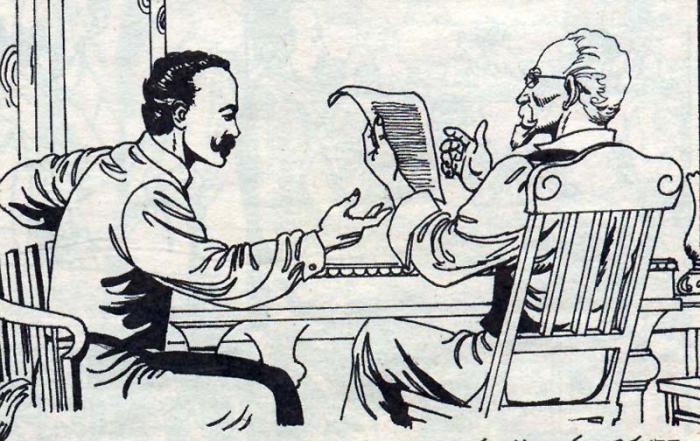
When talking about José Julián Martí Pérez, few would associate his person with military issues, and they might even consider it inappropriate, since his military thought is one of the least publicized facets.
The promotion of José Martí to Major General, in the 1995 War, recognized the man who, without studying in any military school, without combat practice or command of troops, designed the strategy of a revolution, of a war, based on multiple experiences.
As valuable researchers have ruled, to recognize a military thought in Martí can be polemic, given the imaginary of seeing him as a political leader or as an intellectual of pacifist projections, and to restrict the military to the strictly warlike; but if one reviews the history of the popular wars in the world, and in particular those of Cuba, one will be able to verify that there have always been outstanding combatants without academic formation, and José Martí was undoubtedly one of those emblematic examples.
He was the son and grandson of Spanish military men, so since he was a child, military terminology and discipline, as well as the stories related to that field were not alien to him.
Nor can it be ignored that, during the time he was imprisoned, he met several insurrectionists, such as the Canary Islander Joaquín Montesinos Trujillo, who in 1869, at the age of 32, was arrested by the Secretary of the Provincial Government of Pinar del Río, accused of being the main local instigator of the anti-colonial rebellion, and of creating an insurrectionary group.
As a teenager, his teacher Rafael María de Mendive reviewed on a map the operations that took place during the Ten Years' War, and in his school he read the newspapers that came in clandestinely from the newly independent Spanish America. It is known that he deeply analyzed the Ten Years' War, the War of Independence of the Thirteen Colonies, the Latin American independence process (1810-1824), the Civil War in the United States (1861-1865), the Chiquita War, the Gómez-Maceo plan, the Anamite resistance to the French colonization, the Spanish war of independence against the Napoleonic invasion, the Franco-Prussian War, and had contact with important military chiefs.
The process of formation of his military thought originated in a self-taught way, developed under the influence of the demands of his revolutionary praxis and his cautious incursions in this field, so as not to provoke jealousy and suspicion among the veterans of the Ten Years' War who, protected by their experience, arrogated to themselves the exclusivity in military matters.
In reality, the proclamation of the Cuban Revolutionary Party did not determine an absolute and immediate recognition of the authority of the elected Delegate, and this is shown in part of the correspondence received by Gómez, to whom everyone turns to because of his proven loyalty to the cause, and because many consider that he should be at the head of the movement.


