There are magnificent poems, those that cannot escape perfection. Accomplished poems, possessing an absolute balance between expression and delivery, that leave scholars and certain readers astonished.
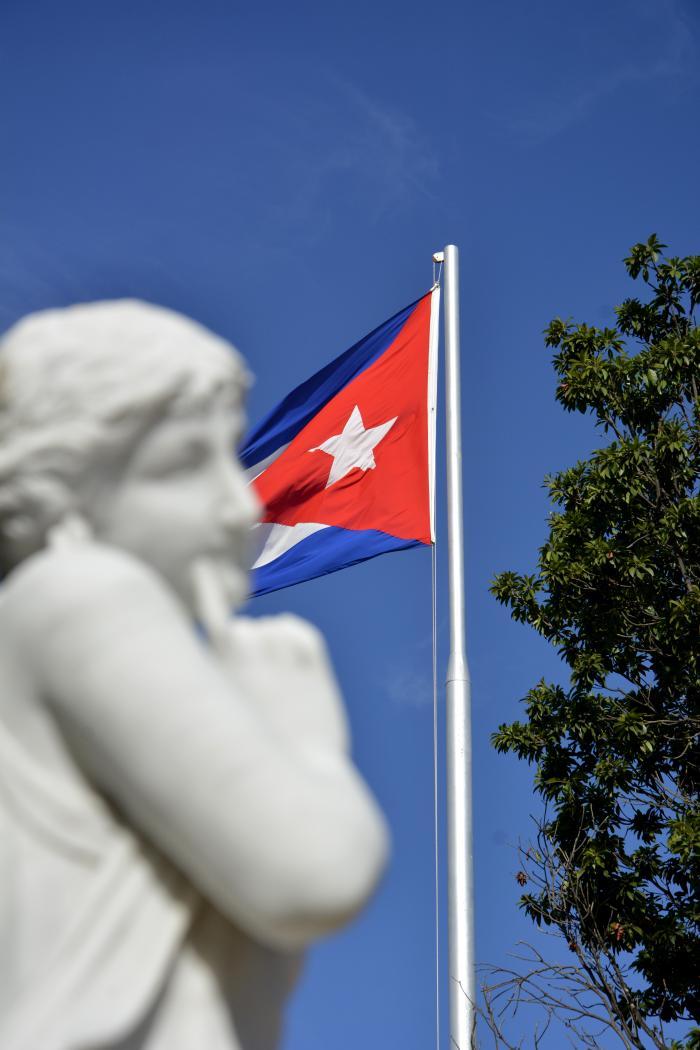
There are others, not so lavish, that lack compositional complexity; poems that some believe, though it is not true, that anyone can write; poems that, to the expert, do not qualify as great works; and yet, they live in the soul of the people, gaining followers from generation to generation. To this category belongs My Flag, written by the poet from Matanzas, Bonifacio Byrne, born on March 3, 1861, 165 years ago.
To remember him on this date, it is fitting to review his life, marked by two great virtues: that of a poet and that of a patriot. The echoes of the 1968 war of liberation, which had begun in Cuba when he was barely seven years old, reached his bardic soul. In 1995, when the Necessary War erupted, his lyrical voice, which had already borne fruit, abandoned modernist tones to offer itself to the service of the redemptive cause.
His deep-rooted humanism led him to journalism, and in pursuit of independence, he founded several newspapers. He also wrote plays and fiction.
Byrne was no minor poet. In the book An Unnameable Feast: The Best Cuban Poems Up to 1960, according to José Lezama Lima, the author of Paradiso considered the poems The Furniture and Harem of Stars, accompanied by an assessment in which he emphasizes: "Byrne's poetic production must be divided into two currents: his patriotic poetry and his other poetry as an excellent modernist poet."
Lezama asserts that, in the first period, Byrne "becomes the poet of the revolution, the singer of separatism," while in the second, a modernist author shines forth, "full of insight, nuance, verbal richness, and a certain intimacy, a secret voice that reveals itself with delicacy."
The patriotic poet suffered exile and continued to collaborate with revolutionary ideals from the United States. In Tampa, he founded the Revolutionary Club, of which he was secretary; and he contributed to publications such as Patria, El Porvenir, and El Expedicionario.
Byrne returned to Cuba on January 3rd, 1899. Much has been said about the event that led him to write My Flag, the poem for which he is best known. "Returning from a distant shore, / with a mournful and somber soul," he saw that, beside his own, the American flag was waving. The tragic spectacle unfolded at El Morro in Havana, and that very day, pouring out his grief, he wrote "My Flag."
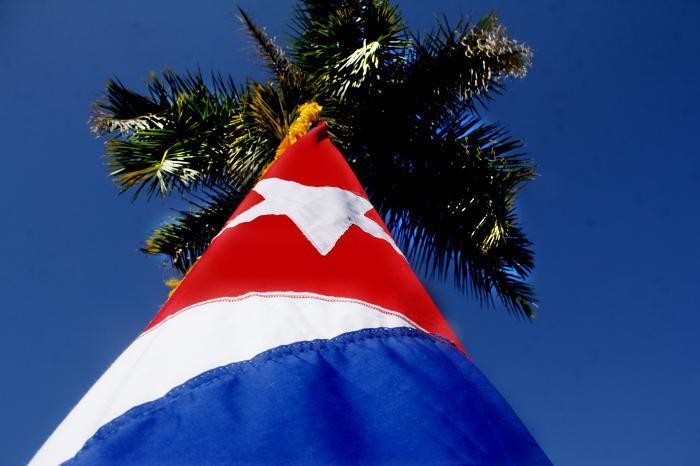
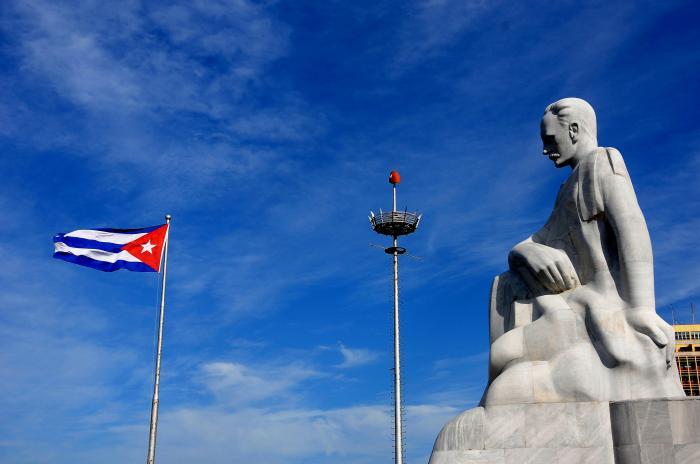
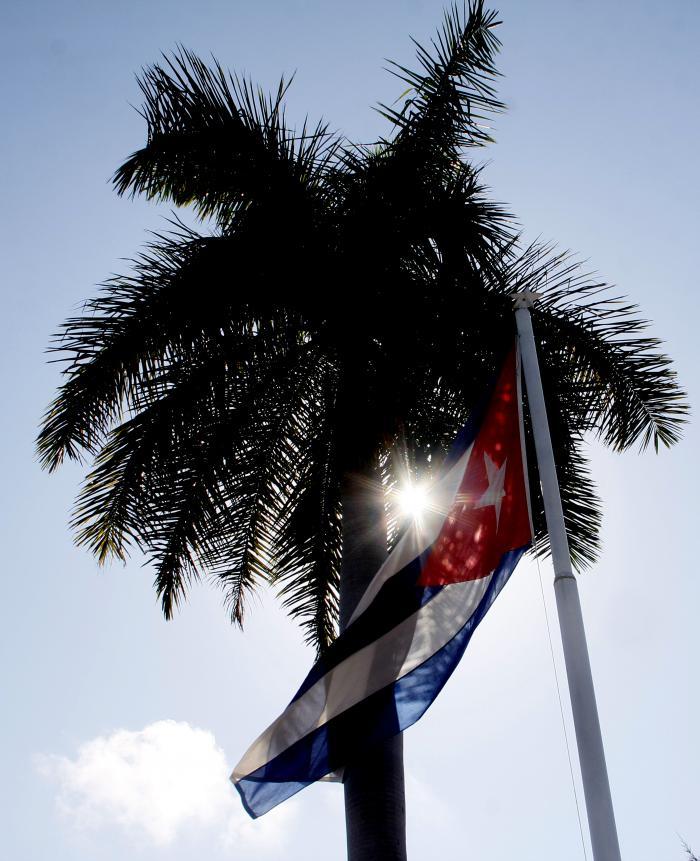
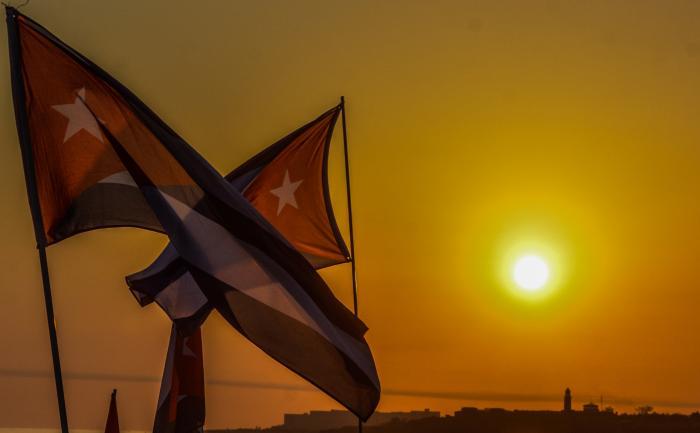
Each verse of the poem is a definitive statement. For over 120 years, it has lived on in the soul of the Cuban people, its message undiminished by any of the many vicissitudes that mark our history. It was not without reason that Camilo Cienfuegos, in a fervent speech before a large crowd gathered in front of the Presidential Palace, quoted the final stanza, so often pondered and felt, which speaks of what even our dead would do to defend it.
"The poem," Virgilio López Lemus said, "became a document in verse, a virile protest, and at the same time capable of representing the feelings of an entire nation regarding what it expresses."
He also points out that "My Flag has remained in the nation's consciousness as a popular work, because it expresses an essential heartbeat of a majority of the Cuban people, who live with a profound love for their homeland, through its essential symbol, the flag with the lone star."
Bonifacio Byrne, who died on July 5th, 1936, bequeathed to us a collective cry that grows stronger each time an imperial threat attempts to violate it. These days, his verses resonate, complete and bold, with not a single word missing or superfluous.
My Flag / Bonifacio Byrne
Upon returning from a distant shore,
with a mournful and dismal soul,
I eagerly searched for my flag,
and I saw another besides mine!
Where is my Cuban flag,
the most beautiful flag that exists?
I saw it from the ship this morning,
and I've never seen a sadder thing!
With the faith of austere souls,
today I hold with deep energy,
that two flags should not fly
where one suffices: mine!
In the fields that are now a charnel house,
it saw brave men fighting together,
and it has been the honorable shroud
of the many warriors who fell.
It stood proud in the fight,
without childish or romantic boasting;
any Cuban who doesn't believe in it
should be flogged for cowardice!
Deep within dark prisons
not even heard the slightest complaint,
and its footprints in other regions
are like beacons of light in the snow…
Don't you see it? My flag is the one
that has never been a mercenary,
and on which a star shines,
brighter as it stands alone.
From exile in my soul I brought it
among so many scattered memories,
and I have known how to pay homage to it
by making it float in my verses.
Though it flutters languidly and sadly,
my ambition is that the Sun, with its light,
illuminate it alone, it alone!
on the plain, on the sea, and on the summit.
If it's torn to shreds,
my flag ever becomes…
our dead, raising their arms,
will still know how to defend it!