

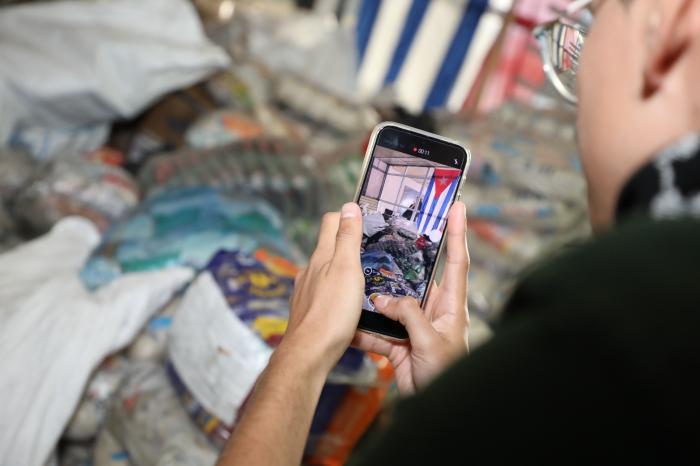
“We sailed for a month toward Gaza, but in the end we couldn’t reach it: we were intercepted, and the Israeli occupation forces seized us and took us to prison. The helplessness of not being able to get there was terrible.”
That was the memory still weighing on Nicole León Avilés as her feet touched dry land in Havana. She, who had been part of the Global Sumud Flotilla—which attempted to create a humanitarian corridor to Gaza—was this time in charge of organizing donations in Mexico and, together with others, arranging their transport by ship to Havana.
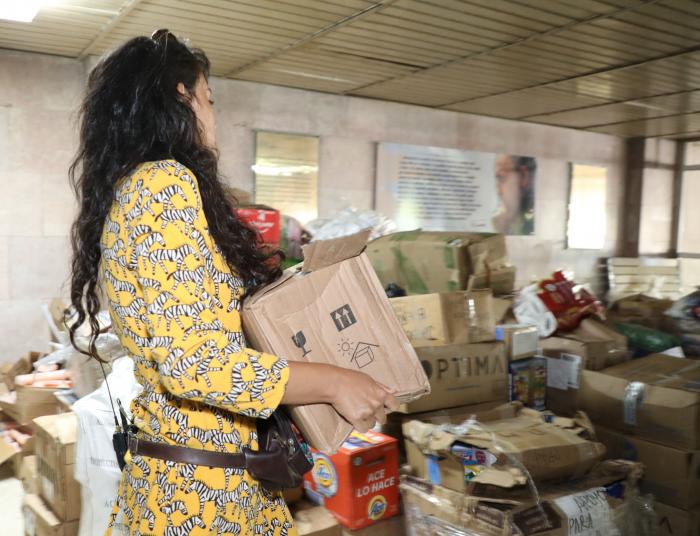
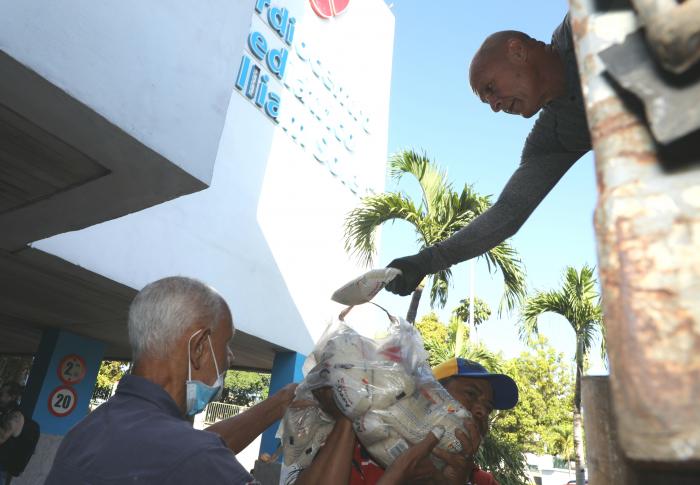
Upon arriving at the Havana dock, then at the William Soler Pediatric Cardiology Center, and seeing how they unloaded the 14 tons of medical supplies, medications, food, and sanitary products, she knew that the helplessness she had experienced in Gaza was now being transformed into an act of justice in Cuba.
“Arriving here and being able to bring aid—the very thing we wanted to do in Gaza but were not allowed to—is of great value to us. It gives us courage; it gives us the strength to keep going,” said the Ecuadorian, a communist activist and one of the crew members of the ship named Granma 2.0, which docked last Tuesday.
A BATTLE THAT GOES BEYOND MEDICINE
Within the walls of the Cardiology Center, the struggle goes beyond medicine. It is the daily battle to find a catheter, a reagent, or a medication, where geographical distance and the barriers imposed by the U.S. economic blockade turn every supply into a piece of a complex odyssey.
“When it comes to purchasing any equipment—anything needed to care for a critically ill patient, such as our children with heart conditions—the Cuban healthcare system, our people, and every Cuban face a dilemma, a tragedy,” explained Dr. Eugenio Selman Housein-Sosa, the center’s director.
This situation, which has been chronic for decades, has recently worsened. In this context, the arrival of the Granma 2.0 not only provided tangible material relief but also confirmed that international solidarity remains an unshakable pillar in the face of adversity.
“This will have a real and effective impact on patient care,” stated Selman, who extended his gratitude on behalf of the entire staff, the young patients, and their families. “On behalf of all of them, we embrace you,” emphasized the doctor, visibly moved by the gesture of those who, through their own efforts, paid for the trip and collected the donations.
THE VALUE OF HARD WORK AND HEART
The director of the Cardiocentro emphasized the added value of this aid: its genuine origin. “We know that you have paid for the tickets, that you have purchased these items through your own effort and work, that of your colleagues, and your family. It does not come from the wealth of a bank or a million-dollar company, but from the sweat, the care, and the hearts of people who want to help.”
For the doctor, this gesture transcends the material. “It is the hope that a better world is possible,” he declared.
“By being here, you give us strength; you fill our hearts so we can keep resisting and trying to do what you teach us: to fight for others, to help others,” concluded the director of the Cardiology Center, on a day that will be remembered as an example of how human will can build bridges over any barrier.
A POLITICAL DUTY AND A SENSE OF GRATITUDE
Nicole León summed up the profound significance of having reached Cuban soil. For her, this is not an isolated gesture. It is part of a shared history of resistance. Having docked in Cuba now represents, in her words, an act of justice and a breath of fresh air.
“Even if they don’t let us stay, we’ll keep going. We’re heading back to Gaza on April 13th; we’re setting sail again. But this is like a breath of fresh air: having been able to arrive and support the Cuban people, who have always shown such solidarity with the world.”
Nicole’s commitment, however, has roots that run deep in the very history of solidarity among peoples. “I’m from Ecuador. There was a Cuban medical brigade providing support there during the 2016 earthquake. For me, that’s a commitment."
“I’m a member of the Communist Party; I’m an internationalist. For me, it’s a political duty and also an expression of gratitude for a whole history of internationalism, solidarity, and commitment among all of us.”
A SYMBOL THAT TRANSCENDS
The voyage of the ship that its crew christened Granma 2.0—in reference to the yacht that in 1956 brought the expeditionaries of the July 26 Movement—was thus sealed not only by the 14 tons of aid, but by the symbol it represents: internationalist solidarity that, despite blockades, distances, and adversities, once again demonstrates that another world is possible.
Australian Daniel Herbert, a member of the solidarity initiative, summed up the crew’s feelings upon setting foot on Cuban soil: “We are very happy to be here because we have always known Cuba as a country that has defended the right to health for all, in every country.”
“That’s why it matters to us to be here and to be able to say that the international community must also defend the rights of Cubans. The rights to health, to medicine, to the basics, to life—these should never be used by politicians. These are fundamental rights,” Herbert stated.
He emphasized the significance of arriving on the island amid a tightening of the economic blockade imposed by the United States.
The activist also highlighted the inspiration he draws from the island’s resilience. “It’s very inspiring to see Cuba’s resilience, to see what’s being done, to see people working together. Yesterday we were at the hospital and listened to the doctors. The way they talk about health, about rights, about the sense of generosity they show toward one another… We’re learning a lot by being here, seeing how people can work together, how we can take care of one another. It’s a great honor to be here.”
Aleksa Vulovic, also Australian and a member of the solidarity expedition, stated: “I believe Cuba has done so much for the world. It always seems like Cuba is helping other countries. That’s why I feel a sense of duty, and I think it’s an honor to be able to come and help in some way, because Cuba has given so much to the world.”
When asked what it meant to him to be able to bring this aid, especially for the children, Vulovic replied: “Bringing it to anyone is already special, but when it’s for children, it becomes even more special. It’s a very sad situation with the blockade; people are really suffering. Anything that helps children in need is a huge deal.”
The 14 tons are already in the hospital’s warehouses, ready to become lives saved, surgeries made possible, and a respite for entire families. But beyond the tangible, the Granma 2 left a lesson: that internationalist solidarity—the very same that Cuba has practiced for decades in every corner of the world—also knows how to reach the island when it is needed most.


