

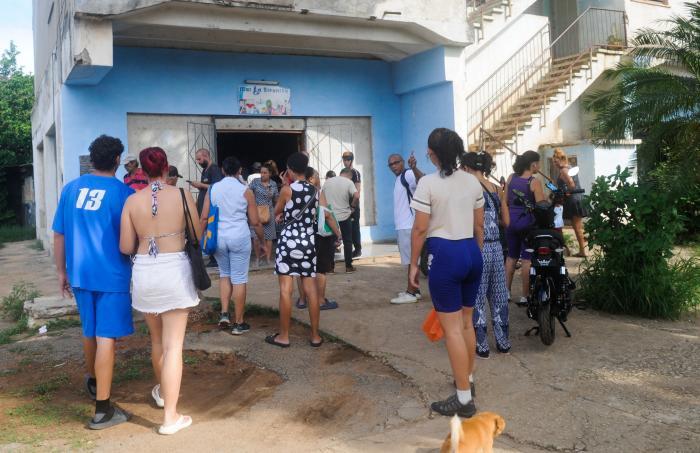
At eight in the morning, a line begins to form outside the La Sirenita market, located on the corner of 23a Street—between 230 and 222a—in the La Coronela neighborhood of La Lisa municipality. Some are waiting for rice; others, for chicken, croquettes, ground meat, or detergent.
It is not a new establishment. Ariel González Vega has held the lease since 2024. In the space where school uniforms, layettes, and hardware supplies were once sold, he built a business that, over time, became a regular stop for local residents. On August 13th, he took another step forward: he transformed his establishment into a neighborhood market.
This decision is part of a series of measures driven by economic and social transformations aimed at fostering the activity of economic players while simultaneously enabling certain products to reach the public at lower prices. In this instance, the mechanism includes tax benefits for individuals who—like Ariel—were already operating out of leased state-owned premises and are now adopting this new model.
Yet, at La Coronela, these figures and regulations take on a tangible human face: that of the people who arrive each morning, shopping bag in hand, tallying up costs before deciding what they can afford to take home.
"I prefer this place because the products here are less expensive—though not truly affordable; I make that distinction because prices remain well beyond the means of a state worker or a retiree—but at least you can get what you need and save a few pesos," says Ramón, a man in his seventies, as he secures his shopping bag to a bicycle that has seen better days.
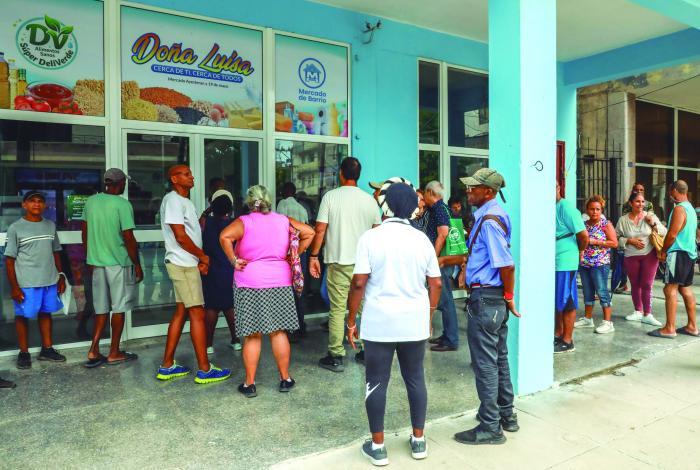
This is perhaps the best way to explain what a neighborhood market aims to achieve: finding ways to alleviate—even if only partially—the burden of current hardships.
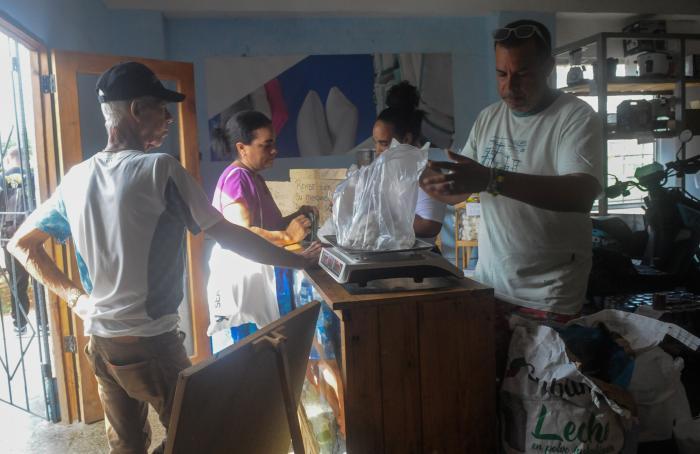
Ariel knows this. That is why he says his business model has changed: he makes less profit per item but sells more volume. He seeks out what his customers need at the lowest possible cost and sometimes stocks items not covered by the government price agreement—goods neighbors ask for because having them close by matters, too.
Over time, he says, the shop has become more than just his business. "Problems? I face the same ones as everyone else. I struggle to source products and secure cash, and I don't have electricity at the shop for most of the day. Yet, I believe I provide a necessary service to the neighborhood—to *my* neighborhood," he acknowledges.
That bond extends beyond the sales counter. "La Sirenita" assists the community's Family Care System (SAF) dining hall and facilitates pension payments for around twenty people.
A NETWORK AIMED AT LOWERING PRICES
What takes place every morning in La Coronela is part of an initiative that, while still modest in scale, is beginning to spread across the country. Currently, 37 neighborhood markets are operating in several provinces: Pinar del Río, Artemisa, Havana, Matanzas, Camaguey, Holguín, Granma, Santiago de Cuba, and Guantánamo.
The project is based on a concrete premise: leveraging existing commercial facilities—many of which were closed, underutilized, or operating at low capacity—to bring essential food and hygiene products closer to communities. The goal is for a selected range of goods to be sold at retail prices approximately 15% lower than those in other market segments.
Marpessa Portal de Villiers, Director General of Merchandise Sales at the Ministry of Domestic Trade (Mincin), explained to Granma that establishments from the existing commercial infrastructure—including local grocery stores, markets, and butcher shops—were selected to form this network. Location, the condition of the premises, population density, and the specific needs of each area were among the criteria considered.
The price difference, therefore, does not depend solely on the merchant's discretion. The model incorporates incentives designed to lower operating costs: exemptions from the 10% wholesale sales tax and the 5% retail sales tax, as well as a waiver of premises rental fees for a period of two to three years.
These benefits apply to a list of priority goods that includes rice, grains, sugar, cooking oil, pasta, meat, fish, eggs, dairy products, coffee, canned tomato products, soap, detergent, toothpaste, and deodorant. Establishments may sell other merchandise, but these items are not covered by the tax incentives established for priority products.
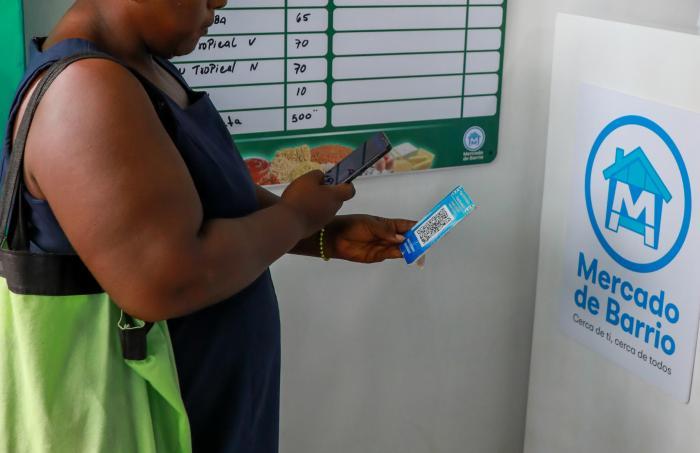
The aim is for the benefits to extend to the purchasing experience itself. Sales are conducted in Cuban pesos, and establishments must provide electronic payment options. They may also offer services such as delivery and pre-packaged products.
However, for this price difference to be sustainable, one condition is crucial: product availability.
ENSURING SUPPLY FOR THE MODEL TO WORK
Stable product availability is one of the main challenges identified by Mincin itself. Contracts with the economic actor responsible for each establishment must clearly define resupply mechanisms and the specific products that must be available daily.
Domestic production of rice, grains, meat, and dairy products—among other items—is one of the planned sources for this supply, alongside the wholesale markets set to begin operations soon in several provinces.
The model also envisions the participation of non-state management entities in both supplying goods and managing the establishments, whether operating independently or in partnership with other economic actors. This participation does not entail a transfer of property ownership: the premises remain the property of the state-owned enterprise, while existing assets may be leased or sold to the operator, depending on their specific characteristics and needs.
Plans also include leveraging the experience of those already working in these units. Employees at the selected establishments have priority to join the project; if they assume direct management, they must organize themselves as a non-state management entity. Otherwise, they may continue working as employees of the establishment.
Initial experience, however, already shows that having a location and establishing incentives is not enough to guarantee success.
According to Portal de Villiers, the markets currently in operation have generally been well-received by the public, yet they have also revealed difficulties that need to be addressed. These include contracts that failed to cover all the elements necessary to ensure the project's operation, outlets lacking most of the planned products, and issues regarding the organization of merchandise within the sales areas.
For this reason, the expansion of the network is not currently following a single nationwide schedule. The addition of new units will depend on identifying local premises, the tendering process, and the subsequent contracting of the economic actors who will manage them.
MORE THAN JUST A RETAIL OUTLET
The design of these establishments also incorporates a social dimension. The project entails the controlled sale of specific products to distinct groups—including pregnant women, children, and the elderly—while the pricing structure itself aims to offer a less expensive alternative to other available options.
At the same time, these neighborhood markets are subject to standard commercial regulations covering aspects such as price setting, weighing, food safety, the origin of goods, and the availability of electronic payment methods. Violations are handled under the prevailing regulatory framework for infractions.
In essence, the initiative seeks to leverage existing infrastructure to revitalize activity and transform these sites into supply points closer to the communities they serve. The true measure of this formula’s impact will lie not only in the number of establishments that open their doors, but in the everyday experience: what neighbors find when they walk in, how much they pay, and how consistently those products remain available.
In La Coronela, then, the neighborhood market can be viewed from two perspectives: that of the policy conceiving it as a tool within ongoing transformations, and that of the daily lives of the people queuing at its doors.
The challenge lies between these two points: ensuring that a formula designed to cut costs and bring specific products closer to the population actually translates into relief that residents can feel.


