"For us, economic growth makes no sense if it does not impact social development; for us, generating economic wealth makes no sense if it does not impact and support social programs—and, above all, if the wealth we build is not distributed based on the principle of social justice."
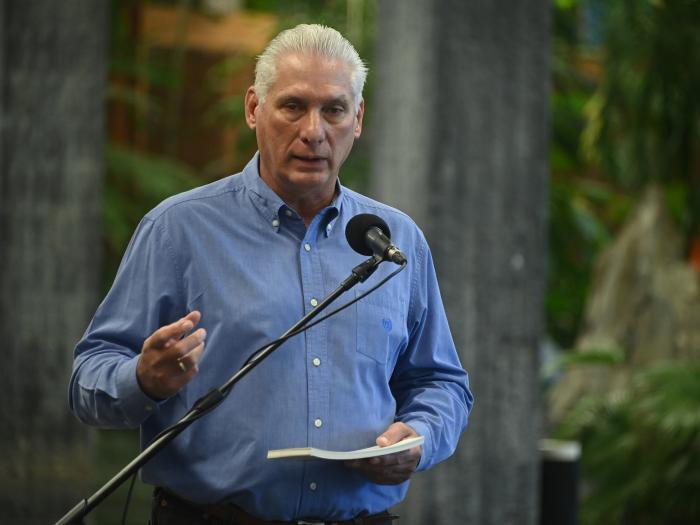
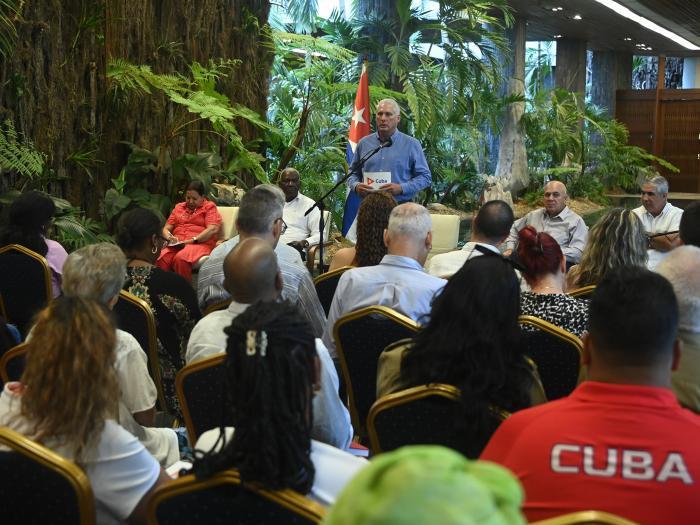
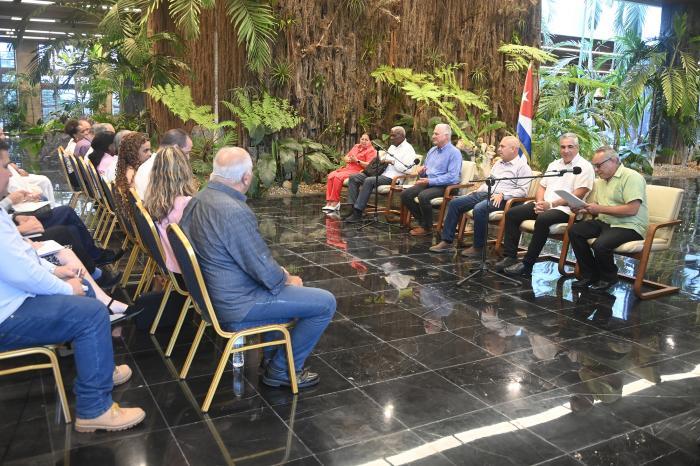
This premise was the guiding principle of the recent meeting held by the First Secretary of the Party Central Committee and President of the Republic, Miguel Díaz-Canel Bermúdez, with representatives from government bodies, organizations, associations, neighborhood leaders, and other community stakeholders linked to the thematic areas of Economic and Social Transformations. These efforts are aimed at continuing to guarantee the social justice that has characterized the Cuban Revolution since its inception—a commitment from which it will never waver.
It is social justice, which makes the 176 Economic and Social Transformations that the country is implementing socialist, stated the Head of State, who was accompanied by the members of the Political Bureau, Esteban Lazo Hernández, president of the National Assembly of People's Power and the Council of State; Roberto Morales Ojeda, Secretary of Organization of the Central Committee; and Teresa Amarelle Boue, general secretary of the Federation of Cuban Women (FMC).
Participants included Deputy Prime Minister Eduardo Martínez Díaz; the Minister of Labor and Social Security, Jesús Otamendi Campos, who moderated the discussion; and ministers from the various agencies involved, alongside other Party, State, and Government officials.
As a key component of these transformations—Díaz-Canel emphasized during the discussion—the social dimension and social justice are what distinguish us from the "shock policies" seen under capitalism—policies adopted by those who attack us, impose blockades, and enforce an energy embargo against us. Yet here, despite our current situation—he reiterated—"we prioritize social initiatives; we champion inclusion, equity, and opportunities for all."
THE COMMUNITY AT THE HEART OF SOCIAL ACTION
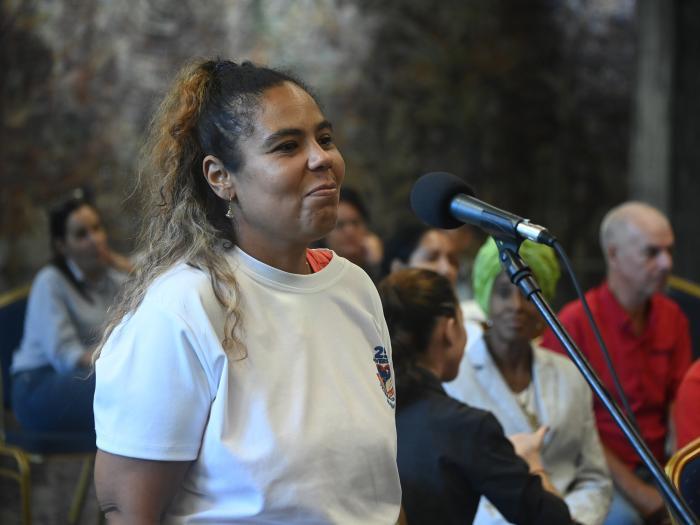
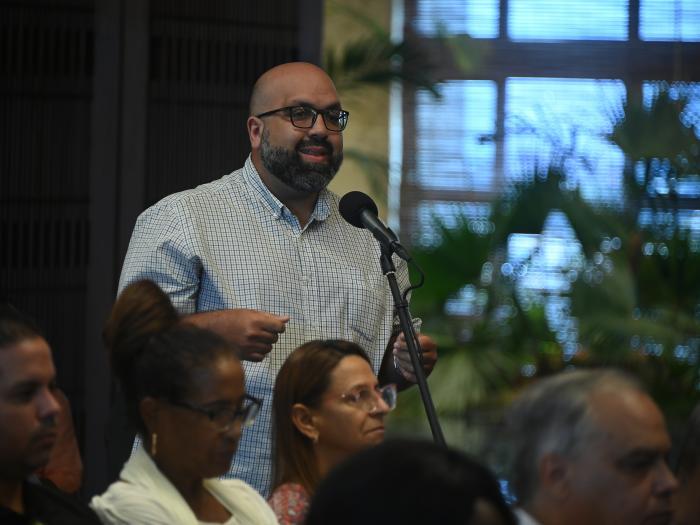
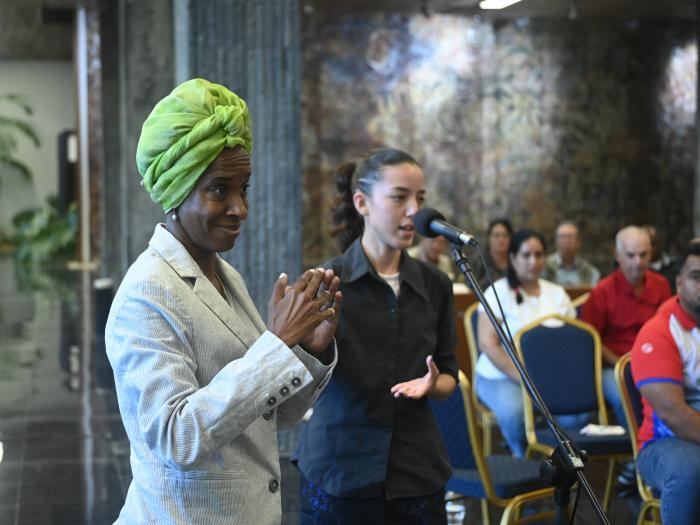
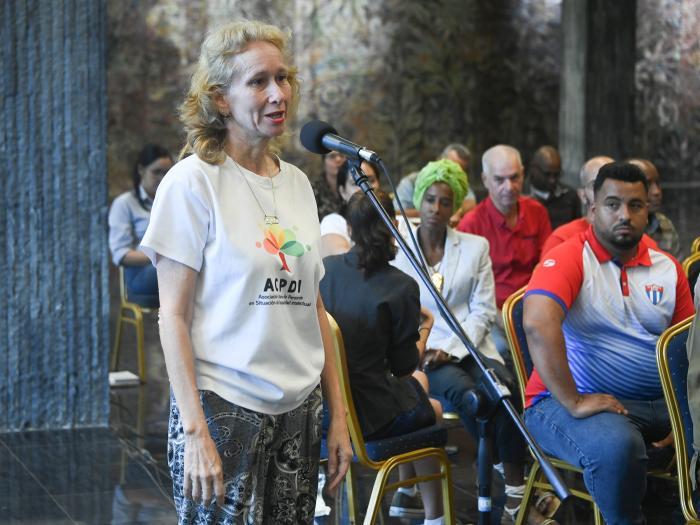
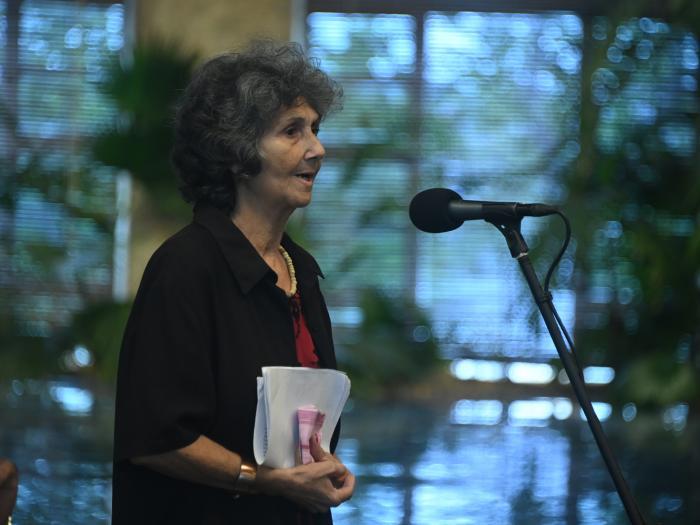
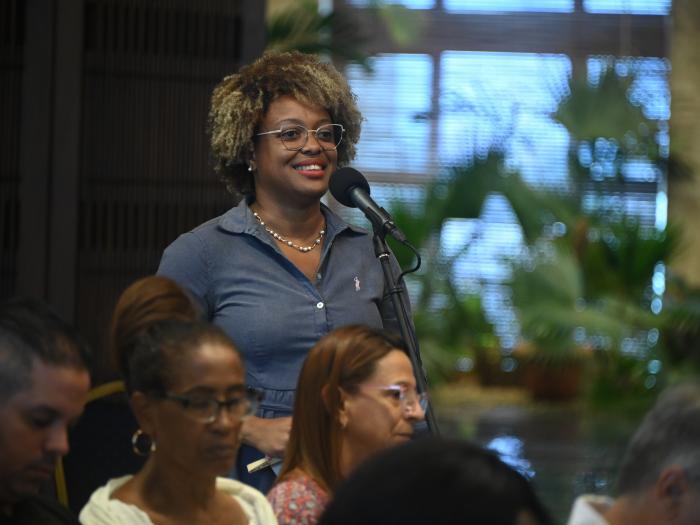
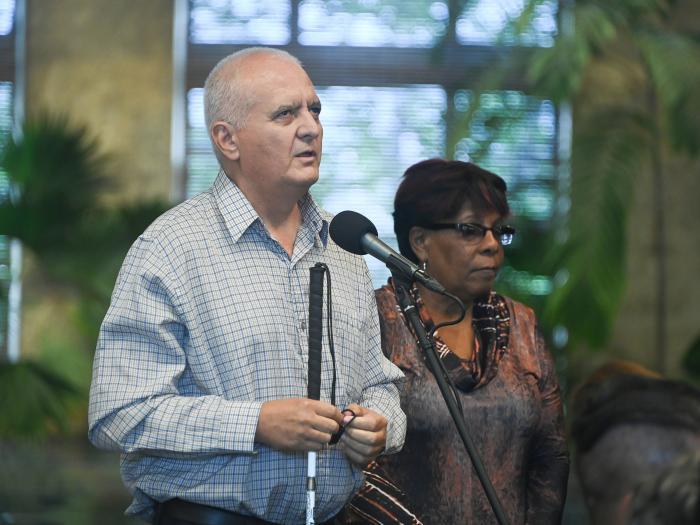
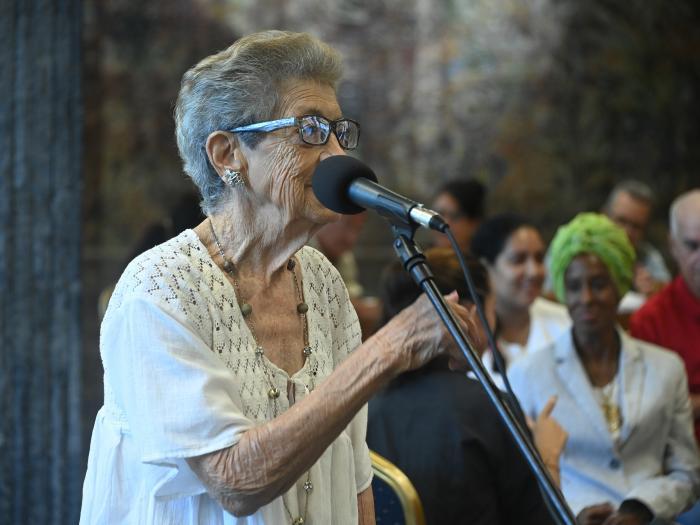
Nearly twenty meeting participants addressed the active role played by the people and their grassroots organizations in implementing economic and social transformations within communities, as well as the fulfillment of social responsibilities by state and non-state economic actors operating in those areas.
Rosa María Luaces Gutiérrez, president of the "Ampliación de Almendares" People's Council, described the collaborative efforts undertaken in the neighborhood by constituency delegates, social workers, and local community stakeholders to address a wide range of identified issues—from pension payments to the operation of the Family Care System (SAF).
Regarding this system—two units of which operate in this local community—commentary highlighted the positive impact of non-state economic actors supporting the service, alongside agricultural entities that supply root vegetables, produce, and other goods, thereby improving the nutritional quality of the meals provided to recipients.
Another initiative praised by residents of this area of Playa involves various companies stepping up to care for former employees who dedicated their working lives to them; now retired, these individuals require the solidarity and material support of the colleagues who stood by them for years—and even taught them their trades.
In the Ampliación de Almendares neighborhood, care for vulnerable individuals is also being expanded; they receive home visits to assess their daily lives and specific needs.
Particular attention is given to pregnant women and mothers receiving support from both state and private sectors—such as a 16-year-old mother who is still breastfeeding but has already secured a spot for her baby at a daycare center and is set to join an MSME, where she will undergo training and take up a job.
Yanisley Martínez Acosta, director of the sports complex at 70th and 9th Streets in the Playa municipality, described how the facility—following an investment in its lighting system—launched an athletic program that has attracted young people struggling with various addictions; through sports and the dedication of their coaches, these youths are gradually leaving those habits behind and adopting responsible behaviors.
Equal attention is due to children and adolescents living in dysfunctional family environments who, through sports, are transforming their outlooks—an endeavor supported by economic actors who, in an effort to alleviate social disadvantages, provide equipment, kimonos, and even snacks.
Caridad Reyes Peña—a social security pensioner, FMC block leader, and head of a community project in Cayo Hueso—explained how members of the Federation (FMC) in that densely populated neighborhood carry out work grounded in social communication; as she notes, "communicating with love" fosters support, harmony, and well-being within the community. Reyes Peña highlighted the pivotal role played by these women, who are extending this initiative from Cayo Hueso to other communities in Central Havana.
Carlos A. Iznaga Valdés, an executive at the GECOMEX business group (under the Ministry of Foreign Trade and Foreign Investment), reported on how companies in the sector are contributing—using their own profits and fulfilling their social responsibility—to the repair and revitalization of hospitals, schools, and other social facilities in Marianao and various other municipalities of the capital.
Luis Miguel Morejón, president of the MSME Hidrox S.U.R.L. (based in Cerro), discussed the work being carried out by his enterprise. Originally launched as a local development project (PDL) based economically on a car wash service, the venture also took on a social mission involving the cleaning and sanitizing of various healthcare facilities and providing support to educational centers in the municipality.
Since 2022, Hidrox S.U.R.L. has been supplying certain goods needed by these social entities at prices that have remained unchanged; the costs are instead covered by expanding the car wash business managed by the company's owner.
Working closely with the Cerro Municipal Administration Council, this MSME also supports the provision of food to pregnant women in need and assists other vulnerable individuals.
Adriana Romero, a social worker in the Zamora-Coco Solo neighborhood council in Marianao, praised the work being carried out by the social policy support group. This initiative has helped refine efforts originally inspired by the Commander-in-Chief—efforts that have always prioritized, and will continue to prioritize, prevention.
As part of the implementation of economic and social transformations, Adriana highlighted the opportunity to channel these working groups' efforts more organically, based on needs identified within the community.
Like the leaders of other national associations representing people with disabilities—such as ANSOC, ACLIFIM, and ACPDI—Jorge Luis Cala Ledesma, president of ANCI, highlighted the impact that the social policies associated with the "Transformations" are already having on these individuals and organizations; he also expressed gratitude to the country's leadership for its continued attention to and support for people with specific disabilities.
Wilfredo González Vidal, Director General of the Digital Government Center, outlined the vast potential of the "Soberanía" platform to manage and ensure social protection—specifically through digital means.
He elaborated on the services the Digital Government Center offers to assist vulnerable individuals, enabling them to request various types of aid through the platform.
ECONOMIC DEVELOPMENT HAND IN HAND WITH SOCIAL DEVELOPMENT
As part of the working system established to monitor the implementation of the 176 Economic and Social Transformations recently approved by the National Assembly, the President of the Republic reviewed the discussions held in recent weeks with representatives from various social sectors.
He noted that the Transformations have undergone a consultative process—first with Party and Youth League members, and now within workplaces and communities, where neighborhood organizations play a fundamental role.
Regarding the importance of participation and grassroots oversight in this process, Díaz-Canel emphasized that institutions linked to social policy areas must ensure that the economic liberalization currently being introduced does not exacerbate inequalities. He stressed that the structural changes being promoted must reach those who need them most, as that is the spirit and intent behind the Transformations.
In this regard, he stated that everyone must understand their specific role and the contribution they are expected to make in upholding the principles of social justice. Institutions should not limit themselves to their specific functions but must instead integrate into a network of relationships with other entities to truly achieve social justice. In short, he noted, the key lies in the coordination among different institutions at all levels—from the national level down to the community.
While underscoring the importance of coordination among the various institutions linked to social initiatives, he also insisted that "the drive and aspiration for social justice cannot be merely a matter of rhetoric and intent."
He argued that without an economy that guarantees social justice, such justice will not materialize; therefore, "it is essential that economic development contributes to social justice, and that social justice, in turn, drives and participates in economic development—for society is the protagonist of economic development."
During a dialogue with representatives from various bodies, organizations, and associations, as well as neighborhood leaders and other stakeholders linked to the social aspects of these Transformations, the President of the Republic outlined a set of concepts intended to guide the daily work of community-level actors.
He noted, for instance, that "social justice is not defended through speeches; it is defended by institutions that operate with social justice as their objective," which requires focusing on the most vulnerable, who need tailored attention.
Regarding economic actors—whether state-run or non-state—he explained that they should not be viewed solely as economic agents, but also as social actors.
He went on to illustrate that this is something he has personally observed in previous meetings, noting that "a sense of solidarity is emerging among economic actors toward the people of whom they are a part—transforming the concept of social responsibility into a commitment of solidarity with society."
Reflecting on how to ensure the social dimension of these transformations, Díaz-Canel Bermúdez emphasized another essential principle: "social protection must be accessible and free of bureaucracy," while cautioning against promising anything that cannot be delivered due to a lack of resources.
At another point in the discussion, the First Secretary of the Central Committee of the Communist Party of Cuba and President of the Republic described the meeting with institutional and community stakeholders as highly inspiring. They demonstrated once again, he said, that even while living under the strain of a prolonged blockade and an energy embargo, we will continue working to build a better society.