

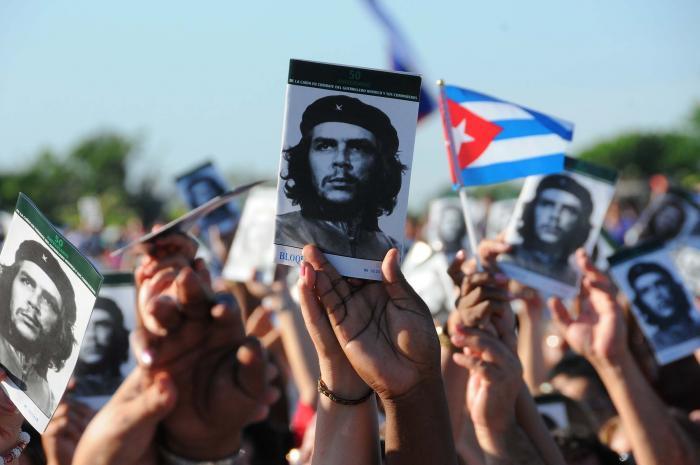
Beyond the convenient and easy commemorations sparked by certain dates; beyond the beauty and depth of a timely slogan or the image—printed, tattooed, and ultimately worn—of him; beyond the songs of a particular era and the books one read, whether at the right moment or not; beyond so many things, Che Guevara must always be part of the conversation.
Not merely in anecdotal exchanges. Not merely in nostalgic reminiscence. The more difficult and contradictory the circumstances and the ensuing debate—the thornier and more painful the situation—amidst the thunder, the suffocation, the disillusionment, and the passions (always the passions), Ernesto will find a way to make his presence felt.
And there will be those who resort to all manner of mental gymnastics—some more sophisticated than others—to keep him out.
In times of so-called sanity, they will call him a madman. In days of false calm, they will label him violent. In moments of feigned affection, they will accuse him of being heartless. In seconds of supposed expediency, they will dismiss him as ill-timed. In times of shrill, performative democracies, they will call him an authoritarian.
And Che Guevara, for all that, will keep stepping in. Without asking anyone’s permission. With the help of so many—men and women alike. Who will dare the "folly" of calling upon him? Will they be branded as madmen, violent, heartless, ill-timed, authoritarian, or sick with nostalgia?
Will they recite his speeches by heart? Will they arrive with eyes burning with his strength? Will they attempt to push past some sacred boundary? With what hands? With what legs? With what rage and what dreams? Might they invoke him without announcing it—or even without realizing it?
There will be no "coordinated visits" from Che Guevara amidst the heated debate over the present and the future. He will inevitably become an uncomfortable—perhaps even accusatory—presence in our minds during those times, days, hours, seconds, and moments dominated by reactionary, paralyzing madness, by the violence of abusers, by heartlessness, paralysis, and even the most refined authoritarianism—all of them disguised, all of them cloaked in their own opposites.
And it will be the people—flesh-and-blood people—who watch the back of that presence. The people who exist beyond, on this side of, and even in the midst of the convenient, easy reminders sparked by certain dates; the beauty and depth of a timely slogan or an image that gets printed, tattooed, and ultimately carried with us; the songs that defined an era—or didn't—and the books we read, whether at the right moment or the wrong one.
It will be the people, and their conscience.
But... for how long, comrades?
At the risk of appearing ridiculous, it will likely be: until victory.


