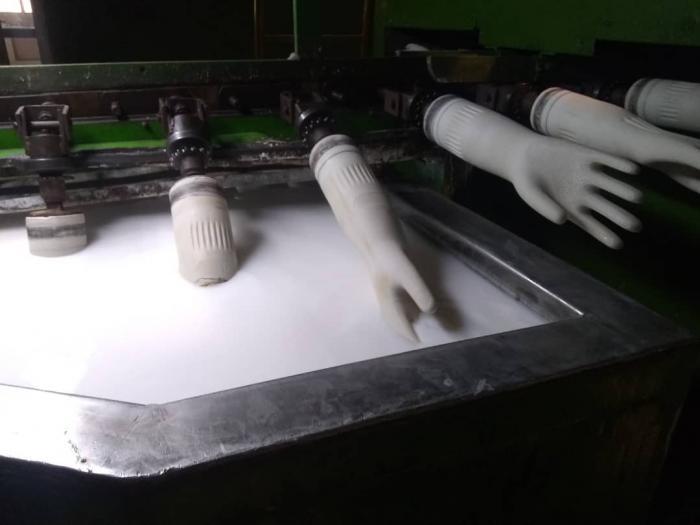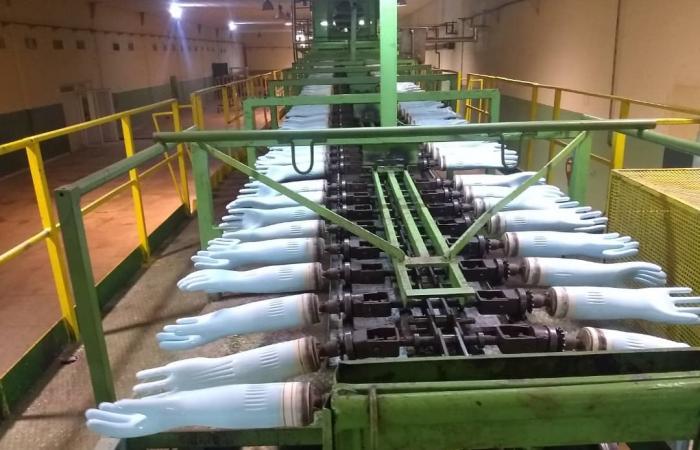
Las Tunas.— The latex products factory in Las Tunas province, the only one of its kind in Cuba, has not produced sterilized surgical gloves since 2017; the harsh reality behind this statement goes beyond mere words.
Its impact is felt painfully within the wards of healthcare institutions, by children and adults in need of surgery, and by medical and nursing professionals. It also harms the economy, as importing these supplies is extremely costly and puts patients' health at risk.
Behind these painful circumstances lies the cruelty of the economic, commercial, financial, and energy blockade—a policy that the United States government intensifies day by day to suffocate the Cuban people, in blatant disregard for the norms of international coexistence.
The most concrete example is the importation of raw materials. The plant previously had a supplier of natural latex in Guatemala, but that business relationship could not be maintained; as an alternative, Cuba found a more secure market in an Asian nation.
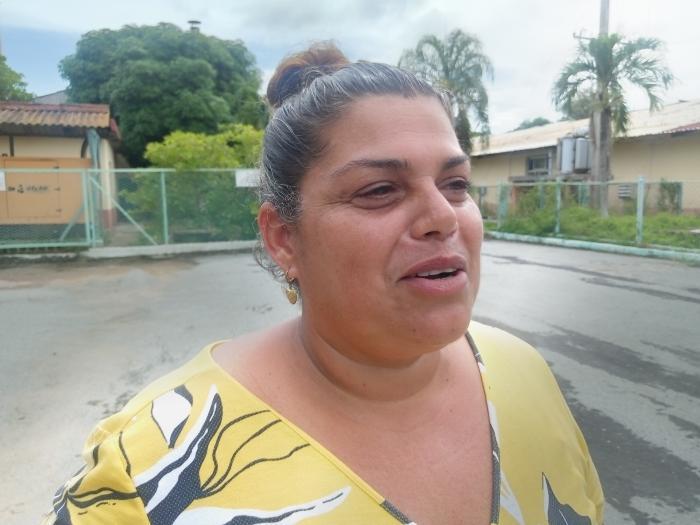
"It is a solution, but one that comes at an enormous cost due to the distance," stated Milaydys García Aguilar, a production specialist.
"It is not just a matter of paying a higher price for the product. Transportation costs and tariffs also increase. Furthermore, because the arrival of raw materials at our ports is delayed, some may arrive expired or defective," she added.
She noted that the manufacturing of these gloves requires other products—currently unavailable at the factory—that must be purchased abroad, such as potassium oleate, the accelerator ZDBC, and liquid pigments.
"Last time, we received those powdered colorants, but to use them, they had to be ground into particles even smaller than those that make up the latex. We don’t have the proper mills here to carry out that process, which is another reason why we haven’t been able to produce anything this year," he concluded.
FACTORY DAMAGED BY THE BLOCKADE
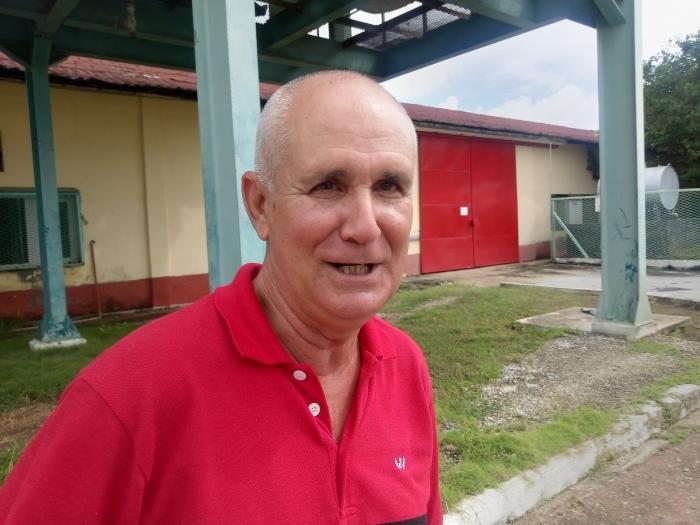
"Ten years ago, in 2016, our plant set a production record of six million pairs of sterilized surgical gloves," recalled Antonio Elio Nuñez Nojas, head of the factory in Las Tunas.
"That output provided significant support for healthcare services across the entire country. Today, that is impossible. We are also unable to operate our auxiliary production lines—lines that used to manufacture household gloves, membranes for collecting bee venom, and cones used for extracting semen from livestock for artificial insemination."
The manager added that the blockade has hampered both chemical and mechanical processes—and has even restricted access to technical literature, as internet servers often indicate that the information is unavailable for this geographic region. "This, too, is part of the blockade; it leaves us falling behind in terms of procedures and new technologies relevant to our work."
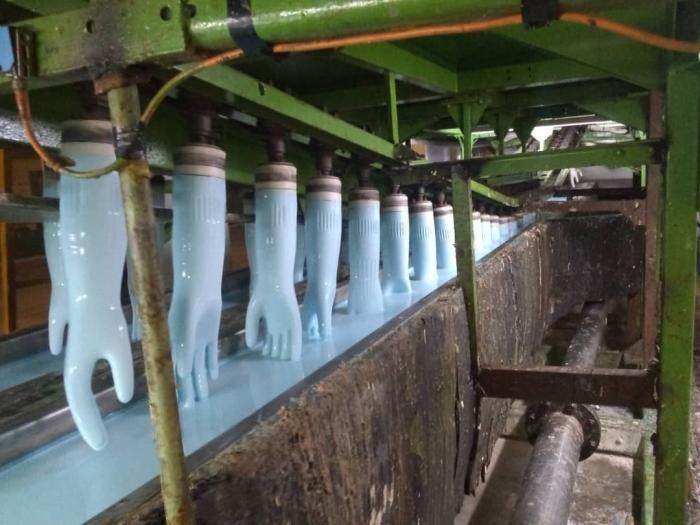
"In our production process, we use variable-frequency drives from a U.S. brand, and we are unable to obtain them. The plant currently requires nine of these units, but only two are operational. This disrupts the conveyor system, because changing the speeds alters the parameters necessary for the production of the gloves," he explained.
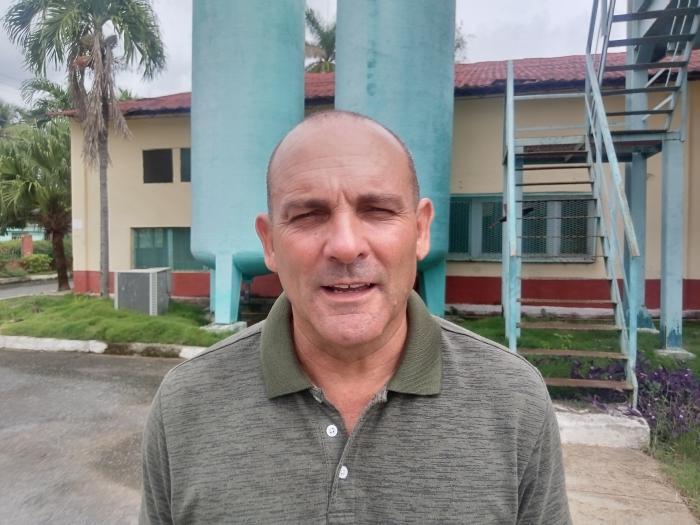
According to George Cruz Ramayo—director of the 'Thaba Las Tunas' business unit, to which this facility belongs—the factory could contribute significantly to Cuba’s socioeconomic development were it not for the blockade.
"Beyond our specialized products, we could do much more. For instance, we have a 10-cubic-meter sterilizer—one of the largest in the entire country." However, we cannot use it because it operates using ethylene oxide in 34-kilogram cylinders, which must be imported.
"If we could use it, it would be of great benefit to the country’s public health, as it would allow for the sterilization of gloves and a wide range of medical equipment. Currently, we are unable to do so, though we keep that area in pristine condition.
"Our laboratories—both the biochemical and the physical-mechanical—are also affected. We lack tensile testing equipment, pH meters, and reagents. Naturally, all of this equipment is essential for ensuring the quality of our production."
LOOKING AHEAD
Most of the workers at the surgical glove factory remain at their posts, eager to move forward—both with their traditional product lines and with new initiatives introduced to improve the facility’s finances and the workers' own earnings.
"We’ve had to branch out into new areas," notes Nuñez Nojas. "We set up a small leatherworking shop, prepared a sewing room, and are repurposing latex scraps to create other items—such as baseballs, which are used by the local baseball team and sold to the Ministry of Education and other organizations."
"We are also producing household gloves by hand, using a stopwatch to ensure each stage of the process lasts the correct amount of time. While they may not be perfect, they are useful for hygiene and cleaning tasks, and even for use in hair salons."
Beyond these alternative production efforts, there is a collective, ongoing effort at the factory to maintain the existing technology—waiting for better times that will allow for the restoration of the core production line, which was halted by the severe blow dealt to the economy and society by the United States.