

«It is not possible to talk about a socialist Revolution without social inclusion. A government program oriented toward socialism is essentially contrary to exclusion. And the Cuban Revolution has a long and intense history, which it never abandoned, of protecting the most vulnerable.
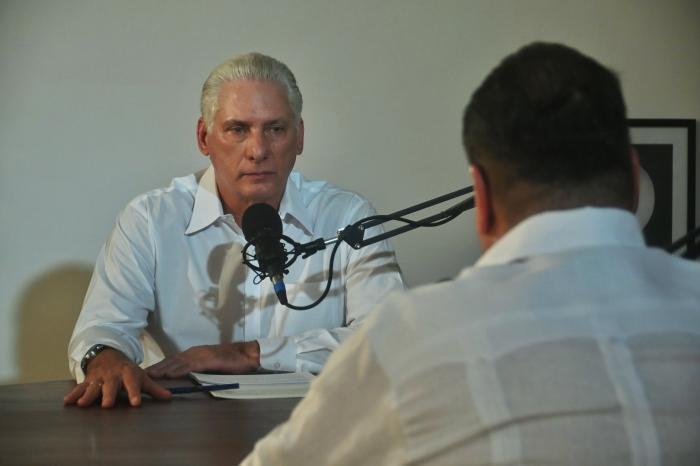
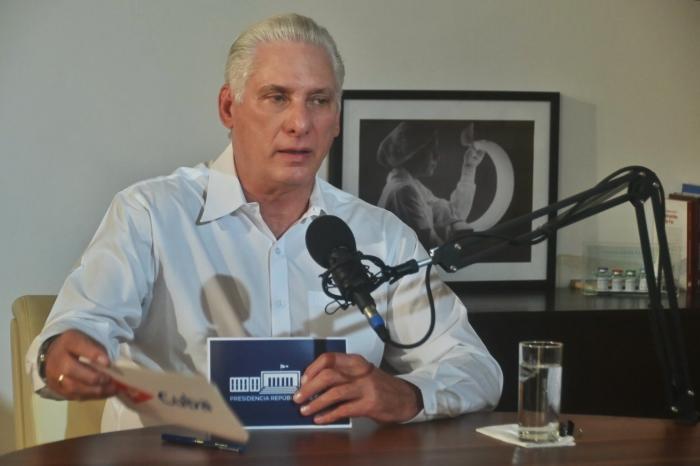
The battle of the Cuban Revolution for social justice was the focus of the new episode of the podcast Desde la Presidency, hosted by the First Secretary of the Central Committee of the Party and President of the Republic, Miguel Díaz-Canel Bermúdez, who recalled that "since it was fought in the Sierra, the Revolution promoted social inclusion."
In this communicative space, the Head of State recalled "the historic, intense day of Cuban victory against the empire", when the rejection and condemnation of the United States blockade against Cuba was ratified for the 34th consecutive time, by the majority of the international community in the UN General Assembly.
In another victory of the Revolution, despite the tremendous pressure that the US administration exerted against countries around the world, Díaz-Canel expressed that this October 28 at the United Nations was a day of denunciation of this genocidal policy.
And it was also, he commented, a condemnation of the genocidal nature of the energy blockade, the collective punishment of the Cuban people, and another defeat of "a hegemonic, arrogant, lying, vulgar imperialist regime that increasingly increases its contempt for the people and that constitutes a threat to multilateralism, peace and international coexistence with respect and ethics."
The President denounced in his podcast the conduct of the representative of the United States government before the United Nations: the more that representative of the United States spoke about our country, the more the foreign policy of the empire was denigrated, which is, he said, “a mixture of ignorance and unfiltered arrogance; an x-ray of the true entrails of the monster, and explains very well why they lose all political battles against Cuba.
In an analysis of the new victory of Cuba and the people of the world at the UN, where the criminal economic, commercial and financial blockade of the U.S. government against our country was condemned by a majority, Díaz-Canel stressed that the vote of 130 countries in favor of Cuba "is, above all, and I want to highlight it well, the recognition of the courage, the heroism, the creative resistance, the resilience of the heroic and supportive Cuban people, to which we all feel proud to belong."

PROTECTING THE MOST VULNERABLE AND SOCIAL WELL-BEING
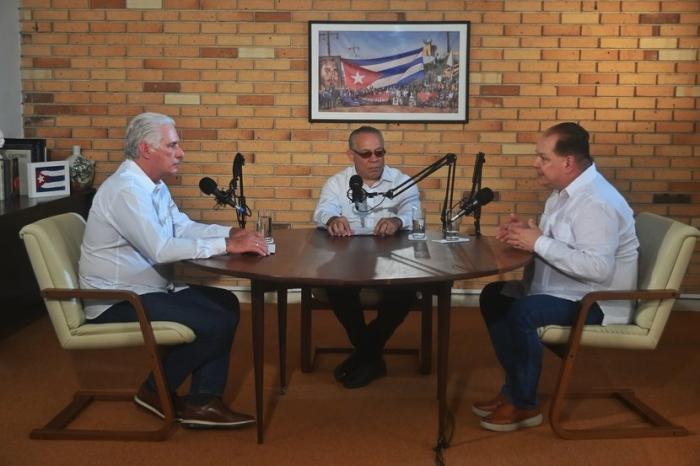
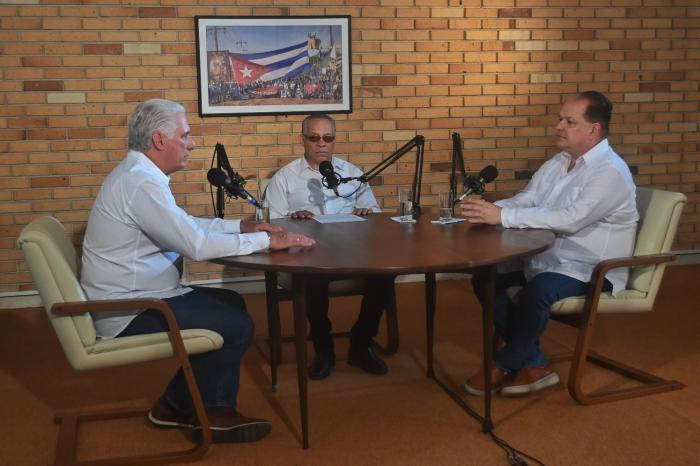
In the latest episode of the podcast From the Presidency—dedicated to the Revolution’s policies and measures for protecting the most vulnerable—the First Secretary of the Party’s Central Committee and President of the Republic was joined by the Minister of Labor and Social Security, Jesús Otamendiz Campos, and Dr. Enrique Alemán, leader of the sociocultural project *Quisicuaba*.
In his introduction to the episode, Díaz-Canel noted that "the principle of leaving no one behind remains central to the design of economic policies aimed at recovery—with social well-being at the core."
He reported that the most recent Council of Ministers reviewed, among other documents, the policy for supporting vulnerable individuals, along with the regulations for its implementation. Furthermore, this issue is consistently addressed as part of the ongoing monitoring of the 176 economic and social transformations recently approved.
This priority placed on protecting the most vulnerable, he stated, "confirms how acutely aware we are of the impact that social welfare provisions have suffered during these times of a tightened blockade and an energy squeeze. This awareness is reflected in our constant efforts to counter the impact of this genocidal blockade on the daily lives of the general population—and, in particular, on the most vulnerable among us."
"The revolution of the humble, by the humble, and for the humble," he reflected, "lifted millions out of poverty and ignorance in its early years. It subsequently developed social inclusion initiatives—recognized globally to this day—by guaranteeing, first and foremost, free education and healthcare for the entire population."
"And even now—as the country faces one of its most critical moments, a consequence of six decades of a blockade that imperialist cynicism seeks to deny—the revolutionary government has never abandoned its commitment to social protection policies," he explained. In an analysis of policies and actions within the social sphere, the work of non-traditional entities—such as the Quisicuaba Project, among others—was also highlighted. These initiatives help to address, as far as possible, cases that have not been resolved through more formal mechanisms—«whether due to a lack of awareness among those who should be beneficiaries, or because of insensitivity, bureaucracy, and other burdens that are incompatible with the philosophy of the Revolution.»
POLICIES TO REVERSE VULNERABILITIES
In introducing the topic addressed in this episode of the podcast From the Presidency, Díaz-Canel framed it as a continuation of his recently launched radio program, Shared Views, which airs every two weeks on the flagship station Radio Rebelde.
Referring to a recent discussion on that program with the Minister of Labor and Social Security (MTSS), Jesús Otamendiz Campos, the President asked him to delve into the reality faced by vulnerable populations and the Revolution’s policy aimed at reversing such vulnerabilities.
Echoing the Head of State, Otamendiz Campos reiterated that, in Cuba, one cannot discuss support for the most vulnerable individuals without considering the achievements of the Revolution since its inception—such as the literacy campaign, universal free healthcare, education, sports, and culture.
As part of this enduring policy of the Revolution, the Minister of Labor and Social Security recalled how, following the difficult years of the 1990s—known as the "Special Period"—Commander-in-Chief Fidel Castro Ruz established the "Programs of the Revolution." Among these was the Social Workers program, which he described as a government initiative designed to address specific social issues, identify their root causes, and devise strategies for transformation.
Among other topics, Otamendiz Campos discussed the efforts currently being undertaken by the MTSS—in collaboration with various national institutions and by applying social sciences—to refine tools for social assessment. This includes a "Multidimensional Vulnerability Index," currently being piloted in six municipalities, which has enabled the identification of the most vulnerable families and individuals, allowing for faster and more direct assistance.
The official also provided an update on a strategy that has enabled social workers and members of the "Social Policy Support Groups"—organized within each local administrative unit—to conduct visits to more than 1,300,000 families. These include, for example, families with children under five years of age, households consisting of elderly individuals living alone, family units with children who are underweight or have stunted growth, and people with chronic illnesses, among others.
After explaining a series of indicators and concepts that define these situations, the head of the MTSS (Ministry of Labor and Social Security) reported that visits to family units and households have initially identified 876,522 people in highly vulnerable situations. He noted, however, that this is not a static category: some people may be in such a situation today, while others may move out of it or enter into it. Consequently, he reported that in the second assessment, the number of people classified as vulnerable rose to 883,426.
At this point in the discussion, the Minister of the MTSS explained the impact that the radio program Shared Views has had on this segment of the population. Many individuals have called in to report their circumstances, and they are now being assisted by local labor offices and provincial governments, with the Communist Party overseeing these processes.
Speaking on the podcast From the Presidency, Otamendiz Campos also provided an update on food assistance being provided to a large number of people through local ration stores (*bodegas*). This effort is supported by international solidarity, including donations from various countries and contributions from institutions such as the World Food Programme.
A PROBLEM DEMANDING SENSITIVITY AND HUMANISM
At this point in the dialogue, the Cuban President noted that the policy for supporting families and individuals in vulnerable situations—a strategy involving various ministries, social organizations, institutions, and associations committed to solidarity—goes beyond mere welfare assistance. Instead, it promotes actions that enable individuals or families to overcome their vulnerability through employment, training, and other initiatives, allowing them to advance their economic and social development at both the family and personal levels.
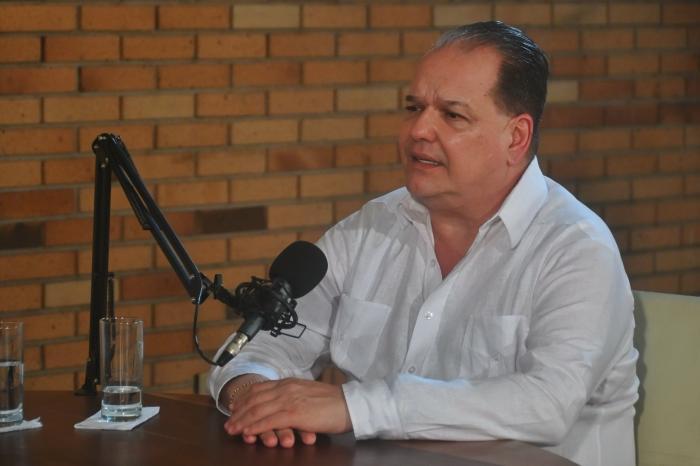
At the President’s request, Dr. Enrique Alemán—leader of the sociocultural and religious project *Quisicuaba*, historically based in the Havana neighborhood of Los Sitios—discussed social support efforts from the perspective of an organization like the one he heads.
"Addressing this topic," Dr. Enrique Alemán remarked, "shows that it is a matter of extreme sensitivity and profound humanism—one that draws upon the experience of government ministries, the political-ideological work of the Party, and the teachings of the Revolution and Fidel."
*Quisicuaba*, he explained, works to safeguard human values and to contribute—as much as possible—to human betterment and the "utility of virtue," echoing José Martí’s core precept: "with everyone and for the good of everyone."
Dr. Alemán highlighted the contributions being made in this area by many other civil society initiatives—including religious and fraternal institutions, as well as community and family-based projects. These efforts help, as you, Mr. President, have taught us, to "chip away" at these problems; for, as he noted, the multidimensional nature of vulnerability in today’s Cuba is unique and must be addressed as such. After outlining a series of initiatives undertaken by Quisicuaba—ranging from direct care for vulnerable individuals to the development of projects rooted in science and innovation—Dr. Alemán reiterated that addressing the multidimensional problem of vulnerability requires more than just providing food, offering financial assistance, or increasing wages.
In this regard, he explained, we must be able to recognize other social determinants at play in contemporary Cuba, within a context that makes navigating the challenges of daily life exceptionally difficult. Ultimately, he noted, the sensitivity with which this issue is approached—and the profound sense of humanism brought to bear—is the essential element in the Revolution’s policy of ensuring that no one is left behind.
HUMAN BEINGS, NOT NUMBERS
In the conclusions of the new episode of the podcast From the Presidency, Díaz-Canel Bermúdez reaffirmed that attention to families and people in vulnerable situations "will be a priority and permanent issue as long as the problem exists."
"Social justice is not defended with speeches, it is defended with institutions that work," said the president, who insisted that to defend social justice we must produce. "If we do not produce, if we do not generate wealth, if we do not provide quality services that are inclusive and comprehensive, what social justice are we going to defend?" he asked.
He thus pointed out that a principle of the government in the implementation of the Economic and Social Transformations is to make it very clear "that before the economic ones we have to have the social transformations that allow us to protect people."
That is why, he explained, economic actors, whether state or non-state, are also social actors, which is why the new regulations "incorporate social responsibility obligations for companies, cooperatives and MSMEs, requiring them to contribute to the improvement of community services and care for vulnerable people."
In addition to insisting on the concept that "social policy is a shared task among all economic actors, consistent with decentralization and local development," Díaz-Canel addressed other principles to follow in this strategy, among them, that "social protection must be accessible, not bureaucratic"; and that “social justice is measured by the ease with which a vulnerable person can access protection, not by the number of documents they must sign.”
At another point in the analysis, the Head of State stressed the responsibility of the institutions "to maintain close monitoring of the fundamental needs and shortcomings of the population, with particular attention to segments in vulnerable situations."
He explained that the Party and the State "have defined a clear, transparent policy committed to social protection, with priority for our girls, boys and adolescents, and our elderly and pregnant women."
In a review of what was discussed in this new episode of his podcast, Díaz-Canel stressed: «The data that has been given here today is essential to assess the setbacks and advances, what has been done and what is pending, but never stop reading them with the awareness that behind each number there is a human being in need of attention and that the Revolution, as a supreme act of social justice, must sensitively and efficiently take care of them. It is what we learned in the school of Fidel, Raúl, Celia, Vilma, Haydée, Camilo, Che and all those who gave their lives to transform the deeply unequal and unjust society of the capitalist past.


