

Cuba is expanding opportunities for the participation of foreign capital in its economy through a series of transformations designed to diversify partnership models, facilitate the establishment of businesses, and offer greater guarantees to investors.
The new provisions allow for partnerships with Cuban private enterprises and cooperatives, introduce investment possibilities in real estate and heritage zones, and extend the duration of usufruct and surface rights granted for business purposes up to 99 years.
In a complex economic context, the country seeks to leverage these tools to attract financing, technology, market access, and productive capacities that contribute to national development. Granma spoke with Déborah Rivas Saavedra, Deputy Minister of Foreign Trade and Foreign Investment, about the emerging opportunities and the conditions required to realize them.
–What opportunities does Cuba currently offer to foreign capital?
–One of the most significant transformations is [Decree-Law] 119, which concerns foreign investment. It enables all Cuban economic actors that are legal entities to enter into partnerships with foreign capital.
"This opening encompasses not only commercial companies but also limited liability companies, as well as agricultural and non-agricultural cooperatives. This means that foreign investors can find new domestic partners and participate in projects across various sectors of the economy."
"Furthermore, opportunities have been expanded for Cubans residing abroad, who may act as foreign investors and partner with the Cuban private sector—holding the same rights and obligations as investors from other countries—while also being able to invest in MSMEs and other forms of business management."
–In which sectors can new businesses be developed?
–These transformations expand investment opportunities across various activities. A new policy allows for the formation of partnerships involving foreign capital for real estate development—not only in tourism, but also in other sectors, such as the construction and recapitalization of existing factories.
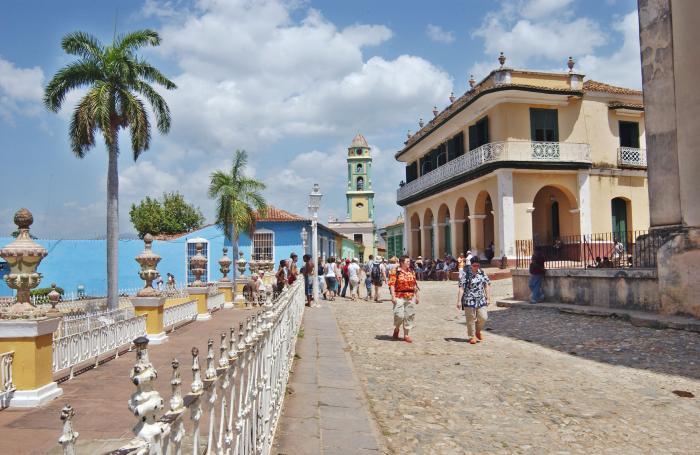
«Another opportunity is in conservation and heritage areas. Now national companies can partner with foreign capital to develop businesses in those spaces, which were previously not open to this type of investment.
«This is particularly important for cities and towns such as Baracoa, Trinidad, Havana, as well as for other historical areas, since foreign capital can contribute to the restoration, conservation and economic use of these spaces.
"The premise is that the projects contribute to the development of the country and represent benefits for both the investor and the Cuban population."
–What legal guarantees have been incorporated?
–The terms of validity of certain rights granted to investors were extended. In the case of agriculture, for example, the right of usufruct could be granted for up to 20 years. With the modifications made to the Civil Code, it can be extended up to 99 years, like the surface right.
"These terms offer greater possibilities to develop long-term investments and provide legal stability to businesses. "They are important guarantees for those who need to plan projects whose recovery and development require prolonged periods."
–How can businesses with foreign capital operate financially?
–Financial autonomy constitutes one of the fundamental transformations to create a favorable investment climate. The possibility of having income in foreign currency and accessing the exchange market is important to support business operations.
"The Cuban banking and financial system faces significant damage derived from the economic, commercial and financial blockade, which has worsened and expanded into an energy siege. This situation has worsened since the inclusion of Cuba on the list of States supposedly sponsoring terrorism."
"In this scenario, offering guarantees to protect and support investors' financial resources is essential. Autonomy makes it easier to carry out its operations and collect dividends, which contributes to the sustainability of the projects and generates trust between those who already invest in Cuba and those who value doing so."
–What advantages does it offer to associate with private companies and Cuban cooperatives?
–Based on Transformation No. 119, two new businesses have already been approved with the participation of foreign investors in the private sector.
"These associations can provide financing, facilitate access to international markets and contribute to the export of national productions. It also encourages foreign partners to supply raw materials, intermediate products and other inputs necessary to increase productive capacities and achieve territorial development."
"Therefore, the opportunities are not limited to the marketing of finished products. It is about developing local capabilities, expanding production, generating employment and promoting export income."
–What is being done to reduce approval times?
–The simplification of procedures is another essential component of these transformations. Decree 153, which came into effect on July 9, implements decisions previously announced by Oscar Pérez-Oliva Fraga—Deputy Prime Minister and Minister of Foreign Trade and Foreign Investment—at last year’s Havana International Fair.
"Key updates include shorter project evaluation timelines and the introduction of ‘positive administrative silence.’ If evaluators do not provide their feedback within the established timeframe, the project is considered approved and may proceed to the next stage."
"Several businesses and projects have already been approved through this procedure. Previously, delays in responses from evaluators could prolong administrative processes and cause projects to exceed their scheduled timelines."
"Furthermore, we are working on a new policy and a new Foreign Investment Law that will build upon these decisions."
–How can investors identify opportunities in the provinces?
–We are facilitating engagement across the various territories. The Ministry of Foreign Trade and Foreign Investment (MINCEX) is conducting a national-level science, technology, and innovation project aimed at building local capacity and identifying initiatives that could attract foreign capital. Each territory possesses unique potential linked to local production and strategic sectors.
"We have an Electronic Single Window for Foreign Trade, used to apply for authorization to conduct foreign trade operations nationwide, as well as a Single Window for Foreign Investment—established in November 2020—through which projects involving foreign capital are submitted for evaluation and approval."
"During our visits to these regions, we work alongside local governments and economic stakeholders to help identify, develop, and evaluate proposals."
–What is the primary challenge in bringing these opportunities to fruition?
–We must create the favorable investment climate that we need; at the same time, all domestic economic actors must embrace foreign investment as a necessary option for development. We also need to strengthen our preparation and negotiation capabilities, and present attractive projects that allow for the establishment of mutually beneficial relationships.
"The economic context presents significant challenges, yet these transformations open up new possibilities for all sectors. We are confident that we can move forward."
"Processes involving foreign investment and foreign trade are complex, requiring companies to master the technical, financial, and commercial aspects of each operation. That is why it is so important that these tools are understood and utilized."
"Our goal is for the opportunities created by these transformations to translate into actual business ventures, investments, and tangible results for the Cuban economy and its people.
"Foreign investment is essential for the country’s economic development and represents an opportunity for those willing to establish business ventures based on mutual benefit."


