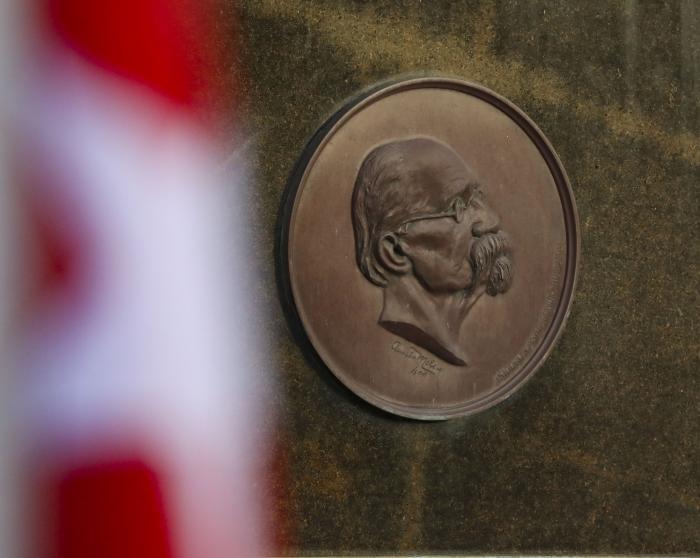
Few regions on the map of Cuba are as deeply intertwined with the name of Máximo Gómez Báez—Commander-in-Chief of the Liberation Army, born in Baní, Dominican Republic, 190 years ago this November 18th—as the territory that now comprises the province of Ciego de Ávila.
In this land, he left behind more than just the tracks of his horse or the edge of a machete; he left a code of human valor, a standard of military conduct, and tangible proof that independence could only be won through combat.
For the people of Ciego de Ávila, commemorating his birth means revisiting a heroic chapter in history—tracing the path of a physical presence that was both persistent and decisive, and which shaped the trajectory of the wars of 1868 and 1895.
According to conservative estimates, Gómez was present in more than 150 locations within what is now the territory of Ciego de Ávila. In areas such as Majagua, his presence was recorded on over thirty occasions—to the point that he became an expert on the region’s geography.
This familiarity was the foundation of his military effectiveness. Only by understanding his operations in this region can one truly grasp the full scope of the Ten Years' War and the conflict of 1895–1898.
Ángel Cabrera Sánchez, a historian from Ciego de Ávila, has rigorously documented this symbiosis between the Generalísimo and the local territory. The researcher notes that Gómez established information networks, relied on local commanders such as José Gómez Cardoso, and transformed the area into a testing ground for his approach to irregular warfare.
It was here—in the pastures of Lázaro López, now the province’s primary historical site and one of the most significant locations in the Cuban struggle for independence—that Gómez and Antonio Maceo finalized the structure of the Cuban Invading Army.
It was during the formation of that force, on November 30th, 1895, in which the Dominican General pronounced his famous sentence: "The day that there is no combat will be a day lost or misused", a summary of his war ethic and commitment to Cuba.
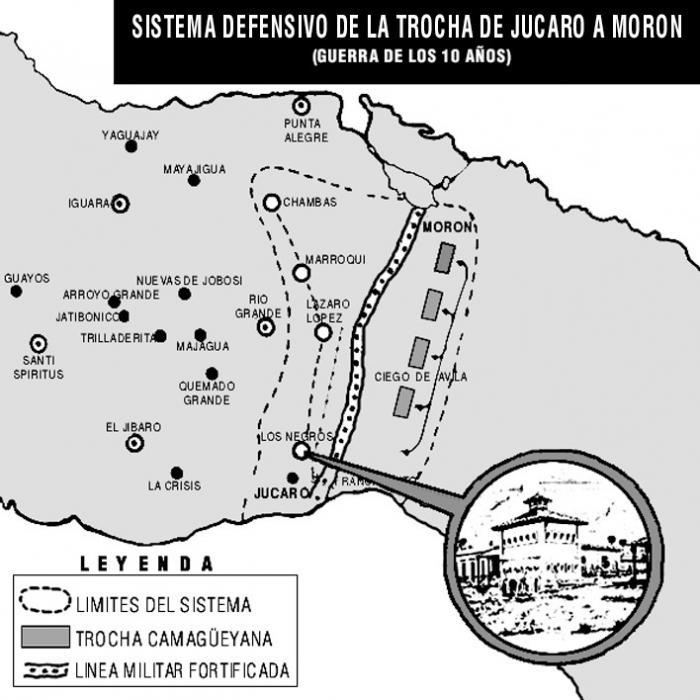
As the main strategist and tactician in the lands of Ciego de Ávila, Gómez successfully confronted the numerous Spanish colonialist troops concentrated on the military trail from Júcaro to Morón, the most important defensive system of its type built by Spain in its American colonies.
He demonstrated that the wall, apparently impregnable, was not impassable: he facilitated the two most important crossings of it with contingents of more than a thousand troops. The first, on January 6th, 1875, headed by himself; the second, by Antonio Maceo, on November 29th, 1895.
During the La Reforma Campaign (January 1897 to early 1898), Gómez became the logistical guarantor of the custody of ammunition and the support for its transfer to the west of the trail, through commissions or small groups of mambises. The lands of Ciego de Avila were the setting par excellence where he demonstrated the effectiveness of his irregular warfare tactics, the crowning expression of which was that campaign, deployed to the lands of Sancti Spiritus.
When narrating Máximo Gómez's connection with this region, it should not be forgotten that Gómez never fought alone.
Alongside the Military Trail Brigade, other significant units fought within the territory of what is now this province: the Castillo, Honorato, and Martí regiments. While these names appear in local history books, it was the people of the Ciego de Ávila region themselves who gave them flesh and blood. Among them were José A. Gómez and the local-born General Juan Veloso Cardoso; Colonel Simón Reyes Hernández—known as "The Eagle of the Military Trail"—a distinguished patriot from the municipality of Chambas; Colonel Nicolás Hernández Moreno, nicknamed "El Tocayo," a celebrated patriot from Morón; Captains Manuel La Hera and Manuel Campos Sosa; and the patriots surnamed Cervantes—Irene, Tranquilino, Amador, and Pío (the latter a notable patriot from Florencia). Also deserving of mention is Mrs. Emilia González Echemendía, an illustrious patriot from Majagua who, together with her family, oversaw the mambí field hospitals in the wilderness.
Simón Reyes knew every cattle trail in the vicinity of Chambas; Nicolás Hernández monitored the movements of Spanish columns from Morón; the Cervantes family took turns transporting ammunition from one side of the Military trail to the other; and Mrs. Emilia’s hospital, hidden deep in the wilderness of Majagua, provided care for the insurgent forces.
Gómez died in Havana in 1905, never having held formal Cuban citizenship, yet bearing a title that no decree could ever bestow: Generalísimo (Commander-in-Chief) of the Liberation Army of Cuba. Between his native land and his adopted homeland lay a territory that served as a hinge, a laboratory, and a trench: the lands that today comprise the province of Ciego de Ávila.
190 years after his birth, the figure of Máximo Gómez remains—for those who attack us—an uncomfortable yet illuminating mirror: a foreigner who gave everything for a homeland that was not his own; a military leader who disdained pomp and led by example; a man who believed that freedom must be defended every single day, and that a day without combat—a day without effort, dedication, or sacrifice—is a day lost or poorly spent. In Ciego de Ávila, that lesson was learned for all time.
One hundred and ninety years later, many stones from the Military trail and several small forts remain. Those names live on in the pages of history books. The General’s statue depicts him on horseback; behind him—one by one—stand Reyes, Hernández, the Cervantes, González Echemendía, and many people from Ciego de Ávila belonging to newer generations.