It was also a November 25th. On that same date, 60 years later, the people had to confront the physical death of Fidel—even though they had never truly believed it possible. He, the survivor of every danger and ambush, the architect of the impossible, was supposed to be eternal.
Yet, six decades earlier—on that November 25th, and despite all that had already transpired: the Moncada, imprisonment, exile—not everyone placed their trust in the still-very-young revolutionary. The path of armed struggle was viewed with suspicion.
Those who had been with him since the early days of the Movement—and those who later joined, bound by the pledge that, in 1956, they would be either free or martyrs—did indeed know the qualities of their leader; they knew of his commitment to his fallen comrades; and they knew that he was, as Abel Santamaría had once remarked, the one who was meant to live.
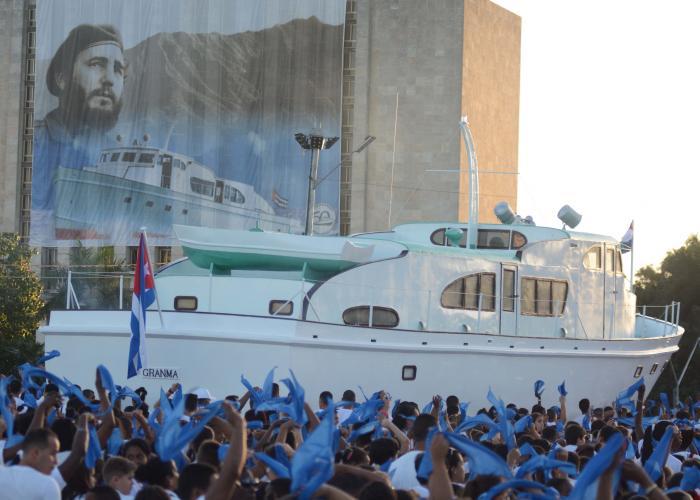
That morning – November 25th, 1956 – would mark the beginning of the definitive redemption of the Homeland. On the pleasure Granma yacht, they left the port of Tuxpan. There were 82 men, weapons, ammunition, food, additional fuel.
One of the crew defined it as "a nutshell." There was barely any room to move. Soon, nausea, the vagaries of the sea and other incidents would demonstrate the recklessness of the undertaking. Above all that, however, were the deeper motivations. This is how Juan Almeida Bosque told it:
"Already at the gates of the Gulf, with the yacht lights on, faces illuminated by emotion and hearts pounding, our voices can be heard singing the National Anthem and the July 26th March. Long live Cuba! Down with the tyrant!"
***
We march towards the dawn of harmony. No one will be able to say / that our name is a dark arrow. With the lights / off, and having as light the steely eyes / of the dawn, we left one early morning in November / towards the Island.
***
"The shots continue: ras, ras, ras! What a will this man has! He's been at it for hours. Anyone else would have already taken several breaks. On the port side he has a target placed on the bow, and from the stern he shoots, flush, flush, flush!... With each rifle he adjusts he makes the last check." "Like this, one after the other, with a medium screwdriver that almost got lost in his hands."
It is Almeida again who tells the story, amazed by Fidel's perseverance, while the rest barely manage to stand up. He will also feel joy when, in the midst of the general anguish over Roque's fall into the water, I heard him say: "We're not leaving here, we have to find him!" They already know that they will not be abandoned or forgotten, even when common sense indicates otherwise.
At last, the man is rescued from the waves: "He comes aboard, soaked, wearing trousers but no shirt, shivering uncontrollably. Later, once his strength has returned thanks to the artificial respiration he received, he can be heard calling out, in a faint, broken voice:
'Long live... a free... Cuba!' —and we join him in the cry.
'Set a course for the lighthouse!' Fidel commands the captain."
***
Aboard that white yacht, sailing across / a sea the color of saffron and antique glassware, we felt / the waves of uncertainty striking us / just as our own desire to put an end to the past did. / And as we made our landing in the muddy / waters of Las Coloradas—with the same joy / as children gazing toward the future—(…) / we discovered / that behind every one of our actions, the words / of the Apostle would shine forth.
***
Over the radio, they heard about the events of November 30th in Santiago de Cuba—actions intended to support the landing that would take place just two days later at Los Cayuelos, a mangrove swamp about two kilometers from Las Coloradas beach.
Che Guevara would later describe it as a shipwreck: "Of our military equipment, nothing remained but a rifle, a cartridge belt, and a few wet bullets. Our medical supplies had vanished, and most of our backpacks had been left behind in the swamps."
Then came Alegría de Pío—a disastrous encounter with enemy troops for men already worn down by exhaustion, thirst, hunger, and blistered, sore-ridden feet.
Fidel, as he recounted to Ignacio Ramonet decades later, experienced what he called "one of the most dramatic moments" of his life: "It is not hard to imagine my state of mind, having seen the efforts of nearly two years vanish in a matter of minutes."
Unwilling to return to prison, and feeling that sleep would overcome him, he placed his rifle between his legs, pointing it toward his chin and his finger on the light trigger.
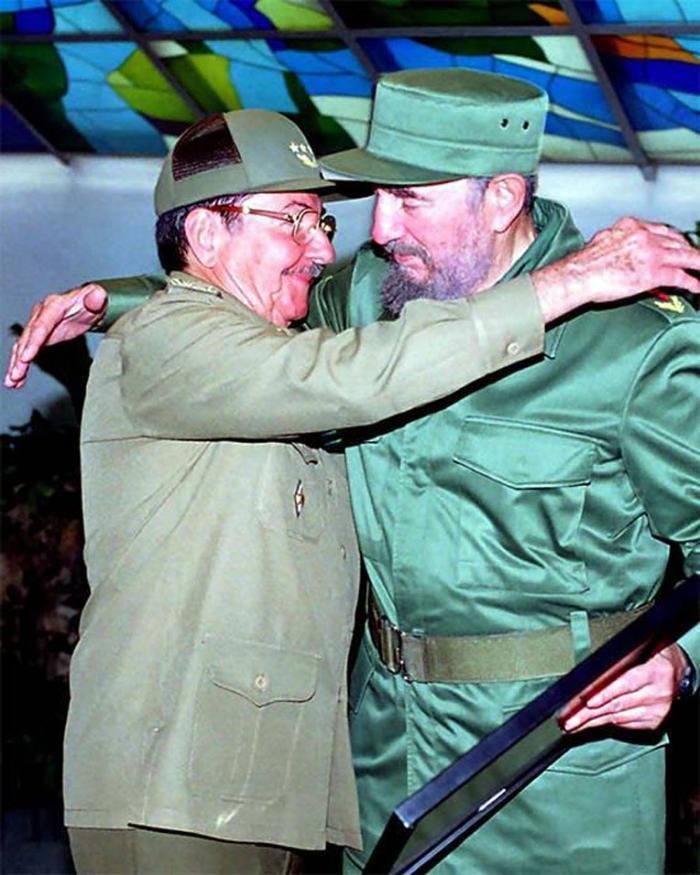
In the following days, an inhumane hunt was unleashed against the expedition members. Many were killed in cruel circumstances. However, Fidel – as Raúl assured in Santiago de Cuba, on December 3rd, 2016, at the farewell of the leader and brother – "never lost faith in victory," and 13 days later, already in the mountains of the Sierra Maestra, on December 18th of the aforementioned year, when gathering seven rifles and a handful of combatants, he exclaimed: "Now we have won the war!"
On July 26th, 1994, the Army General, in words that he returned to that day, had stated: "Fidel's permanent teaching is that it is possible, that man is capable of overcoming the harshest conditions if his will to win does not falter, he makes a correct evaluation of each situation and does not renounce his just and noble principles."
***
Then came the writing of fire, the temper / of the knife flashing in the Sierra nights, / the opening towards the light of voluntary work / and, like a warm hand that reaches out / to shake another, proletarian internationalism. /No one will be able to say that our name is a dark arrow.
***
Yes, we must continue, if the end is just, and what is at stake, the dignity of Cuba, the historical coincidence seems to tell us: 70 years ago the Granma yatch sailed towards a victory that few would have taken for granted then. Ten years ago, the Commander-in-Chief died: but his life's work tells us that his death is not true, because he leaves the legacy of will.
You have to persevere, ready for anything. And always return to that early morning when a boat left towards the collective dawn; return to the spirit of that day. Almeida wrote:
"The yacht starts up slowly, it does so forcefully, it seems that the propellers, due to the weight, are buried in the mud or that the boat is sitting and refusing to move, as if it foresees the danger it is going to face."
"A fine drizzle covers it, the lights are still off. The emotion cannot be described (…) We have to navigate with the engine at low speed until we pass the Customs Post, we are going without an exit permit, I hear what they say. I look at the clock, it's one thirty in the morning on November 25th. Fidel says:
"–If they order us to stop, we have to continue."
*The verses cited in this text belong to the poem Cantar de Alejandro, by Hildebrando Pérez Grande.