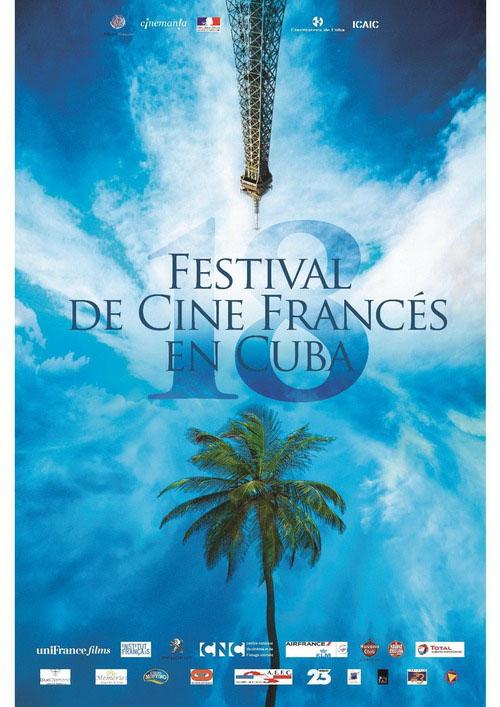
One of the greatest figures of contemporary global cinema, Costa-Gravas, traveled to Havana to present his film Capital, included as a tribute work in the 18th French Cinema Festival, scheduled April 30 through the end of May.
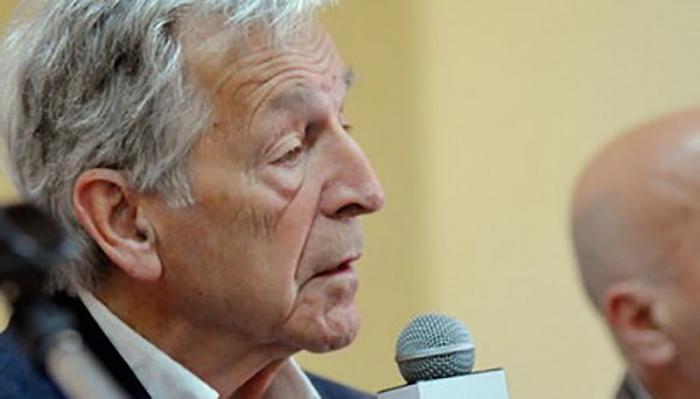
The French-Greek filmmaker (Athens, 1933) held a long press conference on the Festival and his four or five visits to the island, either to give classes at the San Antonio School of Cinema or attend the International Festival of New Latin American Cinema.
Also President of the French Film Archive, he stated, “Cuban cinema has always interested me; to see how a country emerging from a revolution quickly developed a national cinema industry and made important films.”
For this eighteenth encounter with French cinema, considered to be the largest of its kind outside of France and the second most popular in Cuba after Havana’s New Latin American Cinema Festival, Costa Gavras presented his film, Capital,starring Gabriel Byrne and Gad Elmaleh, aboutruthless ambition, power struggles, greed and deception in the international world of finance.
Costa Gavras has always been admired for the breadth of his social and political outlook, avoiding Manichaeism and stereotypes, which has seen him become the chief pioneer of so-called “political cinema.”
The director of Z, State of Siege, Missing and Music Box was asked precisely about this definition in a brief aside: “I don’t accept definitions, because what do they mean by political anyway? It comes from Greece, the birthplace of democracy. I talk about human beings, about victims.”
In his films he combines tragedy and spectacle… “Greek tragedy is over 2,500 years old and also leads to democracy; it was a spectacle, an important word. Spectacle, as defined by Sophocles or Molière”.
What about your film Capital? “I talk about the economy, money, about how today bankers control the world and have more power than politicians. I try to reflect reality, in this case a cruel reality about the power of banks, the desire for money and disregard for the average citizen.”
Are you working on a new project? “Yes, but I would prefer to talk about it once its finished, I can tell you that its about a current issue. I make films about stories which interest me, which touch me deeply.”
For the French Film Festival, an important delegation arrived to the capital, led by Fréderique Bredin, president of the French National Film Center who signed an agreement with Roberto Smith, president of ICAIC (Cuba’s Film Institute), focused on three key elements: Co-production, film restoration, and the digitization of the Rampa Cinema.
This year’s Festival includes 15 feature length fiction films, four documentaries, two animations and four restored works of classic French cinema (Zero for Conduct, 1933; Grand Illusion, 1937; Children of Paradise, 1945 and The Golden Helmet, 1952).
The annual event opened with a screening of the French-Mauritian film Timbuktu - winner of the Palme d'Or Prize at Cannes, 2014 and seven Cesar Awards - presented by its producer Sylvie Pialat.
Renowned director Laurent Cantet, who brought his classic film The class to Havana in 2007, is back with Return to Ithaca¸ written by four authors including Cuban writer Leornardo Padura, while director Jean-Paul Salomé, president of Unifrance Films, is presenting the comedy Playing Dead , after the success of Arsenio Lupin in Havana.
Must-see films include The Life of Riley, directorAlain Resnais’ last work, who died shortly after filming; and documentary Homos, el odio, presented in theChaplin cinema by its producers Pascal Houzelot, Damien Cuier, and Mariela Castro, director of CENESEX.
Cristophe Barratier (director of The Chorus),member of the French film collectiveCinemania and founder of the French Cinema Festival stated, “When I first arrived to Cuba in 1998 to present the film Microcosmos, it was an instant connection with the public, and from that moment on, I decided to try to return. The Cuban public touched me deeply. It has become a love story.”
As director Jean-Paul Salomé explained, French cinema makes films to compete with those of Hollywood, which now, more than ever, focus on “heroes such as the Marvel series or machines. We want global audiences to see other ideas, other stories.” And the variety of films included in this 18th Festival does exactly that.