THE 19th International Cubadisco Festival, 2015 will be held in Havana from May 15-25, with the competition, symposium and concerts continuing to display the “irrevocable principle maintained since its creation – the quality of the product being presented.”
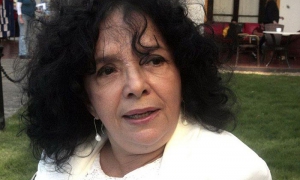
This statement was made by Cary Diez, vice president of the event, during an exclusive interview with Granma International in which she spoke about topics such as the Cuban music industry, the significance of the awards and this year’s program.
What are the most noteworthy aspects of an event such as Cubadisco?
”The first is that it’s the only one of its kind in regards to the Cuban record industry. It started out as a modest concept, a record competition, and has become a point of reference for the identification, promotion, development and diffusion of what’s going on in the Cuban music industry. Thanks to Cubadisco, every year we have the opportunity to gain an insight in to what’s being produced, now not only at the level of Cuban record labels and productions from other international brands working with Cuban musicians, but also independent productions created in the country. What's more, it’s still true that despite the greatest efforts of many institutions, in a country with such a vast wealth of music, it is impossible to recognize every quality creation.”
So, what of the Cuban record industry?
”I think it’s an incomplete aspiration, but yes, you could say there is a Cuban record industry because there exists a system which features the different stages of creation, sound and audiovisual recording. There are different systems to support these modes of production, although we would like there to be more professional ones in Cuba, however this is still an unfulfilled goal, but there is an industry, because there also exists a system of music commercialization.”
Commercialization is a complicated issue…
”It is deficient but it does exist. There are markets which we have yet to reach. Just because supply and demand is not being met in certain spheres, doesn’t mean there isn’t a market, just that it reaches others, that’s why we have record companies. The Cuban market is very challenging. It’s complicated, the price of albums, which are generally not produced in Cuba, has to be researched and studied, and we also need people who will play and disseminate the music. It’s a complicated chain from a logistical point of view.”
Do the Cubadisco awards recognize the best examples of Cuban music in every category?
There is a lot of really good music, much of which doesn’t feature in the competition, because many albums are still being recorded while others are in the production stage. Time also has a negative impact; delays mean the music that is enjoying success does not coincide with the release of albums. But yes, the Cubadisco awards effectively reflect a good part of the best of what is being produced.”
And popular tastes, what do people like the most?
Cubadisco features reggaeton as one of its categories – a reflection of the boldness, integrity and reality of what’s going on. To begin with, it was negatively received by some people, just like rap and other alternative genres of music which are now popular among certain demographics of our population, our society. But now, independent productions are competing and have the possibility of expressing themselves and the event has to take them into account. Since the beginning we have always tried to promote quality, which is an irrevocable principle, we will not allow the quality of the product we are presenting to be lost.”
What does Cubadisco recognize?
”It’s an academic prize; it is neither influenced nor constrained by market parameters. It is not awarded based on sales figures, nor popularity, although as a specialist event we have to be responsive to future music trends and the preferences of the Cuban public. That’s why Cubadisco isn’t just an award ceremony. We have spaces for theoretical reflection - the symposium - which address this type of phenomena. We try to identify the areas which see as most in need of such activities. In regards to this edition which is dedicated to symphony and choir music, and just as you asked, there will be a session dedicated to analyzing the current state of the Cuban music industry.”
What would you highlight about the concert program?
“Above all, that it shows the strength that Cuban symphony music is gaining. A number of important symphony orchestras are being developed by young directors, with a repertory of Cuban works written especially for this type of format. Concerts paying tribute to Russia, selected as guest country of honor, will include pieces byRachmaninov, Shostakóvich and Prokófiev, among other Russian classics.
Almost 10 symphonic and choir groups will participate in the symphony gala on May 17, with a huge performance from a global repertory, including Polovtsian Dances,from the opera Prince Igor, byAleksander Borodin, under the direction of maestros Guido López-Gavilán and Digna Guerra, this year’s presidents of honor.
On May 10 a symphonic orchestra formed of students from the Caturla, Roldán and Higher Institute of Art schools, with the participation of children’s theatre company La Colmenita and the group Sampling will perform the symphony, Peter and the wolf, bySergéi Prokófiev, because like I said we are focusing on the repertories of Russian composers.
We will also be receiving the Minnesota Symphony Orchestra which made a previous visit to the island from 1929-1930 and is currently celebrating its 100th anniversary. The group will give two concerts conducted by Finnish maestro Osmo Vonsk, to one of which have been invited Cuban pianist Frank Fernández, the Cuban National Choir and the Vocal LeoChamber Choir.
Concerts by the ICRT orchestra and its choir will feature in the gala playing tribute to the work of Tania Castellanos and Adolfo Guzmán; a performance by the National Symphony Orchestra conducted by its director Enrique Pérez Mesa will close the event, while a special tribute will be paid to the Great Havana Theatre Orchestra on the 200th anniversary of its founding.”
Cubadisco has an extensive list of nominees in various categories. We will only mention those already announced for the Special Awards: La Fantasía. Homenaje a Juan Formell (Egrem) and Eterno Formell (both in homage to the Cuban musician a year after his passing); Indefinidas Confesiones. Poemas de Antonio Guerrero (Bis Music); Fanfarria de Primavera. Obras Electroacústicas de Jesús Ortega (Colibrí) and Canción de Otoño. Pablo Milanés Interpreta Canciones de José María Vitier (Bis Music).
If the Special Awards are any indication of what is to come, then Cary Diez, vice president of Cubadisco is right when she states that: quality is an irrevocable principle.