The story goes that Beethoven once said, “After Mozart, maybe God.” What is certain is that the genius of Salzburg continues to enchant audiences wherever his music is performed, and Havana could not be any different before such beauty.
Thanks to the Festival Mozart-Habana 2015 (October 16-24), throughout the city’s central World Heritage district, his symphonies, flute concertos, masses, divertimentos, organ pieces, chamber music for string quintets, and sonatas were heard.
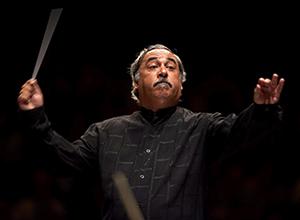
One special event took place outside the historical district, in the National Theater’s Covarrubias Hall, the customary site of performances by the National Symphony Orchestra, led on this occasion by its principal conductor Enrique Pérez Mesa.
Pérez Mesa was happy to respond to a request by the head of the festival’s organizing committee, Ulises Hernández, that the National Symphony Orchestra present a concert featuring works by the great Wolfgang Amadeus Mozart.
He selected for the program nothing less than Piano Concerto No. 23 in A major (K. 488), performed by Cuba’s master pianist Frank Fernández.
Pérez Mesa told Granma International, “This is a work which has brought him (Fernández) very good luck, all of his life. In fact, he received some of his best critical reviews in Russia, when he played it.”
This is how he was described in Moscow: “Fabulous pianist. His way of playing this work could be defined as perfect distancing, in which an apparent simplicity of execution is marvelously combined with the immensity of Mozart.”
Concerto No. 23 was finished, according to Mozart himself, March 2, 1786, and includes three movements which the masterful Frank Fernández performed with virtuosity: the allegro, joyful and positive; the melancholy adagio; and the allegro assai, with overwhelming joy and vigor, establishing the desired contrast.
After the long ovation, Fernández commented to the audience which continued to applaud, “The second movement is one of the most intense chapters of, not only Mozart, but all classical music,” and described the composer as “an intense and passionate man.”
He returned to the piano, to again perform the adagio which had so moved the audience, to “conclude with intimacy.”
The concert had begun with the Symphony Orchestra playing the Magic Flute Overture, premiered in Vienna, September 30, 1791, when Mozart, at only 35 years of age, had only a few more months to live.
Critics consider these works, especially the Overture, as one of the most exquisite miniatures to emerge from Mozart’s pen.
Performed next was the Symphony No. 35 in D major, K. 385, also known as the Haffner, composed in 1782, the first of Mozart’s “important” symphonies, since the first 30 had all been written before he was 18.
The orchestra emphasized the powerful opening of the piece, “with much fire,” as the composer himself requested; then the serene beauty of the andante; pure classicism in the brief menuetto; and the triumphant final presto.
Mozart wrote his father about the work, “The theater could not have been more full and…every seat was occupied. But what pleased me above all was that his Majesty, the Emperor, was present and – Heavens! – he was enchanted and how he applauded! It is his custom to send money to the box office before coming to the theater, so I had no justification for a larger sum, but really his pleasure was far beyond what I expected. He sent 25 ducats.”
In a brief dialogue with Pérez Mesa, the conductor said that he considered the performance “a way to honor one of the world’s greatest composers, and an opportunity to highlight the work being done at the Mozart Lyceum in Old Havana.”
When Mozart is performed, for example, by Cuba’s National Symphony Orchestra, is the piece given some specific color, or is it pure Mozart?
First, Mozart makes everyone change. He is a very virile composer, of very deep music, very difficult, which demands a very strong technical preparation, since they are works distinguished by lyricism, the orchestra’s internal rhythm, and I believe it is obligatory for all symphony orchestras to approach this repertory which prepares one to later perform works of greater scope.
What level of connection, of comprehension, is there between the Cuban audience and Mozart?
I believe that the Cuban audience has one of the highest levels in the world and I have had the opportunity to conduct in other countries. Conductors and soloists who come to Cuba always tell me that the Cuban audience is fabulous, for example, Francesco Madara, concertmaster of Alla Scala in Milan, says that he only comes because the applause of the Cubans is totally different, it’s sincere and knowledgeable. We are a country with a great history in music and very interesting things are happening, we are well respected internationally.
Recently the visit of the great Chinese pianist Lang Lang, one of the most important figures of the classical world, as well as the Minnesota Symphony, just as we expect the Chicago Symphony. I think Cuba is rescuing what it always was due to its geographical position. You always saw before the programs for New York, Buenos Aires, Havana and that is what we are going to rescue once we have the Amadeo Roldánfunctioning again, we will have it I can assure you, it is a commitment from the state, the Minister of Culture, on the Great Theater of Havana is finished we will begin to troubleshoot the problems at the Amadeo Roldán.
Does the Mozart Festival impact of the development of classical music on the island?
I think the Festival is important. I think it's also a way to show the audience that Cuba is on the cutting edge of music. Mozart is played in Havana, although one plays it in one way or another, the spirit of the Cuban musician is different, we interpret Mozart a little more from within, it is not that we make it more romantic, it’s that we play with more vividness. This is something that the conductors and soloists who pass by here also highlight. Mozart is a composer who must always be present. Here there is an arts education system that is not the best but that is one of the most outstanding in the Americas and that gives provides us with the possibility of interpreting such a complex composer as Wolfgang Amadeus Mozart.
The Festival Mozart-Habana 2015 closes the three years of operation of the cultural project “European classical music in the social environment of Old Havana”, funded by the European Union and the Mozarteum Foundation, under the auspices of the Office of the Historian of Havana, and the Mozarteum University of Salzburg, among others.