With his performance at the Minor Basilica of Saint Francis of Assisi, talented pianist Cecilio Tieles confirmed why his concert was one of the most eagerly awaited of the 28th Havana Contemporary Music Festival.
Maestro Tieles, with his refined technique and extraordinary skill, made the most of the opportunity to present the works of Cuba’s contemporary composers, as he does in every international performance, whether in Spain, the U.S. or Ecuador.
He plays for his love of music and his country, while his extensive and solid training has enabled him to create a vast and varied repertory of works spanning all eras, from the 17th century to present day.
On this occasion he performed two pieces: one by Orlando Jacinto García, exceptional Cuban composer based in the United States, entitled “Oscurecimiento gradual” and “Diurno y postludio” by Juan Piñera.
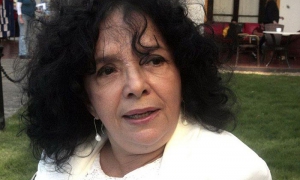
Speaking with Granma International prior to the concert, in the gardens of the National Union of Writers and Artists of Cuba, maestro Tieles explained the characteristics of both works.
”I think they are two very interesting pieces, two completely different styles. Both are distinguished by a pure contemporary language which is familiar or easily understandable for the listener. Orlando Jacinto’s composition is a work where the cotemporary element resides in the elongated sounds which stretch out across space and time. Piñera’s piece is expertly written for the right hand and has an ironic element to it: Scriabin wrote “Nocturno” and “Preludioparamanoizquierda” – on which the piece is based – while suffering problems with his right hand. So Piñera has made “Diurno y un Postludio” for the right hand. A successful piece which has been performed in the U.S., Madrid and Barcelona, to great acclaim. I wanted to present two personalities, one who lives in Miami and the other in Havana, and I wanted the public to get to know their music.”
Where is the cubanía in these works?
You’ve touched upon a very important issue. It’s that sometimes our culture appears too schematic and if the African aspect isn’t present it no longer sounds so Cuban. Fernando Ortiz, himself, to reference an expert on the matter, spoke about Euro-Cuban music. We are a complete mix, but our complexity mustn’t be obscured. It can’t be measured in a unilateral way. Where do you sense the cubanía? It’s a question that needs to be asked. Cuban culture is very rich.
Is there any difference from a technical point of view when approaching classical and contemporary music?
There is no difference because when a musician approaches a piece, first they must try to figure out what each composition is trying to say and study it to the maximum, which in a certain way influenced this work and I believe is valid for everything.
On the other hand, contemporary music is such that you start to create traditions, which is nothing more than the consecration of certain lasting elements. We are creating traditions with all types of music, when you make a modern or contemporary piece you start out on that road.
Beethoven or Liszt were developing a base and started a tradition which continues to day. This is the complex nature of contemporary works, you don’t know how they will turn out, you give your version, and later someone else comes along and does something different. That’s the difference. And another thing, I have been studying the so-called classic works for 40 years, while I have only been playing new pieces, such as “Oscurecimiento total”for eight months.It’s very important to familiarize yourself with contemporary works and study them.
Can you explain the public’s relationship with contemporary music…
You have to compose with the public in mind. Composersnowadays are looking to communicate. Here in Cuba there’s Leo Brouwer, for example, who owes his fame and prestige to his ability to communicate, his music has always been structured around the desire to communicate. Juan Piñera, Roberto Valera, Harold Gramatges would also make the endless list, but there are others as well. The breach between the audience and the composer is closing, and we musicians, who are in the middle, must keep the public in mind. You have to play songs the audience enjoys, because if no one comes to your concert you can’t make a living. I have to play attractive music. I would only play purely experimental music for a specialist group.
What is your assessment of the festival?
I value it highly. Fantastic music is presented. We have moved past the era of the vanguard, the search, experimentation; the public must now be the focus, without allowing music to become commercial or demagogic. But, who do you compose for, play for? Playing for four or five friends isn’t the goal. Music has an emotional function and the objective is to create connections through the codes you use, something which we occasionally forget – not only in Cuba – and we make music that is too abstract, or too commercial, even vulgar. We are denouncing the problem here, because it’s contradictory to Cuban culture, which is a refined culture.
Cecilio Tieles (Havana, 1942), as well as being a celebrated pianist, is a great educator and researcher; who during the festival, offered a presentation on the figure of Cuban composer, pianist and professor Nicolás Ruiz Espadero (Havana, 1832-1890) at the National Library.