A film festival’s prestige is earned in a variety of ways. In many cases due to the high-profile stars they attract, others for the quality of films presented, and two of three for their status as time-honored events.
The Havana Festival of New Latin American Cinema’s reputation is marked by its beginnings, no less that 37 uninterrupted years ago, with city cinemas looking to first attract domestic and later global audiences.
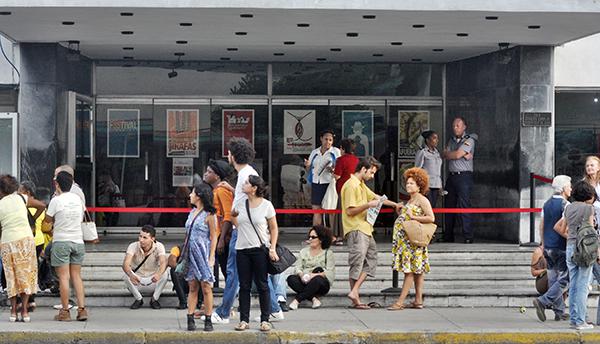
December in Havana sees a celebration of Latin American film, supported by half a million spectators; a must for directors from throughout the region.
The 37th edition of the festival is scheduled to take place December 3-13, which according to the organizers - who reserve the right of admission and are yet to reveal the final selection for the official competition - will include “Latin American productions completed in either 2014 or 2015.”
Such tireless efforts to maintain the festival, running for 37 years now, merit a brief history of the event. The first edition was held December 3-10, 1979, at which time over 600 filmmakers participated. The winners of the Coral Grand Prize for fiction were Geraldo Sarno (Coronel Delmiro Gouveia, Brazil) and Sergio Giral (Maluala, Cuba).
Brazilian productions have won on several occasions, with accolades going to titles and directors instantly recognizable to film buffs: Bye Bye Brasil, by Carlos Diegues; Eles não usam black-tie, by Leon Hirszman; Memórias do cárcere, by Nelson Pereira dos Santos and Ruy Guerra’s Opera do malandro.
Argentina is another historical winner with: Asesinato en el Senado de la Nación, by Juan José Jusid; Darse cuenta, by Alejandro Doria; El exilio de Gardel, by Fernando Solanas; Ultimas imágenes del naufragio and El lado oscuro del corazón, both by Eliseo Subiela;Luis Puenzo’s La historia oficial; El secreto de sus ojos by Juan José Campanella; and Miss Mary; Yo, la peor de todasand De eso no se habla, all iconic films by the great Maria Luisa Bemberg.
As the host country, Cuban productions receive the same treatment as those from any other nation in the region, with its directors also having won several Coral Awards: Hasta cierto punto, Tomás Gutiérrez Alea; Se permutaandPlaff, Juan Carlos Tabío; Un hombre de éxito,Humberto Solás; Fresa y chocolate, by Tomás Gutiérrez Alea and Juan Carlos Tabío; and Conducta, by Ernesto Daranas.
Beyond its golden age of cinema, Mexico too has picked up numerous distinctions with, among other films: Frida-naturaleza viva, by Paul Leduc; La tarea prohibida, by Jaime Humberto Hermosillo and Profundo carmesí, by Arturo Ripstein.
Meanwhile the masters are continually making way for new talents and their debut productions, such as Fernando Pérez’s Clandestinos (Cuba); María Novaro, Lola(Mexico); Luis Alberto Lamata, Jericó (Venezuela); Guillermo del Toro, Cronos (Mexico); Marco Bechis, Garaje Olimpo (Argentina), with offerings from these and even younger directors like Andrucha Waddington, Eu, tu, eles, (Brazil); Alejandro González Iñárritu, Amores perros (Mexico); Lucrecia Martel, La ciénaga, (Argentina); Karim Aïnouz,Madame Satâ (Brazil); and Lucrecia Martel, La niña santa,and Lucía Puenzo, Wakolda, (Argentina), and as will be seen in the approaching festival, the new generation has now arrived.
Despite the fact that festival organizers have yet to reveal the official competition selection, it has been confirmed that 400 films will be presented during the event.
”With a broad range of works spanning various regions, themes and genres, the Latin America in Sight selection offers an extensive overview of the latest cinematic productions from the hemisphere, grouped across 16 subprograms which include a total of 214 films from 28 countries,” notes the event website.
Beyond the competition, the festival offers two essential moments for filmmakers: the Post-Production Coral Award and the Latin American Script Writing Workshop.
The main aim of the Award is to help directors complete feature length fiction, documentary, or animation productions, filmed in Latin America, and which may require technical resources in the post-production stage, as the name indicates. The prize also enjoys the support of various co-sponsors, such as Lazio Film Commission (Italy); La Burbuja Sonido (Argentina); ARACNE DC (Spain); Sofía Films (Mexico) and Boogieman Media (Argentina).
In regards to script writing, known to be the foundation of all audiovisual creations, the workshop, created in 2008, offers participants guidance from experts and other industry contacts, which has seen several filmmakers enjoy the good fortune of seeing their works make it to the big screen, including: El páramo, by Jaime Osorio (Colombia); Las mariposas, by Javier Hayrabedian (Uruguay); Caballos, by Fabián Suárez; Vestido de novia, Marilyn Solaya; and Melaza, by Carlos Díaz Lechuga (Cuba); García, by Diego Ezequiel Vivanco (Argentina-Colombia) and El cerrajero, by Natalia Smirnoff (Argentina).
Thus, as we can see, the Festival of New Latin American Cinema features the participation of numerous artists, while the main attraction for movie-lovers will be the film screenings, although 400 in 10 days is an impossible number.