Many are the paths and histories charted by the Pablo de la Torriente Brau Cultural Center over two decades of existence. Fleeting, momentary, brief, are not words that could be used today, because at the Center’s headquarters on 63 Muralla Street, in the heart of Old Havana, those who have over the years sung, painted and shared there, never leave.
There are plenty of reasons to visit the Center – as it is commonly known – at this time. Firstly, December 19, marks the 80th anniversary of the death in Majadahonda, Spain, of Pablo de la Torriente Brau; this April saw the commemoration of the victory at Playa Girón 55 years ago, which also happens to be the subject of the director of the Center, Víctor Casaus’ classic book on Latin American history, Girón en la memoria; and finally, this 2016 we are celebrating 20 years since the Center’s founding, an essential space for Cuban culture.
REMEMBERING PABLO
Pablo de la Torriente Brau (San Juan de Puerto Rico, 1901-Majadahonda, 1936) is one of the best examples of Cuban journalism in the 20th century and his works in particular set a powerful precedent for the testimony genre, among many others.
Pablo was a revolutionary of his time. He published his first anthology of short stories, Batey, in 1930, followed by, among other works, a series of three articles entitled 105 días preso; La isla de los 500 asesinatos and published in the newspaper Ahora¸ which led to Presidio Modelo and Tierra o Sangre, in 1933, a series of stories denouncing the abusive treatment of campesinos.
He traveled to Spain following his appointment as war commissioner and member of the General Staff of the Seventh Division 109th battalion on November 11, 1936. The following week he arrived in Madrid. On November 28 he met with Poet Miguel Hernández. On December 17, he received orders to march to Majadahonda, where he died – shot in the chest - on December 19. After the fall of the Republic his remains where taken by a Cuban fleeing the country, and have never been seen since.
Miguel Hernández dedicated his poem “Elegía segunda” to Pablo de la Torriente, political commissioner, with prophetic verses:
“I shall remain in Spain, compañero / you told me with a loving gesture. / And in the end without your thundering soldier’s mansion / On Spanish pastures you remain.”
The Center which has borne his name since 1996, is home to the Pablo de la Torriente Brau Documentary Fund, which according to Víctor Casaus contains, “the most information collected on the life and works of the great journalist and Cuban writer. It includes original documents, letters, photos as well as current and past literature.”
He noted that the collection is the result of “donations made by Zoe and Ruth de la Torriente over more than 60 years, and is undoubtedly the most important collection of documents and photos related to the life and work of Pablo; as well as images collected by various researchers during their investigations in Cuba, the U.S., Puerto Rico and Spain.”
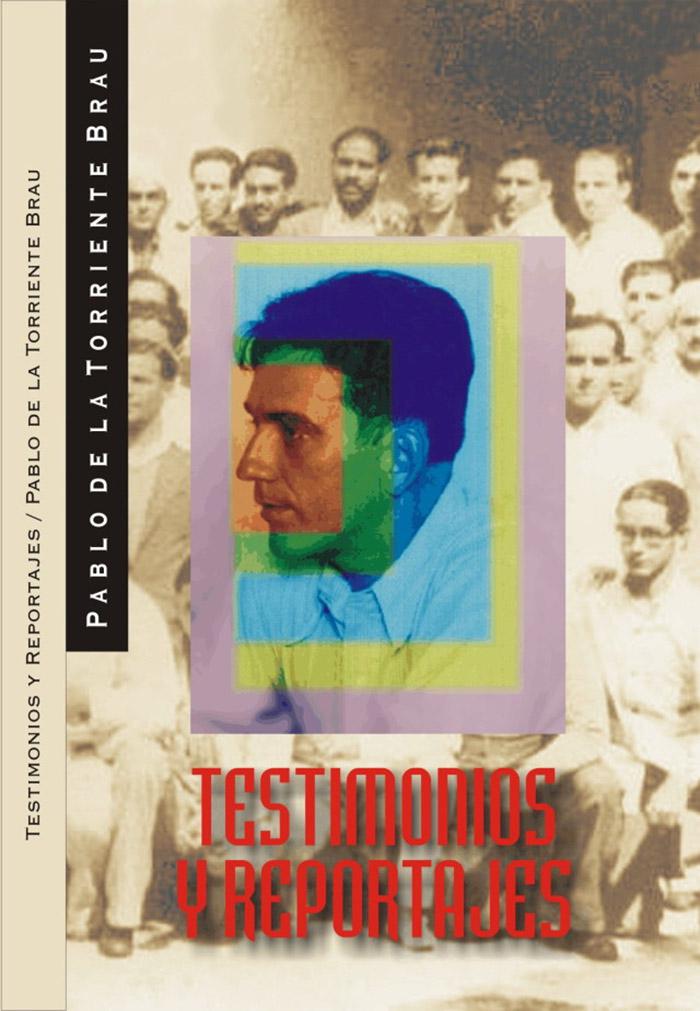
Over the years, the Center has published a great variety of Pablo’s works among them, Cuentos Completos, Cartas y crónicas de España, Aventuras del soldado desconocido cubano, Presidio Modelo, Testimonios y reportajes, Álgebra y política, Arriba muchachos!, Narrativa and Cartas cruzadas.
TWENTY YEARS OF DREAMS, HARD WORK AND ACCOMPLISHMENTS
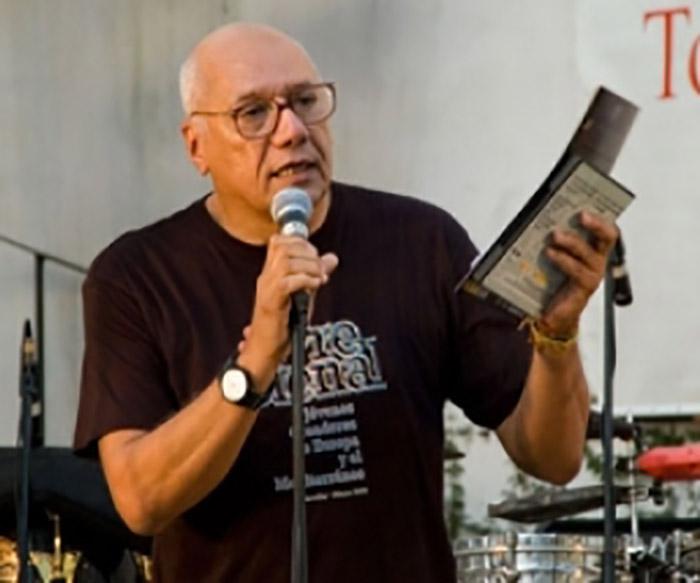
Víctor, poet, film maker and cultural promoter for over 20 years, responded to several questions about the history of the Center:
"The Center was founded in 1996 to preserve and share the essential and revolutionary literary memory of Pablo de la Torriente de la Brau and his formidable generation, as the possibilities and demands of our dreams and resources expanded so we continued adding other areas of cultural work, which despite their apparent differences were linked together by the constant and resounding presence of memory, expressed through the new school of Cuban trova, digital art, testimonial literature, graphic design, audiovisual production, publications and the press, radio, digital tools, more vital than ever in today’s society.
"The creation of the Center was in large part possible due to the support of our friend Abel Prieto, then president of the Union of Writers and Artists of Cuba (UNEAC).
"The long list of co-founders and contributors features Raúl Roa and Pablo’s sisters, as well as a group of friends inducing Eduardo Galeano, Juan Gelman, Mario Benedetti, Ernesto Cardenal, Roberto Fernández Retamar, Luis Eduardo Aute and Silvio Rodríguez.
"I must also mention Havana City Historian Eusebio Leal Spengler. One morning in 1997, in the early days of our recently founded Center, he led me, among the buildings of Old Havana which he had had been responsible for preserving and enriching culturally, to a recently restored building on 63 Muralla Street, whose facilities we have shared with one of the cultural programs affiliated with the City Historian’s Office, la Casa de la Poesía, ever since.”
THE PATIO OF THE SNAKEWOOD TREES
The patio of the Snakewood Trees (patio de las Yagrumas) at the Pablo Center is a veritable stronghold for trova musicians. The space receives both artists and the public alike, who have been enjoying inspirational music there since 1998, when the A Guitarra limpia (Pure Guitar) event began with a memorable concert bySantiago Feliú.
In order to document the art presented there, the founders and continuers, Víctor, coordinator of the space María Santucho, and sound engineer Jaime Canfux, worked hard from the very beginning to record concerts, first on cassette tape and now in CD format.
To date 80 CDs of the over 170 concerts have been produced. The Cubadisco 2016 Festival recently awarded a Special Prize to the five-disc A guitarra limpia anthology-collection.
On presenting the award in the Tropicana cabaret’s Arcos de Cristal Hall on May 18, Jorge Gómez, director of Cubadisco, stated that 15 years ago the Pablo Center "began to present young trova musicians, recoding them one by one, producing as some might say, homemade cassettes, CDs. Today this work is one of the most outstanding documents (or should I say monuments) to new trova in our country."
Responding to the assertion that the Center views the CDs as a cultural item rather than a commodity, Victor responded:
"Exactly, this is our aim, or vocation. Having a site that opens doors in various directions, which supports the work of creators across various spheres, especially young artists, many of whom are trova musicians, and successfully trying, so far, to ensure that the cultural rather than commercial element comes first.
"Once a friend jokingly told us that when he discovered that trova musicians come here and perform for free, at that there’s no entrance charge so people would come, and that afterwards we produce CDs and hardly ever make back the money we spent, at a time where this sort of thing is a rarity, that friend told us, you guys are a dying breed, I said we would rather be an enduring breed, I hope that’s the case."
LA MEMORIA EDITORIAL
The Pablo Center is neither a record label nor a publishing house, but does publish works. “We created the brand Ediciones La Memoria,” states Víctor, "almost twenty years ago, to try to preserve memory. We have over 80 titles. They are books in which we seek to combine a beautiful aesthetic with the depth and importance of the diversity of topics they address.
"The over a dozen collections which make up our editorial catalogue include a range of areas: testimony; visual arts; studies in to new trova in Cuba and popular culture on the island; poetry; graphic design. Palabras de Pablo the very first collection which spurred on the rest of the series includes the journalists’ complete works."
Presented during the International Book Fair, which took place last February, was the book Pablo: imagen de una vida, by the critic and professor Jorge R. Bermúdez; which explores the iconography of the hero of Majadahonda in photos, posters, digital art, songs and documents collected by the Center over the last 20 years.
The Center has also produced Cuaderno Memoria and since 1996 has published over 30 issues, recording the very best of the A guitarra limpia concerts and Digital Art exhibitions and colloquiums (over 10 showings organized since 1999).
During celebrations for the Center’s 20th anniversary, the latest edition of Cuaderno Memoria was published, a mini anthology of A guitarra limpia from 2013 to 2015.
GIRÓN REMEMBERED
Revisiting the past, according to Víctor Casaus (Havana, 1944) is vital, as exemplified by his book Girón en la memoria, which received a special mention from the Casa de las Américas Literary Prize, 1970, a reference text which is being re-released on the occasion of the 55th anniversary of the victory at Playa Girón.
The five chapter book, tracing the daily events which occurred from April 15-19, 1961, through interviews, documents, and photographs, reconstructs - in an almost film like way - the essentials, to understand and measure the scope of such an important event.
Raúl Roa, also known as the Minister of Dignity, a member of the Casa Prize jury panel which awarded a special mention to the book, stated, "It is clearly a excellent book, a vivid, thorough recollection of Girón, and is, at the same time, an exemplary work from a technical point of view."
There is more: last February in the Casa de las Américas Che Guevara Hall the Poet that is Víctor - alongside singer song-writer Lucía Sócam, from Andalucia – gave the concert Amar sin papeles, which takes its name from his poetry anthology, with texts set to music by Sócam.
Who better than poet Juan Gelman to talk about the anthology and the Center’s important cultural work? He states in Increpación a Víctor Casaus, which features in Amar sin papeles:
"Hey, how dare you? We are living in frightening times and you come out with love poems. What are you trying to do? Make us believe that human beings are still human? That we can sleep on sheets of light? That there is light in the slices of shadow? That whiteness seems at first glance, indestructible? (…) You know the liberty of the adventuring word. I hope it lasts you."
According to Eduardo Heras León, 2014 National Prize for Literature winner, in a salute to the institution on its 20th anniversary, stated that the Pablo Center "is a place where its not prohibited to dream, and where dreams can turn into culture and above all, into acts of creation. This is a great feat, practically a miracle."
Maestro Leo Brouwer, National Prize for Music winner, 1999, and Film, 2009, also noted, "The love you breathe in this joyous 20 year old temple is more than a game, it is continual creation… Víctor Casaus is a humble and honest man, who hasn’t used the center for his own benefit but has opened it to those who daydream in poetry and song…Congratulations to those who, alongside Víctor keep this vision of shared beauty alive: breath easy Pablo, the place is alive!”
The Pablo Center is celebrating its first, successful 20 years inspired, according to its director, by the eternally youthful, committed and joyful image of Pablo de la Torriente Brau.