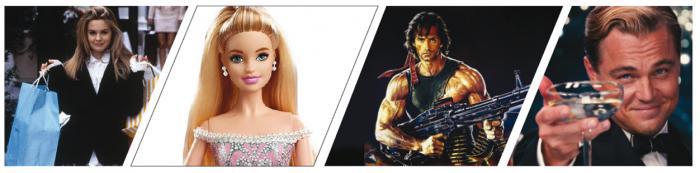
A significant portion of our decisions and behaviors are guided by our tastes. Not infrequently they involve deeply felt emotions. Purchases, sales, marriages, births, burials... are usually motivated by the evident or latent "taste" an object or person compels or inspires in us. What determines whether we like, dislike or stop liking something? Are we, perhaps, a hedonistic and fragile species that is easily victimized by seducing us with our tastes, whether we like it or not?
Capitalism has learned to dominate us through our tastes and has taught us to like this domination. After manipulating us with food, fear, housing, all the basics, capitalism understood that it could sell us whatever it pleased and do big business by controlling tastes. We were quickly educated to assume the boss’s tastes, way of life, values, comforts and accept his power. We were quickly educated to stop liking our peers and to start liking all the people and things that are born, raised and reproduced in the bosom of the class that exploits us. And we were educated to buy and buy everything they invent, but, yes, happily, with "good taste."
A decisive factor in the power of taste is, more often than not, the irrational component of its cause and effect. Why do we spend what we spend around the world on war toys for children? Why do we invest what we invest in alcoholic beverages, sodas and all variety of spirits to enliven parties and celebrations of all kinds? Why do we gladly consume an enormous volume of movies, television series, shows, music, news programs and, in general, bourgeois ideological merchandise? Why do we buy clothes, make-up and fashionable paraphernalia at any cost, with dubious quality? Why do we get into debt, why do we like to get stupid, why do we like to fight?
And despite all the enigmas surrounding the judgments we make based on taste (that is, our ability to affirm or deny something about what we like), nothing that can be said about taste is removed from the class struggle and the historical influence that the ideology of the dominant class imposes on all behavior. Simplifications aside, the objects or subjects of our preference or aversion objectify the entire scope of what we know and don’t know. All our parameters are shaken. Does what we like or dislike come from what we were taught in school, at home, at work, in church, on TV? Do we like only what we know or what we don’t know, too? Do we like what everyone likes or what makes us different? Do we like combinations, mixtures or ambiguities? Where does what we like and dislike come from?
And even more complicated is understanding why we like something that harms us. Why do we gladly accept to do, say, think, and assume as part of life, tastes with consequences that - in the short or long term - will damage our health, social relations, politics or the entire planet. Do we like Hollywood movies, soap operas, TV series, smoking, alcoholism... financing dependencies of all kinds and contributing en masse to the coffers of organized criminals?
Moreover, we transfer "tastes" to our children and friends, as an exercise of power with which we make the most individualistic part of our aesthetics reign supreme, which, by the way, is usually not as individual as we think. For one and many reasons, criticism of tastes is usually taken as an attack that offends us at a very sensitive level and often irritates us to the point of severing a relationship. There is a degree of shame that are hurts us when someone discovers that we like something unacceptable. From that person we expect complicity, silence, and we establish aesthetic associations that include, not infrequently, pathological alliances. Such persons are called addicts. Perhaps because of their tastes?
In the senseless warehouse of merchandise - which capitalism imposes on us as if it were life itself - packed with more than a few unattainable and useless objects, changeable criteria are promoted to drive piece-meal consumption and the criteria are based on taste. A people anesthetized by market tastes and class aesthetics buys the TV set they each like to watch the programs they each like and all the advertising they like. They buy the blender they like, the coat, the spoons, the furniture... and mainly the status, distinction, the ideological platform that facilitates the illusion of belonging to the boss’s world and the universe of his tastes. Whatever the cost.
The dictatorship of tastes is an economic battle and an ideological battle. Tastes are the lethal shrapnel of the ideological war machine. All together and simultaneously. The most perverse intentions as well as the most astonishing ingenuity move within this domination. And while it is true that not everything is meticulously calculated to impose the most profitable tastes and that there is a certain gamble the bourgeoisie assumes as a risk when investing in new tastes for millions of consumers, let us not forget that in the production of oligarchic tastes, massification is indispensable because it is essential to business. And this has generated particular tastes and ideological canons that regulate, for example, the logic, ethics and mercenary aesthetics of advertisers. Exceptions apart.
Developing scientific currents specialized in the criticism and revolution of tastes is an imperative of our times. As long as criticism is based on the justification and trappings of taste to obscure and avoid any serious analysis -and transformation - we will sink a good portion of our problems in the swamp of the most paralyzing subjectivity and complacent relativism. The justification of "I like it" is rarely the best in most cases.
It is also true that there is an arena of taste (the most promising, no doubt) that, under certain special conditions, is able to escape the bourgeois ideological empire (as in the case, not exclusively, of some artistic expressions), but it is clear that these are extraordinary episodes. There is no worse enemy of emancipatory art than capitalism. The complexity of aesthetics in human beings admits - in less contaminated expressions - an exercise of emancipation or freedom that holds much promise for the social revolution that will put an end to capitalism both objectively and subjectively. But we cannot wait for the death of capitalism to insist on the need for education of tastes (their re-education) and this requires a wealth of knowledge and experience, diversity, broad and deep morals and ethics of pleasure, not based on the subjugation of human beings.
This re-education is specialized work that has a place on the front lines of struggle (of praxis), because it is here, better than anywhere else, where what we like will synthesize with what we need, and taste as a pleasurable intoxicant will be transformed to become an emancipating force. This is the school of struggle and the alchemy of revolution.