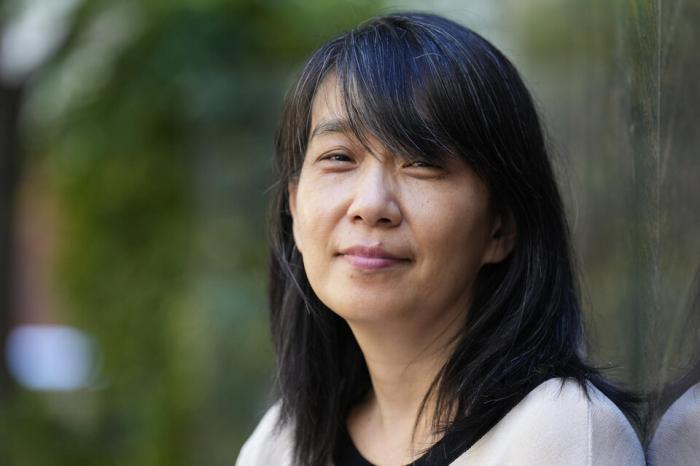
South Korean writer Han Kang was distinguished with the Nobel Prize in Literature 2024 "for her intense poetic prose that confronts historical traumas and exposes the fragility of human life," the Swedish Academy announced.
The academy considered that Han Kang's work is characterized by a double exposure of suffering - as mental and physical torment - and by its connections with Eastern thought.
Hang Kang was born in 1970 in Gwanju, but moved with her family to Seoul at the age of 11. She is a graduate in Korean literature and although she debuted as a poet, she became known first and foremost as a storyteller.
In 1994 she won, with her story "Red Candle", the Seouk Shinmun newspaper prize and from then on she published several books with stories.
In 2016 she won, together with her English translator, Deborah Smith, the Man Booker International Prize for her first novel, entitled "The Vegetarian". Another of her novels, "White" was also among the candidates for the same award and "Human Work" won the Malaparte Prize in Italy.
In The Vegetarian the central character, a Korean housewife, starts by becoming a vegetarian, then tries to eliminate all animal products from her life and ends up dreaming of a life as a plant.
The Literature Prize, like the other Nobel Prizes, is awarded on December 10, the anniversary of the death of the founder of these awards, Alfred Nobel.