Antonio Gades danced and time was suspended: it was his powerful presence on the stage, the movements of his arms, the expression of his face, the mastery... but that magnetizing power also extended off the stage; because he was an avant-gardist and a revolutionary both in his artistic work and in his attitude before the world.
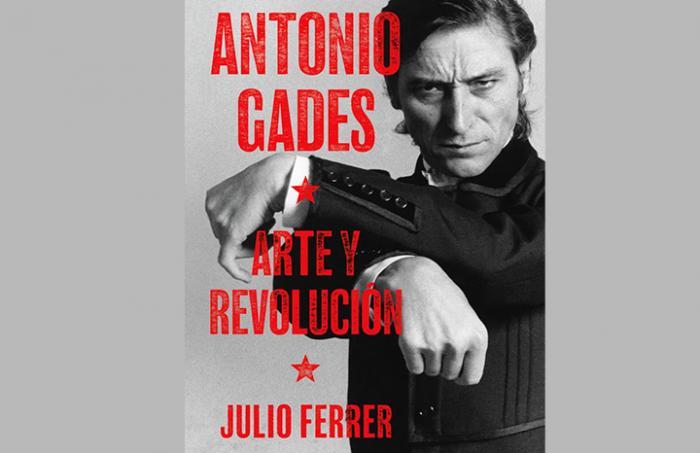
This was discussed in depth this Thursday at the presentation of the book Antonio Gades. Arte y Revolución, by Argentine journalist, writer and teacher Julio Ferrer, which took place at the Casa del Alba Cultural, as part of the activities of the Festival La huella de España, which is being held in Havana.
Miguel Cabrera, historian of the National Ballet of Cuba, who moderated a large panel, in the presence of personalities such as Stella Arauzo, artistic director of the Antonio Gades Foundation, described the Spanish dancer, whose remains rest in the Mausoleum of 2nd Front Frank País, as an extraordinary figure, and recalled his statement that Cuba constituted the port of his life. "This text is not a literary exercise, but an act of faith, of communion of ideals," Cabrera said.
Ferrer commented that he tried to reflect in this, the first complete biography of Antonio, all the edges of who was an anti-facist, and a man committed to his time, who believed in the human condition and equality for all. "He was a rebel and a dreamer, and in these moments in the world where the human condition is in danger, life must continue to give birth to figures like Antonio Gades," he said.
Cabrera added, quoting Alicia Alonso, that loved ones -and artists are among them- only die when they are not remembered, and Gades' art is still alive. Dr. Jose Angel Garcia, who attended the creator for a long period of time, added that he was "more a great human being than an artist, and as an artist he was great.
The author, who is a member of the Network of Intellectuals and Artists in Defense of Humanity, said he was honored to be back on the island of a "Revolution that has given so much to the history of humanity. This revolutionary Cuba has formed me as a man, I owe to it and to its people who I am, and I believe that both continue to be a beacon."