

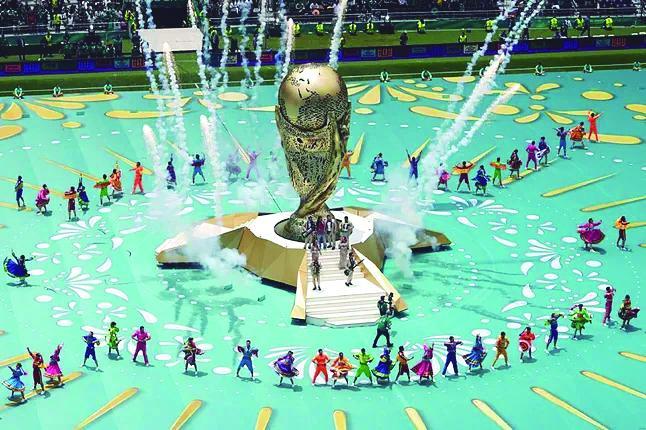
Some World Cups go down in history for a goal, a save, or a controversy. The 2026 tournament, however, was already historic before the ball was even kicked.
For the first time, three countries are hosting the World Cup, a celebration that has grown to 48 teams and promises to be the most ambitious stage ever built for football. Beyond the logistical deployment and the numbers, what truly captures attention are the human stories that intertwine across this tapestry of 16 cities.
The geography of power in football shows signs of change. Uruguay, the cradle of grit, is going through a rough patch. Germany, synonymous with efficiency, seeks to recover after the failures in Qatar and Russia. Brazil, the five-time champion obsessed with a sixth title, continues to search for its identity between "jogo bonito" and European pragmatism.
Meanwhile, the favorites speak volumes with recent titles: Argentina arrives with the star of 2022, France with its physical prowess, and Spain with its torrent of young talent.
The United States, Canada, and Mexico complete the host trio. The first contributes its undeniable organizational power, although with a shadow that tarnishes the discourse of inclusion, under the motto "Football unites the world."
Fans from at least 12 countries—Afghanistan, Myanmar, Chad, the Republic of Congo, Equatorial Guinea, Eritrea, Haiti, Iran, Libya, Somalia, Sudan, and Yemen—will be barred from entering the United States due to visa denials.
For example, the referee from one of these "banned" countries, Somali Omar Artan, was expelled from the tournament due to "alleged terrorist ties" by those who claim the right to maintain the unfounded list of states sponsoring this scourge.
In compensation, FIFA will pay him his full tournament salary, and the European governing body appointed him to referee the Super Cup final between Paris Saint-Germain and Aston Villa on August 12 in Salzburg.
However, just as the World Cup is the ultimate aspiration for the players, it is also the case for the referees, making the aforementioned benefits little consolation in the face of the immense disappointment of their ban.
Ultimately, the Iranian team decided to compete, but under extremely adverse conditions compared to the other teams, which will significantly increase fatigue and reduce their chances of recovery: they must enter and leave the United States on the same days as their matches. Furthermore, they will compete with little support, due to the restrictions imposed on their fans.
This politically motivated persecution also extends to officials like Jibril Rajoub, the president of the Palestinian Football Federation, who is stranded in Mexico, awaiting authorization to visit the United States.
The problems also affect dozens of accredited journalists, especially Iranians and Africans, whose hopes of covering the event have been dashed.
Meanwhile, the Spanish-speaking colleagues who managed to enter the World Cup territory endured the humiliation of not being able to ask questions in their native language during press conferences. FIFA has already corrected this ridiculous measure, but it provides yet another example of how much reality contradicts the beautiful phrase "Football unites the world."
This sport, after all, is a language understood by all people. And the entire world, with teams competing or not, gathers in North America to remind us that, beneath the differences, there is only a rolling ball and 11 against 11 who want to reach glory.


