

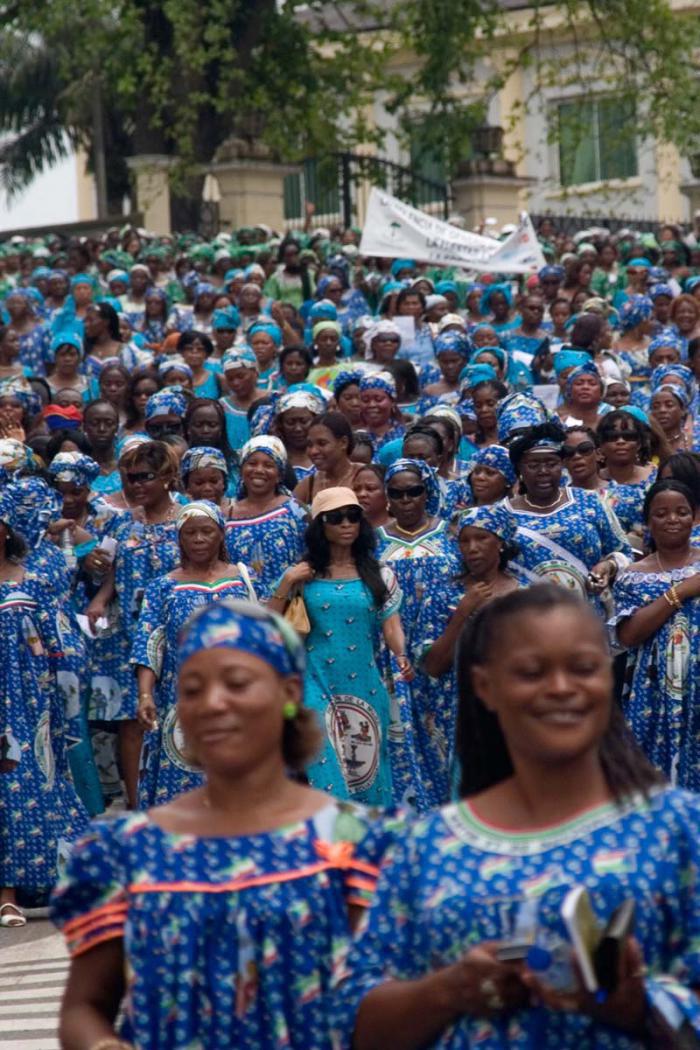
“Violence against women and girls remains one of the most serious - and the most tolerated - human rights violations, both a cause and a consequence of gender inequality and discrimination,” stated Phumzile Mlambo-Ngcuka, UN Women executive director, a body founded in 2010 by the international institution to address issues of gender equality worldwide.
Despite the region’s commitment to promoting gender equality and female empowerment, violence and discrimination against women and girls remain problems for the continent.
Major shortfalls in combating the issue persist in the region where marriages of underage girls still take place and sex offenders enjoy relative impunity in some areas. To this list must be added the enslavement of women and girls in conflict zones as well as female gentile mutilation, among other harmful practices.
As a consequence, Africa faces great challenges to improve the lives of women and girls in a context marked by the presence of terrorist groups, political instability, economic and social underdevelopment in many cases due to the pervasive legacy of colonialism, and the exploitation of natural resources.
Thus countries of the region are looking to establish concrete actions and undertake joint efforts in order to change the situation.
According to UN Women, almost all African countries have ratified the Convention on the Elimination of all Forms of Discrimination against Women and over half have accepted the African Union’s Protocol on the Rights of Women in Africa.
Likewise, the African Union (AU) declared 2015 the year of Female Empowerment and Development looking toward the Africa Agenda 2063, a document designed to achieve female development on the continent.
The initiative is aimed at expanding employment opportunities for women, access to healthcare, education and technology, economic empowerment, and participation in governance, among other objectives.
For its part, UN Women is involved in various projects on the continent to improve health systems as well as provide information about sexuality, and women’s rights and policies.
The body’s educational efforts are geared toward encouraging women to fulfill their roles as social and political protagonists, protecting their rights, broadening employment opportunities and assuring their participation in all spheres of national life; hence the importance of not only building schools in cities but also rural areas, as well as ensuring that girls attend.
In its efforts to end gender violence, UN Women supports programs in Africa which help to strengthen policies and laws to combat crimes against women, while also highlighting the need for strong government policies, measures and legislation which protect this sector of the population.
Aware that discrimination - which limits female developemnt - represents a chief obstacle to achieving these goals, the organization works to ensure that countries develop non-discriminatory labor and social protection policies.
It also supports the creation of mechanisms which provide vital services for women in areas of past or ongoing conflict, by promoting female participation in decision making; working with national electoral systems and political parties to ensure equal opportunities for all.
To this are added the challenges of reducing poverty rates, providing greater access to healthcare and education, raising wages and improving the overall standard of living in the region.
Experts note that promoting education for women and girls could make a vital difference to Africa. Investing in education will not only generate greater opportunities for women but also their children.
On the other hand, industrialized countries which have benefited from exploiting the region’s resources – above all the major global powers - have a duty to provide greater support to the continent. This is one of the ways to improve or at least positively affect the lives of African women.
The director of UN Women called on the international community to work together in order to create a more egalitarian world in which women and girls can live without fear of violence.
Key to this however, is the AU’s gender oriented platform Women, responsible for overseeing and implementing such practices.
South African Minister of the Presidency for Women, Susan Shabangu, said that the region’s 2063 agenda “represents renewed hope for women of our continent because it goes beyond the rhetoric on gender issues, and focuses on implementation of concrete actions with visible and measurable outcomes.”
Experts on the issue have suggested that in order for Africa to achieve its female development goals, current policies must be effectively implemented, which would require a change in mentalities and more resources.
Therefore the region must continue working to implement the measures outlined in the 2063 Agenda in order to achieve its aim of placing gender equality at the heart of social and economic development in the region.
Now, under the guidance of the Africa Union and with sights set on the African Agenda 2063, women across the continent are preparing to demand and fight for their rights, and end gender based violence and discrimination.


