

Elections took place in Bolivia on October 20 and President Evo Morales was re-elected.
The defeated opposition promoted a coup. The police chose to retreat to their barracks, assuming no responsibility to prevent violent groups from creating chaos, in response to calls by right wing leaders.
President Evo Morales was forced to resign on November 10 and seek asylum in Mexico.
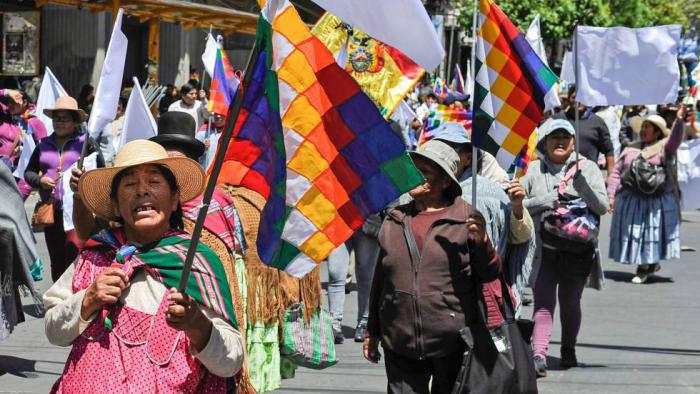
On November 12, Deputy Jeanine Añez proclaimed herself President during a Congressional meeting without the required quorum, since violent groups prevented Senators and Deputies from the Movement To Socialism (MAS) from reaching the site.Since then, campesinos, indigenous peoples, and popular sectors have blocked 83 roads in seven of the country’s nine departments, close to at least five cities, which are facing shortages of food and fuel.
The protests have been attacked by coup-supporting gangs and police, causing the deaths of at least 30 Bolivians, according to the Ombudsman.Although mobilizations continue in the streets, the Senate unanimously approved a proposal to study the drafting of an Exceptional Transitional Law to convoke general elections.
Senate President Eva Copa said that the proposal would shorten established timeframes, and streamline requirements, to allow for elections as soon as possible.On November 19, eight deaths were reported at an oil company located in Senkata, during a police-military operation to break a strike there and begin fuel deliveries.
Educational institutions in the municipality of Villa Tunari occupied a highway to join six other trade unions in Cochabamba and organizations nationwide denouncing the coup and expressing solidarity with Evo Morales.
Meanwhile, in Mexico, exiled President Evo Morales called on the United Nations and the Inter-American Commission on Human Rights "to denounce and curb this massacre of indigenous brothers demanding peace, democracy, and respect for life in the streets."


