

On May 3, general elections will be held in Bolivia and although the most widely supported party, the Movement for Socialism (MAS), has not yet chosen its candidates for President and Vice President of the Republic, the names of several possible nominees are circulating.
After almost two months in exile, following the coup against Evo Morales, Foreign Minister Diego Pary announced that he will return to the Andean nation to represent indigenous peoples and other social movements in Bolivia.
Speaking on a local radio station, Pary stated that he is grateful to the social movements that have put his name on the table among MAS pre-candidates. "I come from the social movements ... and, within that framework, I will always be ready to serve in whatever capacity is decided."
Other potential MAS candidates are former Foreign Minister David Choquehuanca, as well as Economy Minister Luis Arce, and coca union leader Andrónico Rodríguez.
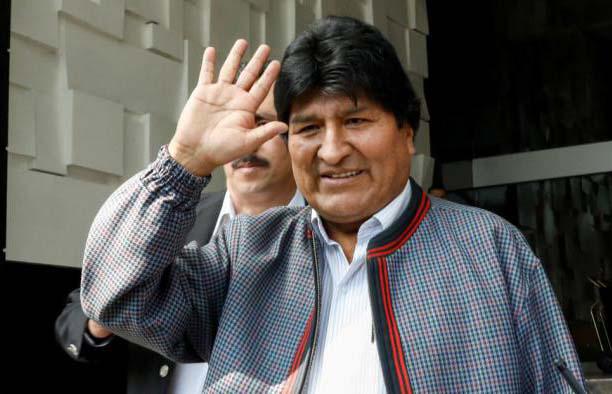
The official MAS candidate will be announced on January 19 at a press conference in Argentina by Bolivia's Constitutional President, Evo Morales, who called for a massive mobilization in the nation and said he would present a report on his administration’s work.
According to a study by the Bolivian television channel Unitel, the Movement for Socialism is leading polls in the run-up to the Presidential elections. The survey indicates that a MAS candidate will win 20.7% of the vote, five percentage points ahead of the closest rival, de facto President, Jeanine Áñez, with 15.7%.
The analysis places right-wing leader and candidate in the cancelled elections of October 20, 2019, Carlos Mesa, in third place with 13.8% of the vote.
According to teleSUR, the survey was carried out December 21-30, 2019 and has a margin of error of 2.5%, giving the results a high level of reliability.
The Bolivian Supreme Electoral Tribunal will officially convoke Presidential elections on January 6 and the MAS candidate will be called upon to defend the same government program presented by Morales in past elections and the accomplishments of his years in office.
On November 10, a coup against President Evo Morales, orchestrated by the United States and the Organization of American States (OAS), was consummated after commanding officers of the Armed Forces and the Police joined in calling for his resignation on the pretext of maintaining peace, while making false accusation of irregularities in the October elections.


