

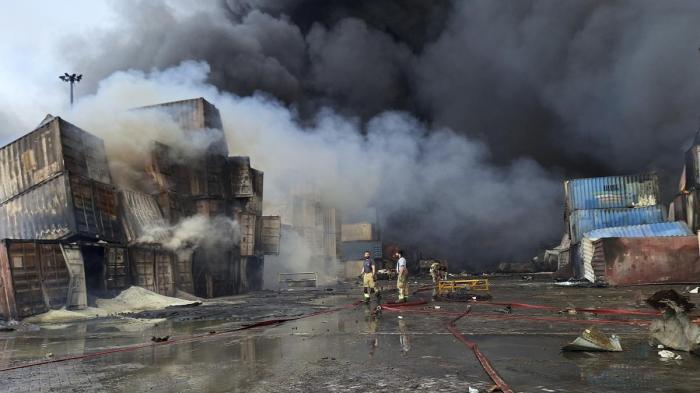
Bandar Abbas, a key port in the Strait of Hormuz, has been rocked by a tragedy that has generated national and international concern. The incident, a major explosion and fire, caused significant damage and an undetermined number of casualties.
Iranian authorities immediately deployed emergency teams to control the flames and attend to those affected.
According to preliminary reports, the exact causes of the incident are still under investigation, although there are various hypotheses as to its origin: from an industrial accident due to human error or technical failure, to a possible cyber-attack or external sabotage.
The presence of flammable materials, such as fuels and chemicals, facilitated the rapid spread of the fire, causing destruction to docks, cranes and warehouses.
Beyond the human cost, the incident threatens serious economic consequences. Bandar Abbas is a critical node for Iran's exports and imports, especially of oil and other commodities.
The disruption of port operations could aggravate the country's economic situation - already affected by international sanctions - by reducing export revenues, generating delays in maritime traffic and increasing transportation costs, adding uncertainty to global markets.
In a regional context marked by geopolitical tensions, particularly generated by the United States and Israel, the possibility of sabotage cannot be ruled out. Iran has been the target of cyber-attacks in the past, and an incident of this magnitude could involve the compromise of port systems.
Ongoing investigations will have to clarify whether this was an accident or a deliberate act, a verdict with inevitable repercussions in the already complex Persian Gulf scenario.


