

Reema, Rahaf and Suhaib are Palestinian children who were vilely killed recently by Israeli bombardments against their home in the town of Jabalia, in the northern Gaza Strip. What was the fault of the three siblings, two girls and a boy - who, judging by their photographs, were no older than 11 years old - for having been born in an occupied city, attacked and massacred?
Like them, there are thousands who have died in the enclave, approximately 100 are killed or injured daily, and according to Unicef, more than 14,000 are on the brink of death from starvation. These figures are a grim reminder of the scale of the massacre.
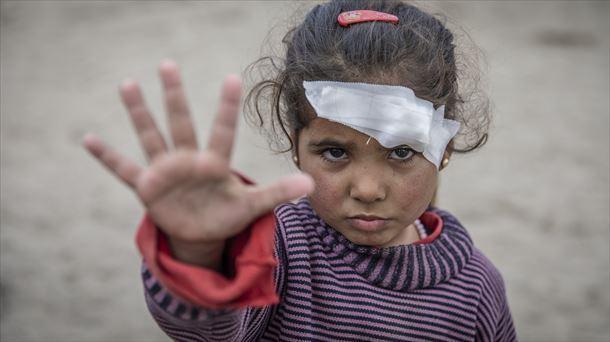
Like Reema, Rahaf and Suhaib, there are millions of children who are innocent victims of aggression, which is why the date of June 4 was set to remember them; to, beyond rhetoric, raise international awareness.
The date is not arbitrary. It was chosen by the United Nations General Assembly in 1982, at its Emergency Session on the question of Palestine. It was intended to do something about the plight of the large number of Palestinian and Lebanese children who had been victims of Israeli acts of aggression.
The initial objective was to focus attention on the plight of these children, victims of the conflicts in the Middle East. However, over time, the day has been taken to include all children around the world who suffer the consequences of violence, regardless of their origin or location.
The reality, as evidenced by the data, is chilling. According to the UN Secretary-General's Annual Report on Children and Armed Conflict, in 2023 alone "reached extreme levels, with a shocking 21% increase in grave violations.
According to the document, the highest incidence were: "the killing (5 301) and maiming (6 348) of 11 649 children, followed by the recruitment and use of 8 655 children and 5 205 verified incidents of denial of humanitarian access, and the abduction of 4 356". This year, by the looks of it, the figures are unfortunately going to be exceeded.
The text also states that the largest number of serious violations occurred in Israel and the Occupied Palestinian Territory, the Democratic Republic of Congo, Myanmar, Somalia, Nigeria and Sudan.
But this is not limited to physical violence. In the interconnected world, cyberbullying is emerging as a new and worrying form of child aggression, as well as sexual and labor exploitation.
Meanwhile, silence and ignorance are complicit in aggression, which is why, in order to prevent it, the 2030 Agenda for Sustainable Development includes for the first time a specific target focused on ending all forms of violence against children.
Although much remains to be said and done, I will summarize by saying that it is necessary to protect and give the opportunity to grow up safe and free from fear to those who, as José Martí said: "are the hope of the world".


