

The formulation of U.S. foreign policy during the Cold War was marked by the vision of Nicholas Spykman, International Relations Theorist, considered one of the fathers of modern geopolitics.
His ideas were fundamental in shaping the strategy of containment, which had so much to do with the events in our America since 1945: proliferation of military bases, direct and indirect invasions, coups d'état and military dictatorships.
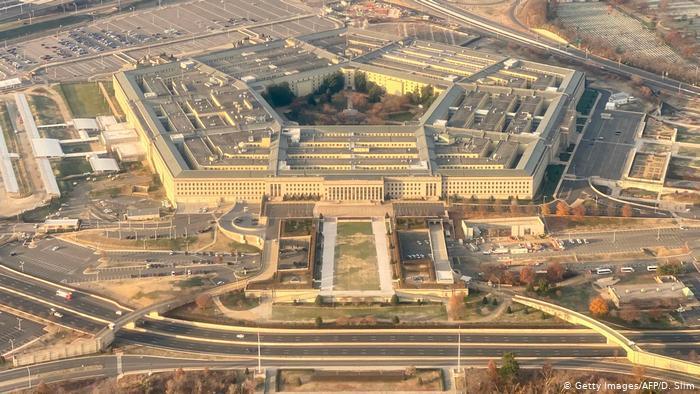
Adapting these principles to current circumstances, the Pentagon's military doctrine is based on the integration of new technologies, the multi-domain approach and preparedness to face both conventional and non-conventional threats.
This involves identifying vulnerabilities in enemy systems and employing patterns of behavior that conceal U.S. intentions until it is too late for an effective response.
The strategy integrates cyber capabilities with other instruments of military and diplomatic power, enabling coordinated campaigns, even below the threshold of traditional armed conflict, to eliminate, or at least disrupt, enemy activities.
It emphasizes the modernization of the armed forces, especially in areas such as electronic warfare, cyberspace and outer space. It recognizes the importance of operating in the electromagnetic spectrum, as well as the development of Artificial Intelligence (IA) capabilities and autonomous systems to maintain technological superiority.
In this way, the new doctrine seeks to divert the attention of adversaries to secondary or tertiary areas, forcing them to disperse their efforts and resources, which would weaken their ability to respond in areas of greater interest to the u.s.
The Department of Defense has introduced projects that integrate advanced artificial intelligence to accelerate decision making in key operations, such as Thunderforge. These systems allow commanders to analyze large volumes of data, simulate scenarios-war games-with IA and receive recommendations on deploying military assets in real time.
Another example is Project Replicator, which can deploy thousands of autonomous drones and smart weapons systems, integrating ia into unmanned air, land and sea vehicles for surveillance, defense and offensive operations.
The Pentagon has signed million-dollar contracts with leading ia companies, such as Openai, Google, Palantir and Anduril, in pursuit of developing more effective solutions for modern combat, cognitive warfare and the operation of even the bureaucratic apparatus of the Armed Forces.


