

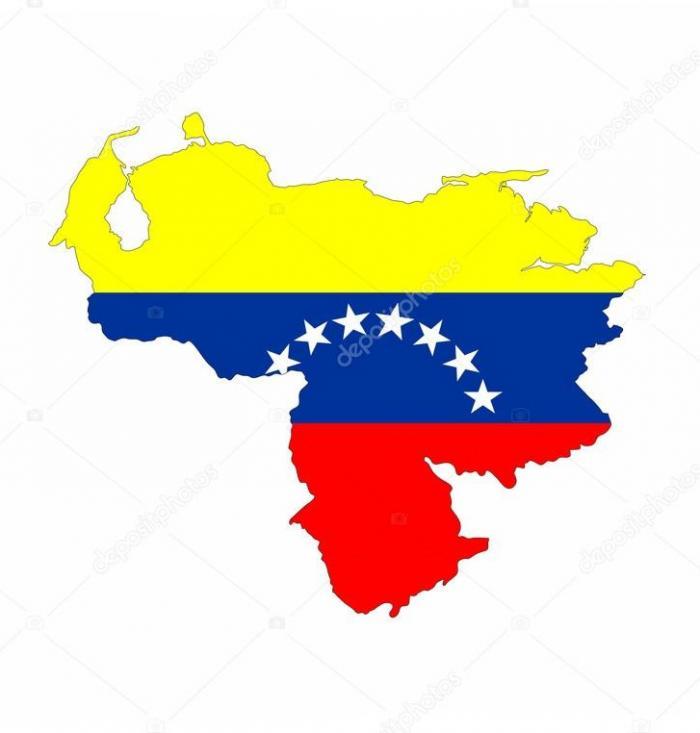
In January of this year, a high-level meeting seemed to mark a new path between the United States and Venezuela, which would also be seen as a possible opportunity for regional understanding. The president of the South American nation, Nicolás Maduro, received Richard Grenell, special envoy from the White House, at the Government Palace.
At the meeting, the Venezuelan leader proposed the creation of a zero agenda for a new beginning in bilateral relations, and issues such as migration, the negative impact of economic sanctions, U.S. citizens involved in crimes on national territory, and the integrity of the Venezuelan political system were addressed.
This was the first formal rapprochement between Donald Trump's administration and the Bolivarian government since the United States refused to recognize Maduro as the legitimate constitutional president in 2019. It was thought that the willingness to engage in dialogue was mutual. However, subsequent events have only reaffirmed the expansionist and interventionist behavior that has characterized the empire, which began to reach its peak last August.
Thus, under the guise of a supposed fight against drug trafficking in the Caribbean, which threatens the national security of the northern nation, an ongoing military aggression looms over Venezuelan soil today.
August 7: U.S. Attorney General Pam Bondi announced an increase to $50 million in the reward for information leading to the capture of Venezuelan President Nicolás Maduro, who was accused of allegedly leading the Tren de Aragua, Cartel de los Soles, and Cartel de Sinaloa cartels.
August 19: The United States began a large-scale military deployment in the Caribbean Sea under the pretext of fighting drug trafficking.
September 2: U.S. authorities report the first extrajudicial attack in Caribbean waters on a vessel allegedly carrying drugs.
October 16: Donald Trump authorizes the CIA to carry out covert operations on Venezuelan territory.
November 3: The 60-day deadline of the so-called War Clock, from the War Powers Resolution of 1973, expires.
November 6: The U.S. Congress did not pass a bipartisan resolution to limit the actions of the Armed Forces within or against Venezuela, led by President Donald Trump.
November 11: The USS Gerald Ford, the world's largest and most modern aircraft carrier, arrived in the Caribbean.
November 14: The U.S. launched Operation Southern Spear, through which it formalized its interventionist actions in the southern Caribbean and the eastern Pacific.
November 21: The U.S. Federal Aviation Administration (FAA) issued a notice recommending "extreme caution" to airlines operating in Venezuela, due to an alleged deterioration in security and increased military activity. At the same time, several airlines unilaterally suspended their commercial air operations to and from Venezuela.
November 24: The White House added the Cartel of the Suns to its list of foreign terrorist organizations.
November 29: Trump announced the total closure of airspace over and around Venezuela, an action allegedly directed against airlines, drug traffickers, and human traffickers.


