

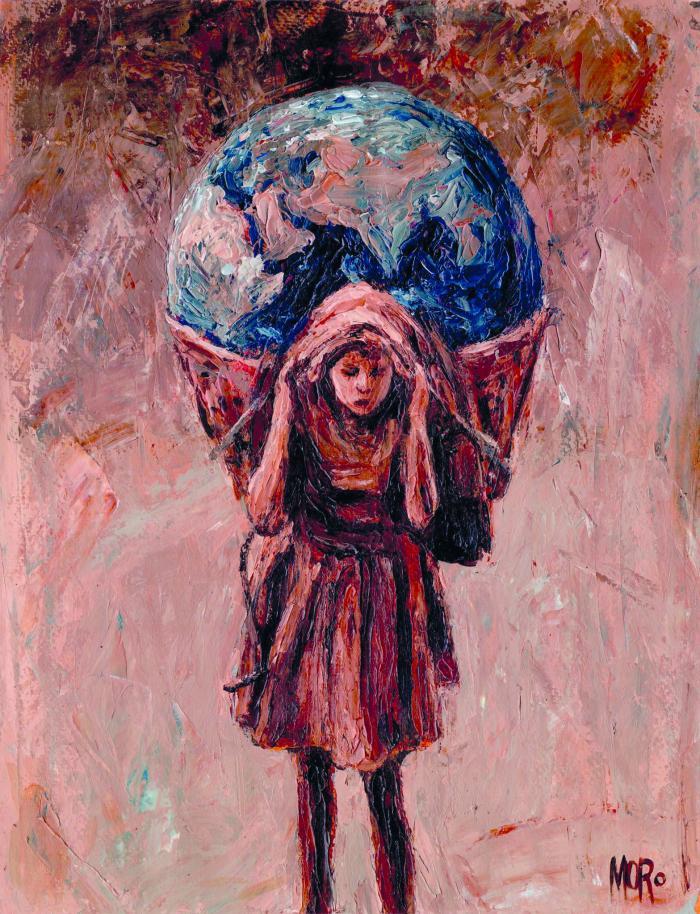
A few decades ago, the Spanish-Moroccan philosopher Juan Domingo Sánchez Estop, better known in the publishing world as John Brown, published an essay entitled La dominación liberal (Liberal Domination), in which he explored the many ways in which liberalism constitutes a device of power.
Among the most interesting and controversial reflections was that concerning the discourse on human rights. Sánchez Estop recalled the wave of violence unleashed by the United States and Europe against the Arab world in the wake of the September 11, 2001 attacks.
The atrocities committed in the name of human rights—i.e., torture, extrajudicial executions, bombings, military invasions of sovereign countries—did not appear as isolated incidents or exceptions, but rather as part of the norm. And to ensure that this was understood in every corner of the planet, an impressive symbolic production was unleashed, one that had already been rehearsed since the Cold War.
It began with speeches that flooded the mainstream press and continued with films (including children's films) and literature, which, rather than justifying what was happening, normalized it through xenophobic and racist rhetoric.
When mass murder and torture are carried out in the name of human rights, wrote the philosopher, it is time to remember that this ideology—that of human rights—is not the enemy of barbarism in today's world, but the hidden side of the same coin.
What has been happening in Palestine for almost 80 years, with the terrifying escalation undertaken by the Zionist, interventionist, and colonial state of Israel since 2023, is a living example, probably the most widely reported, of how liberal brutality is exercised in the name of liberal principles.
In the name of the right to self-determination and sovereignty, land is constantly usurped and the right to nationhood is denied; in the name of freedom of belief, other devotions are segregated; in the name of sexual dissidence, sexual dissidents are murdered—look under the rubble in Gaza; in the name of the right to life, it is made clear that some lives are more valuable than others.
Palestine, as we said, is the most media-friendly example, but the "free" world is full of the same thing on different scales.
Think of how most indigenous peoples are constantly denied the right to self-determination, to memory, to an education that dignifies and explains them, and a long list of other things, including the right to their very existence.
Think of the many mechanisms, not just economic ones, that are set up in most societies so that "first-class" citizens never encounter "second-class" or "third-class" citizens, whether in kindergarten, school, or the places where they live, shop, breathe, or on the soccer team they support, or in the stands.
A few months ago, the South American activist and intellectual Néstor Kohan kindly remembered the Cuban revolutionary and philosopher Fernando Martínez Heredia, who passed away in 2017.
Fernando said, Néstor recalled, that now in many countries people talk very loftily about democracy and human rights, but they do so after—and on the basis of—dictatorships that, in a few years, murdered the best minds and the most brilliant spirits who had set out to build a different world. In other words, people talk about freedom, democracy, and human rights only when a certain and very specific understanding of freedom, democracy, and human rights is not in danger.
In a world of such traps and contradictions, opportunism and violence, Cuba has its jurisdictional waters. It is our responsibility and keeps us awake at night not only to understand these traps and contradictions, opportunism and violence, but also to be, in our daily lives and horizons, more human—truly human—fair, full, effective, and painfully human.


