

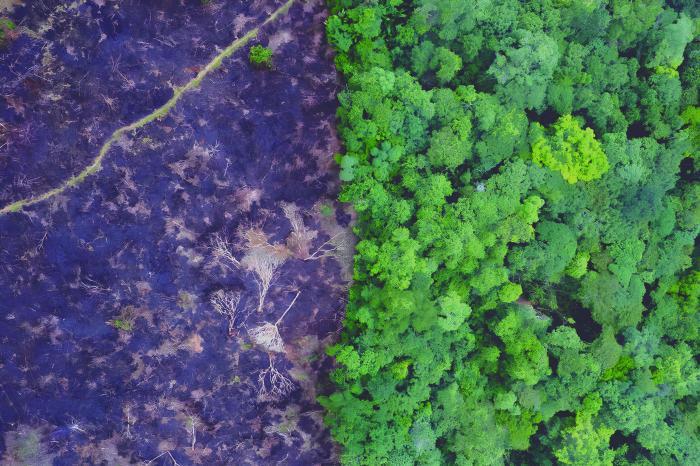
The future of the Earth could be even more chaotic; everything will depend on the responses humanity is able to develop to address the deterioration of its living conditions and livelihoods.
Recently, the United Nations Environment Programme (UNEP) published a comprehensive assessment on the subject, the result of the work of 287 scientists—men and women of recognized expertise in various disciplines—from 82 countries.
The prevailing development models are incompatible with the preservation of nature and human existence itself, taking into account the current degradation and forecasts from multiple sources, the analysis argued.
Since 1990, greenhouse gas emissions have increased by 1.5% annually, raising temperatures and intensifying climate impacts, as illustrated by UNEP in its Global Environment Outlook, Seventh Edition: A Future We Choose report, published in December 2025.
Over the past 20 years, extreme weather events attributable to climate change have caused devastation at an estimated cost of US$143 billion annually, the report stated.
Nearly eight million species coexist on Earth, and one million are currently threatened with extinction. Furthermore, between 20% and 40% of the Earth's land surface is undergoing degradation, directly affecting more than three billion people.
As a result of pollution, approximately nine million people die each year. The economic cost of health damage from air pollution alone amounted to about $8.1 trillion in 2019, equivalent to 6.1% of global gross domestic product (GDP), the research revealed.
According to experts, “the state of the environment will worsen dramatically if the world continues to drive economies under a conventional model.”
Given current trends, the increase in the Earth’s average temperature is expected to exceed 1.5 degrees Celsius (°C) above pre-industrial levels by the early 2030s and surpass 2.0°C by the 2040s, UNEP noted.
“In this scenario, climate change would reduce annual global GDP by 4% by 2050 and by 20% by the end of the century,” the United Nations agency stated.
At the current rate, soil degradation will lead to the annual loss of fertile and productive land equivalent to the size of Colombia or Ethiopia. The report emphasized that climate change could reduce per capita food availability by 3.4% by 2050.
If current production and consumption patterns continue, the 8 billion tons of plastic waste polluting the planet will continue to accumulate.
This will also exacerbate the economic damage in terms of health, estimated at $1.5 trillion annually due to people's exposure to the toxic ingredients present in plastic waste, the report concluded.
Governments, businesses, and societies should incentivize the shift of economies toward circularity, the decarbonization of energy systems, sustainable agriculture, and ecosystem restoration, experts recommended.
"The Global Environment Outlook (GEO) presents humanity with a simple choice: continue down the path toward a future devastated by climate change, nature loss, soil degradation, and air pollution, or change course to ensure a healthy planet, healthy people, and healthy economies," summarized UNEP Executive Director Inger Andersen.
The report proposes two paths to avoid collapse: the first based on changing behaviors to reduce material consumption, and the second focused on technological development and efficiency improvements.
To move forward in both directions, “radical changes” are needed in five key areas: the economy and finance, circularity and waste management, the environment, energy, and food systems.
Experts recommend moving beyond GDP toward comprehensive metrics of inclusive wealth; properly valuing goods by establishing positive and negative externalities; and eliminating and redirecting subsidies, taxes, and negative incentives to safeguard nature.
Based on science, the seventh edition of the GEO report leaves no room for doubt: humanity is digging its own grave.


