

The armed incident that occurred in the waters of the El Pino channel, Falcones Cay, Corralillo municipality, Villa Clara province, where a speedboat with Florida registration (FL7726sh) opened fire on a unit of the Border Guard Troops of the Ministry of the Interior, is not an isolated case.
The history of aggression against Cuba by anti-Cuban groups organized, trained, and financed in the United States is extensive and very well documented. For years, attacks against Cuban coastal towns, fishermen, and vessels established a pattern of violence that has continued for more than six decades to the present day.
To cite just a few examples, in 1963, two landing craft from a mother ship opened fire with bazookas and machine guns on the Patricio Lumumba sulfuric acid plant on the northern coast of Pinar del Río.
A notable instance of criminal action against Cuban fishermen was carried out directly by U.S. authorities on February 3rd, 1964, when several units of the U.S. Navy boarded and seized the Cuban fishing vessels Lambda 8, Lambda 39, Cárdenas 14, and Cárdenas 19 in international waters, along with their 38 crew members.
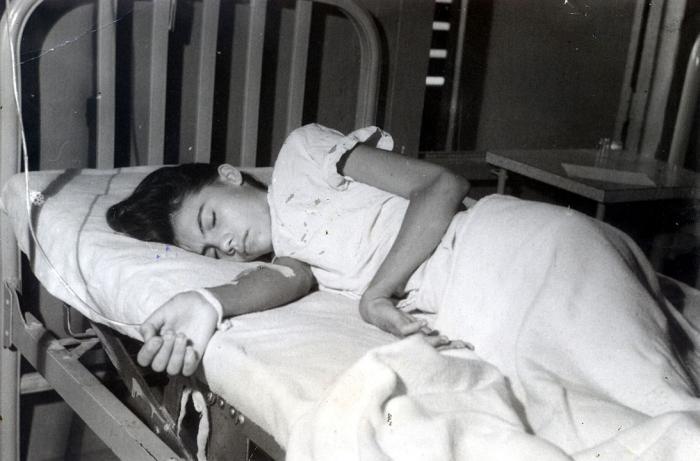
One of the most heinous acts of aggression was committed on October 2nd, 1971, by two speedboats from Florida against the coastal community of Boca de Samá, in the municipality of Banes, Holguín. The results of this "valiant action" were two deaths and four injuries, including sisters Nancy (15 years old) and Ángela Pavón (13 years old).
In October 1972, several armed speedboats attacked the Cuban fishing vessels Aguja and Plataforma 4 near Andros Island in the Bahamas. A year later, the Cuban fishing boats Cayo Largo 34 and Cayo Largo 17 suffered the same fate, with fisherman Roberto Torna Mirabal being fatally wounded.
Then, on April 6th, 1976, a pirate speedboat attacked two Cuban fishing vessels, the Ferro 123 and the Ferro 119, sinking them with machine gun fire in the area between Cayo Anguila and Cayo Sal. The crew of the Ferro 123 were wounded and left adrift.
In another incident, dating back to 1992, a U.S. speedboat collided with a Cuban patrol boat, causing the former to sink and several of its crew members to die.
The list of criminal actions carried out by pirate vessels operating from U.S. territory is long. It is high time to put an end to such practices.
In Context:
October 14th, 1990: Terrorists Gustavo Rodríguez Sosa and Tomás Ramos Rodríguez infiltrated through Santa Cruz del Norte, Havana.
September 17th, 1991: Two terrorists from Miami were arrested. Their objective was to sabotage tourist stores. Weapons and a radio transmitter were seized.
December 29th, 1991: Two individuals from Miami were captured in Cárdenas, Matanzas. Their plans included sabotaging economic facilities and other public and recreational services.
October 7th, 1992: A pirate attack was carried out on the Meliá Varadero Hotel by an armed speedboat belonging to the terrorist organization Comandos I.
April 2nd, 1993: The Maltese-flagged tanker Mykonos, with a Cuban-Cypriot crew, was machine-gunned seven miles north of Matanzas.
February 11th, 1996: Shots were fired at the Meliá Las Américas Hotel by a speedboat that entered the area at night.
September 17th, 1996: Cuban-born terrorist Pedro Pablo Pulido Ortega was captured. He had infiltrated Cuba through the Chambas area of Ciego de Ávila province with a shipment of weapons, ammunition, and other supplies for carrying out terrorist attacks.
May 19th, 1996: Terrorists residing in the U.S. landed on the coast of Pinar del Río with the mission, among others, of establishing a stronghold of bandits in the mountains of that region.
April 26th, 2001: Counterrevolutionaries residing in Miami, linked to the F-4 Commandos and Alpha 66 organizations, were captured while attempting to infiltrate northern Villa Clara province.


